Call (888) 295-0220

The Snowbird Return: A Pest Checklist for Reopening Your Florida Home
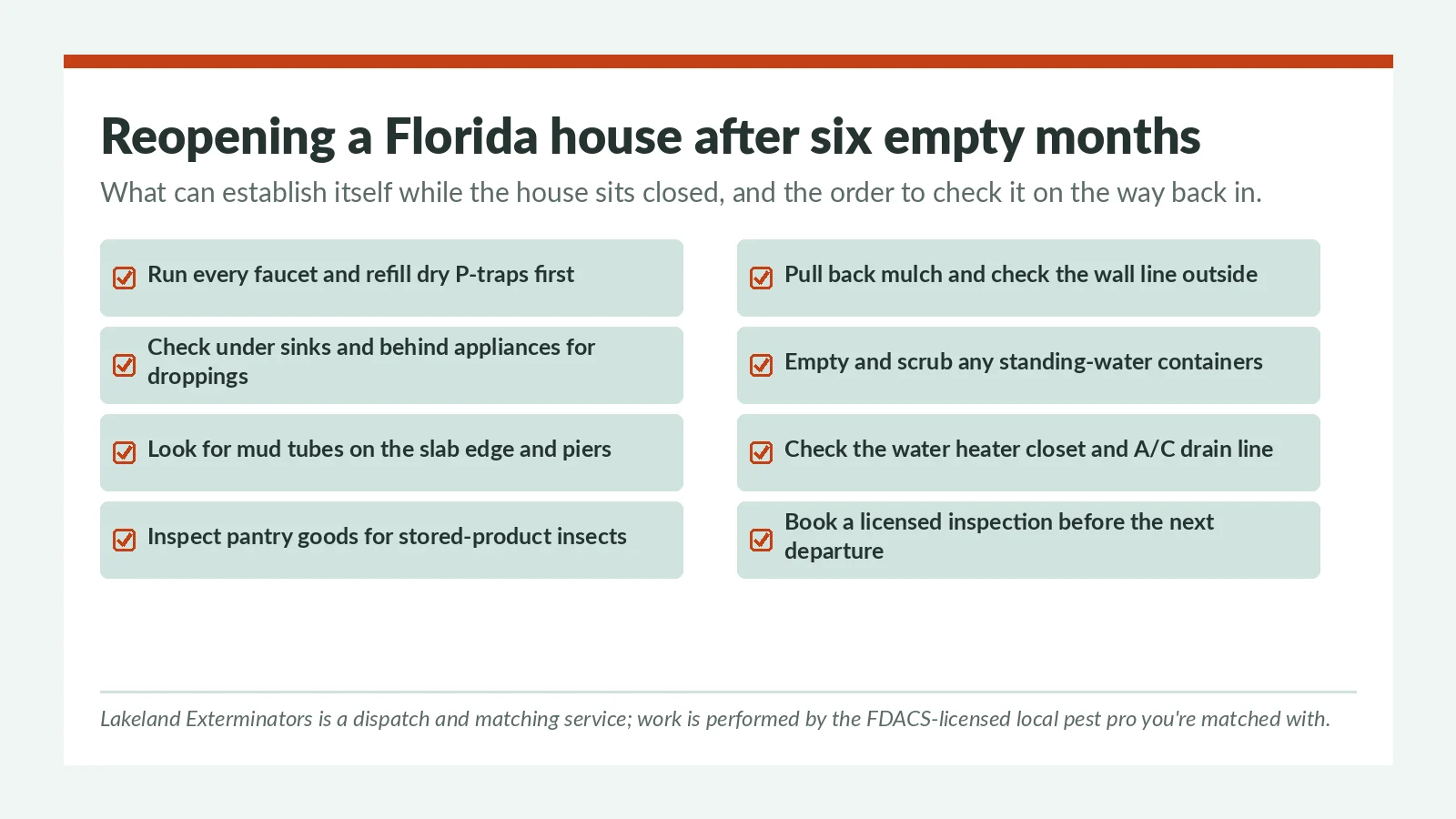
Snowbird reopening pest checklist for a Florida home — dry P-traps, rodent evidence, slab-edge mud tubes and stored-product insects, verified by the licensed local pest pro you're matched with

Seasonal Homes · Florida Field Notes · Updated August 2026 A Florida house does not pause while you summer up north. Six quiet months is exactly how long several pests need to turn a closed home into an occupied one. Every October and November, tens of thousands of seasonal residents unlock Florida doors that have … Read more
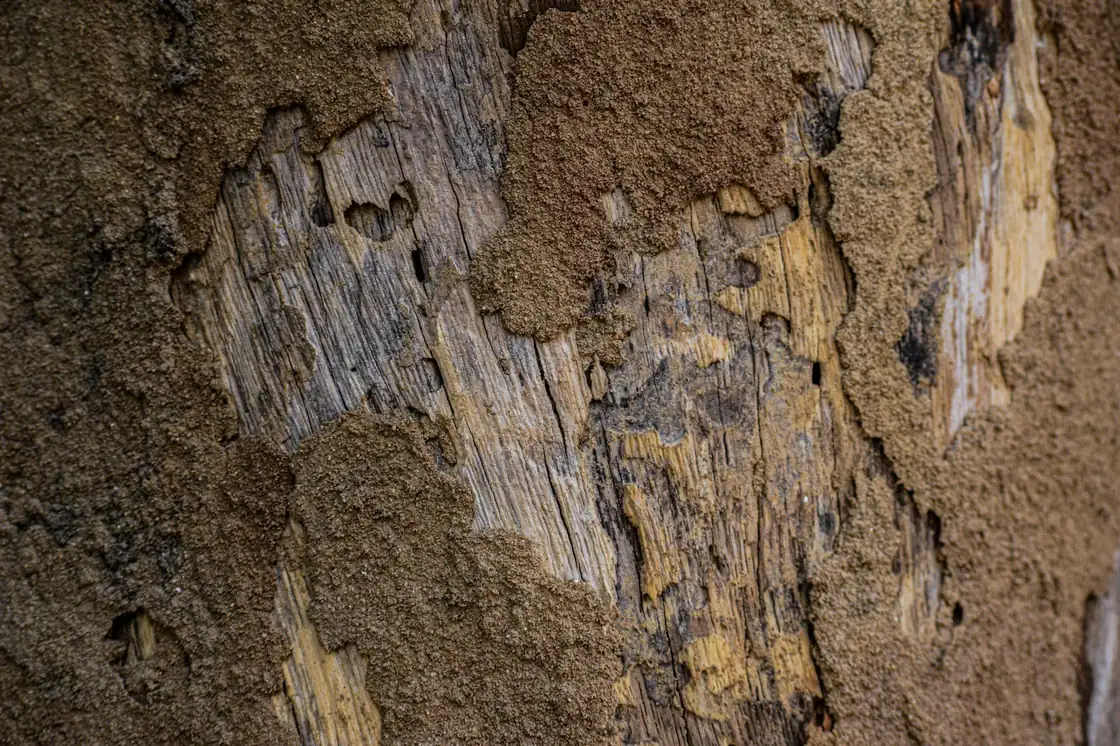
WDO Reports in Polk County: the Adopted Form and What the Inspection Standard Excludes

WDO Reports · FDACS-Licensed Network · Polk County, FL Florida has exactly one wood-destroying organism report form, and a rule that forbids adding anything to it. If a report on a Polk County closing arrives on some other form, or arrives with extra disclaimers stapled onto the findings, something has gone wrong. The form, the … Read more

The Polk County Mosquito Calendar — Aedes, Anopheles, Culex Activity by Month

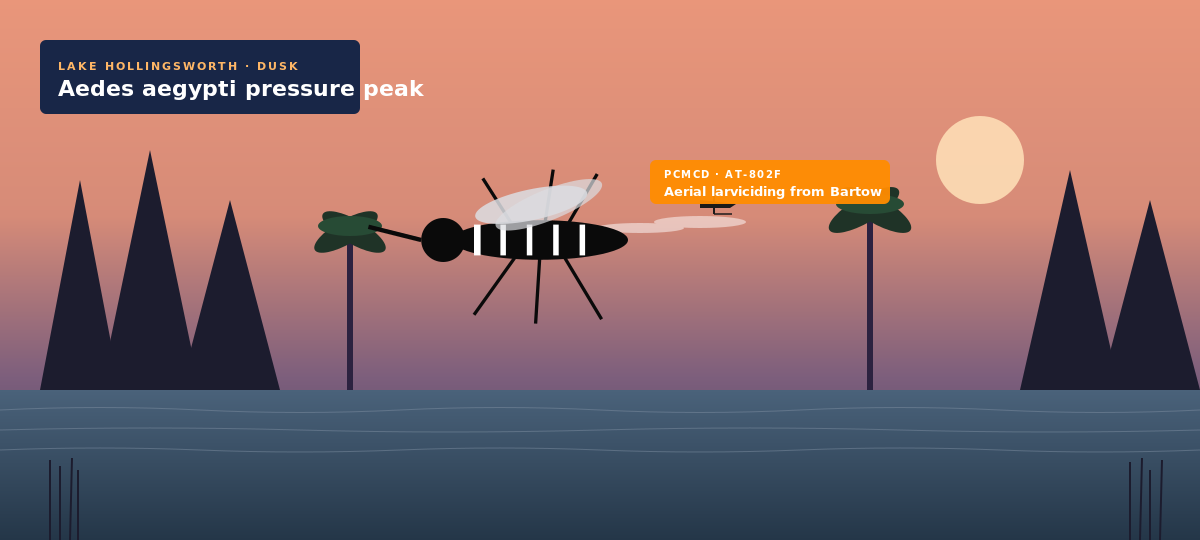
Polk County’s subtropical climate supports near-year-round mosquito activity, with seasonal pressure peaks driven by rainfall, temperature, and breeding habitat. Understanding when each major mosquito species is active helps Polk County homeowners time prevention and treatment effectively. This is an informational guide; mosquito treatment in Polk County is performed by independent, FDACS-licensed Florida pest-control companies. Activity … Read more

Roof Rats and Tile Roofs: Why Polk County’s Architecture Drives Heavier Rodent Pressure

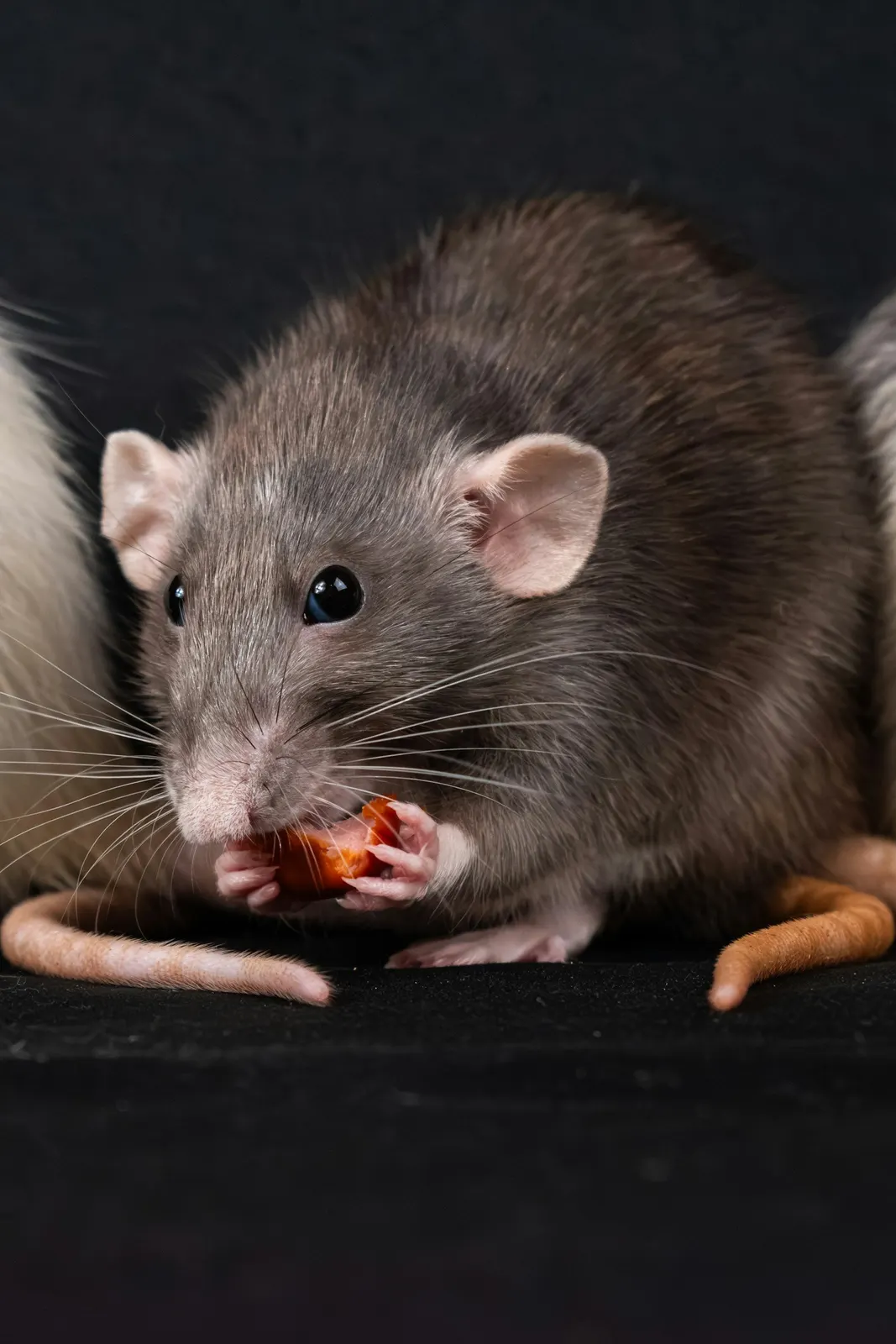
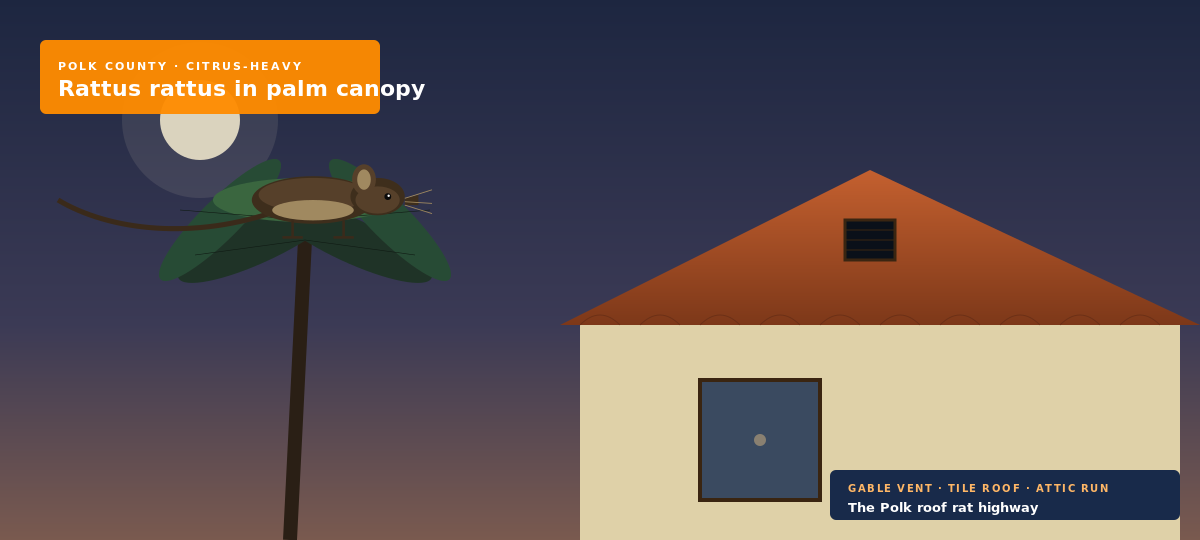
Roof rat (Rattus rattus) in a Lakeland palm frond canopy with a tile-roof gable vent visible - the Polk County roof rat highway.

The roof rat (Rattus rattus) is the most common rodent in Polk County residential properties — and Polk County’s distinctive architectural heritage actively favors roof rat establishment. Spanish/Mediterranean barrel tile roofs, mature oak canopy, citrus trees in residential yards, and palm tree landscaping all create the rooftop habitat roof rats prefer. Call the number below … Read more

Roof Rats in Lakeland’s Historic Tile-Roof Neighborhoods: Cleveland Heights, Lake Hollingsworth & Lake Morton

Roof rat infestation evidence in a Polk County, FL attic

If you live in one of Lakeland’s historic tile-roof neighborhoods — Cleveland Heights, the Lake Hollingsworth shoreline, Lake Morton, or the Dixieland historic blocks — you’re in the part of Polk County where roof rat (Rattus rattus) pressure runs heaviest. These neighborhoods combine three things roof rats need: 1920s–1960s Spanish/Mediterranean barrel-tile roofing, decades-old live oak … Read more

Why Lakeland Sits in Florida’s Highest Combined Termite Pressure Zone — Subterranean and Drywood

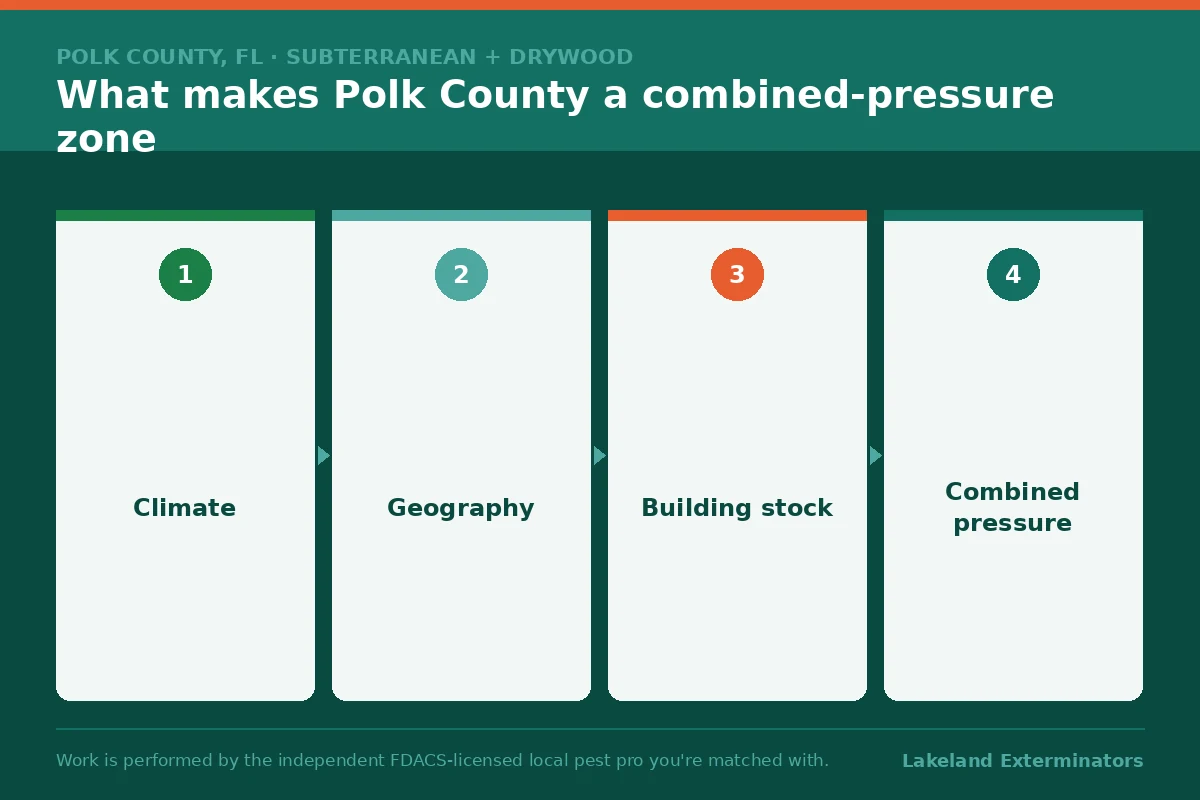
Four-stage graphic explaining what makes Polk County, Florida a combined subterranean and drywood termite pressure zone: climate, geography, building stock and combined pressure.

Most U.S. termite markets have one dominant species. Lakeland has two. The convergence of climate, geography, and building stock makes Polk County one of the very few American markets where both subterranean termites (Reticulitermes flavipes) and drywood termites (Cryptotermes brevis and Incisitermes snyderi) are established at high density — and where homeowners reasonably need to … Read more

Drywood Termites vs Subterranean Termites in Polk County: How to Tell the Difference (and Why It Changes Your Treatment Options)

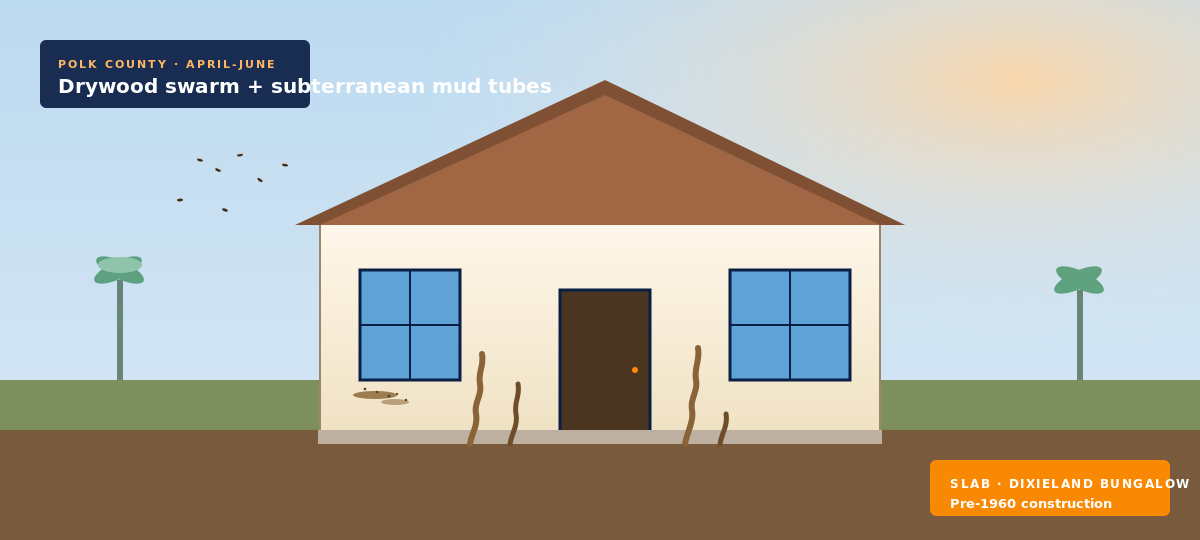
Eastern subterranean termite mud tubes climbing the slab of a Dixieland-era Lakeland bungalow with a drywood swarm overhead during April-June swarm season in Polk County, FL.

One call reaches a licensed, local exterminator who covers your address — and a real person answers, 24/7. ✅ FDACS-Licensed  •  🏠 Polk County Local  •  🔍 Inspection  •  ⚡ Same-Day Available Same-day inspection available across Polk County Initial inspection — written quote FDACS-licensed — both species, both treatment categories Soil contact is the dividing … Read more

📞 Tap to call (888) 295-0220