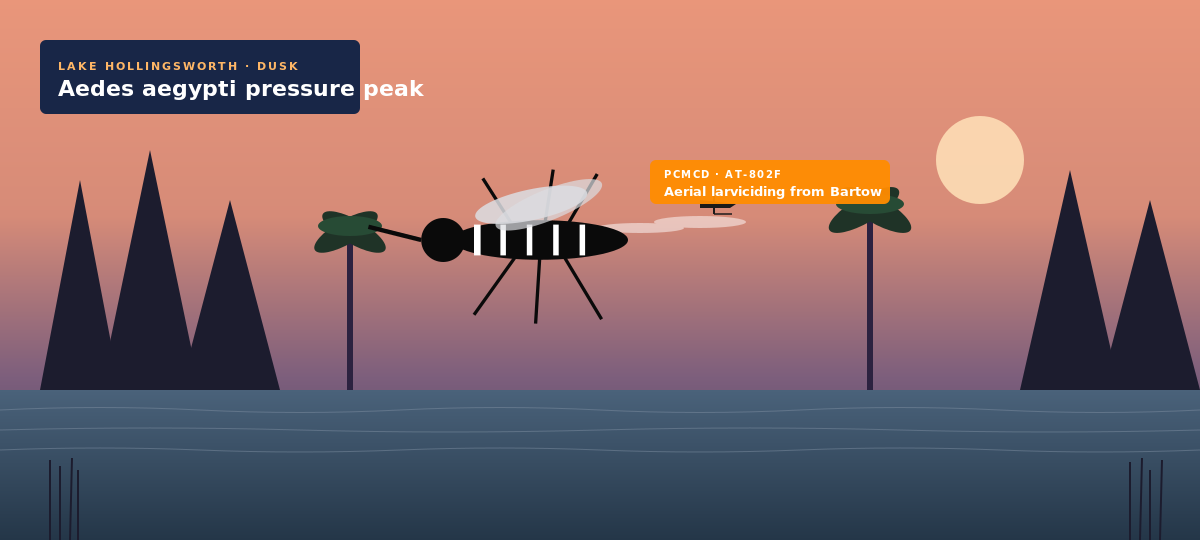
Summer mosquito surge in Polk County, FL is a near-annual story for Lakeland homeowners — and the geography is doing most of the work. The city sits inside one of the densest chain-of-lakes complexes in central Florida, with Lake Hollingsworth, Lake Mirror, Lake Morton, Lake Parker, Lake Bonny, and dozens of smaller water bodies inside city limits alone. Add June through September rainfall and the dew points the National Weather Service Tampa Bay office routinely records in the mid-70s, and you have one of the state’s higher-pressure mosquito environments. This guide explains what species are involved, where they breed in the Lakeland landscape, and what an FDACS-licensed treatment program covers.
Dealing with a pest problem right now?
📞 Call now — get matched with a licensed local exterminator: (888) 295-0220When you call, stay on the line for a few seconds while we match you with the licensed local exterminator for your area. Have your address and a quick description of the problem ready.
Licensed local pros · Fast response, subject to availability · No obligation
This is an informational guide. Mosquito treatment in Lakeland and Polk County is performed by independent, FDACS-licensed Florida pest-control companies. For the common household pests our Polk County dispatch line currently covers, see pest control in Polk County.
Why Lakeland’s Geography Concentrates Mosquito Pressure
Polk County mosquitoes don’t actually breed in big lakes — fish, wind, and wave action keep open water unattractive for most species. The real breeding habitat is the edge of those lakes: marshy shallows, lily pads, cypress knees, stormwater retention ponds, and the irrigation-fed bromeliads, gutters, and tarps in the neighborhoods immediately around them. Lakeland’s grid of lake-adjacent residential streets (Cleveland Heights, Lake Hollingsworth Drive, Lake Hunter Drive, Lake Morton Drive) keeps breeding habitat within typical mosquito flight range — usually 200 yards to a mile — of most homes nearby.
Polk County Mosquito Control conducts area-wide surveillance and treatment for vector species like Aedes aegypti and Aedes albopictus, but residential-scale pressure on yards, lanais, and patios is typically a homeowner-level problem.
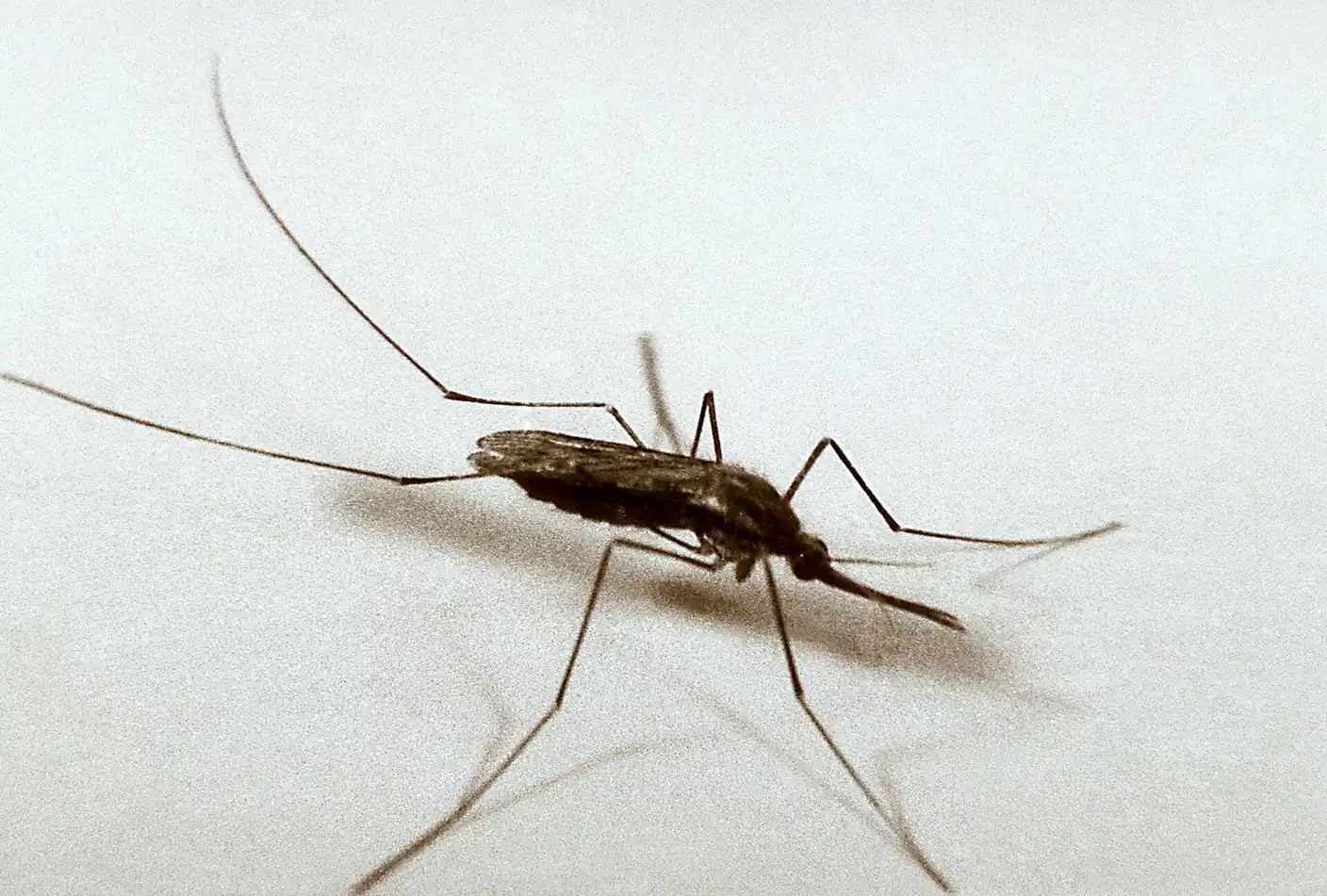
The Mosquito Species You’re Most Likely Dealing With
Four species drive most of the complaints in Lakeland summers:
- Yellow fever mosquito (Aedes aegypti): small black-and-white, day-active, lays eggs in tiny containers — flowerpot saucers, gutters, bird baths. Disease-significant.
- Asian tiger mosquito (Aedes albopictus): aggressive day-biter with distinct white-striped legs. Container-breeder like aegypti. See our Asian tiger mosquito profile for full ID.
- Salt marsh mosquito (Aedes taeniorhynchus): long-distance flier from coastal marshes, occasional pressure on Lakeland yards after sustained sea-breeze events.
- Southern house mosquito (Culex quinquefasciatus): dusk-and-dawn biter, lays egg rafts in standing organic water — storm-drain catch basins, retention ponds, septic seepage. Significant West Nile virus vector.
Where Standing Water Hides on Lakefront Properties
A licensed mosquito inspection in a Lakeland-area yard typically finds water in places homeowners don’t think to look:
- Bromeliad and air-plant rosettes (each can hold a tablespoon of water — enough for hundreds of eggs)
- Pool-equipment housings, screen-enclosure tracks, and skimmer baskets when pumps are off
- Gutter sections sagging behind decorative shutters or downspout extensions
- Boat covers, kayak hulls left upright, and uncovered grill drip pans
- Saucer trays under potted plants, especially shaded patio collections
- Tarps, irrigation manifolds, and rain-barrel screens with torn mesh
- Children’s toys and pet bowls left in yard between use
What a Licensed Mosquito Control Program Covers
FDACS-licensed (CPCO) treatment programs in Lakeland typically have three components:
- Source reduction: the technician walks the property and identifies every container or chronic standing-water source, with a written list and homeowner-action recommendations
- Larvicide: EPA-registered Bti (Bacillus thuringiensis israelensis) granules or briquettes placed in any standing water that can’t be eliminated — bromeliads, ornamental fountains, low spots
- Barrier spray: backpack or mist-blower application of labeled residual product to vegetation in the 0-to-8-foot resting zone where adult mosquitoes shelter during the day. Treatments typically repeat every 21 to 30 days during peak season
For pet-owner households or families with children, see our pet-safe mosquito control program for the lower-residue formulations and application schedules used in those homes.
Schedule and Cost Norms in Polk County
Most Lakeland-area mosquito programs run on a monthly schedule from April through October. Pricing typically depends on lot size, vegetation density, and screen-enclosure inclusion. See our timing guide for Polk County mosquito spraying for the seasonal cadence, and our monthly pest control cost overview for budget context. Winter Haven sits on the same chain-of-lakes system and sees the identical species pressure — see mosquito control in Winter Haven for that area’s program details.
Working With a Licensed Mosquito Company
For a Lakeland-area or chain-of-lakes property, an FDACS-licensed pest-control company will inspect the breeding habitat, recommend source reduction, and structure a treatment plan appropriate to your property. The licensed company sets the price after an on-site inspection.
Frequently Asked Questions
How quickly does a mosquito barrier spray reduce biting pressure?
Most homeowners notice a substantial reduction within 24 hours of the first treatment, with steady-state control after the second monthly visit.
Will barrier spray harm bees or butterflies?
Application is targeted at vegetation in the mosquito resting zone and timed to avoid peak pollinator hours. Licensed technicians coordinate with property owners who keep beehives or pollinator gardens.
Do I need a service if Polk County Mosquito Control already sprays?
County-level programs target vector species at the public-health scale and don’t typically address backyard biting pressure. Residential service complements rather than duplicates that work.
How long do I need to keep pets and kids off the lawn after a treatment?
Once foliage is dry — typically 30 to 60 minutes. The technician will confirm specifics based on the products applied.
What can I do between visits to reduce mosquitoes faster?
Walk the property weekly looking for standing water, dump and refresh saucers and bird baths, clean gutters, and replace bromeliad water with flushes of fresh water. See our timing guide for more.
Disclaimer: Lakeland Exterminators is a local dispatch and referral service, not a licensed pest-control operator. We connect Polk County, Florida homeowners with independent, FDACS-licensed and insured pest-control companies. All inspections and treatments are performed by those independent providers, who set their own pricing, scheduling, and service terms.
Any reference to same-day, emergency, or 24/7 service describes the typical scheduling of matched independent providers and is not guaranteed; actual response times vary by provider, season, location, and demand.