Pest control in Cypress Gardens, FL — shoreline living, shoreline pests
One call reaches a licensed, local exterminator who covers your address — and a real person answers, 24/7.
Talk to a licensed exterminator now
ZIP-only request. One field, then a licensed operator handles the inspection.
Free to get matched. No obligation. The independent licensed operator provides the estimate.
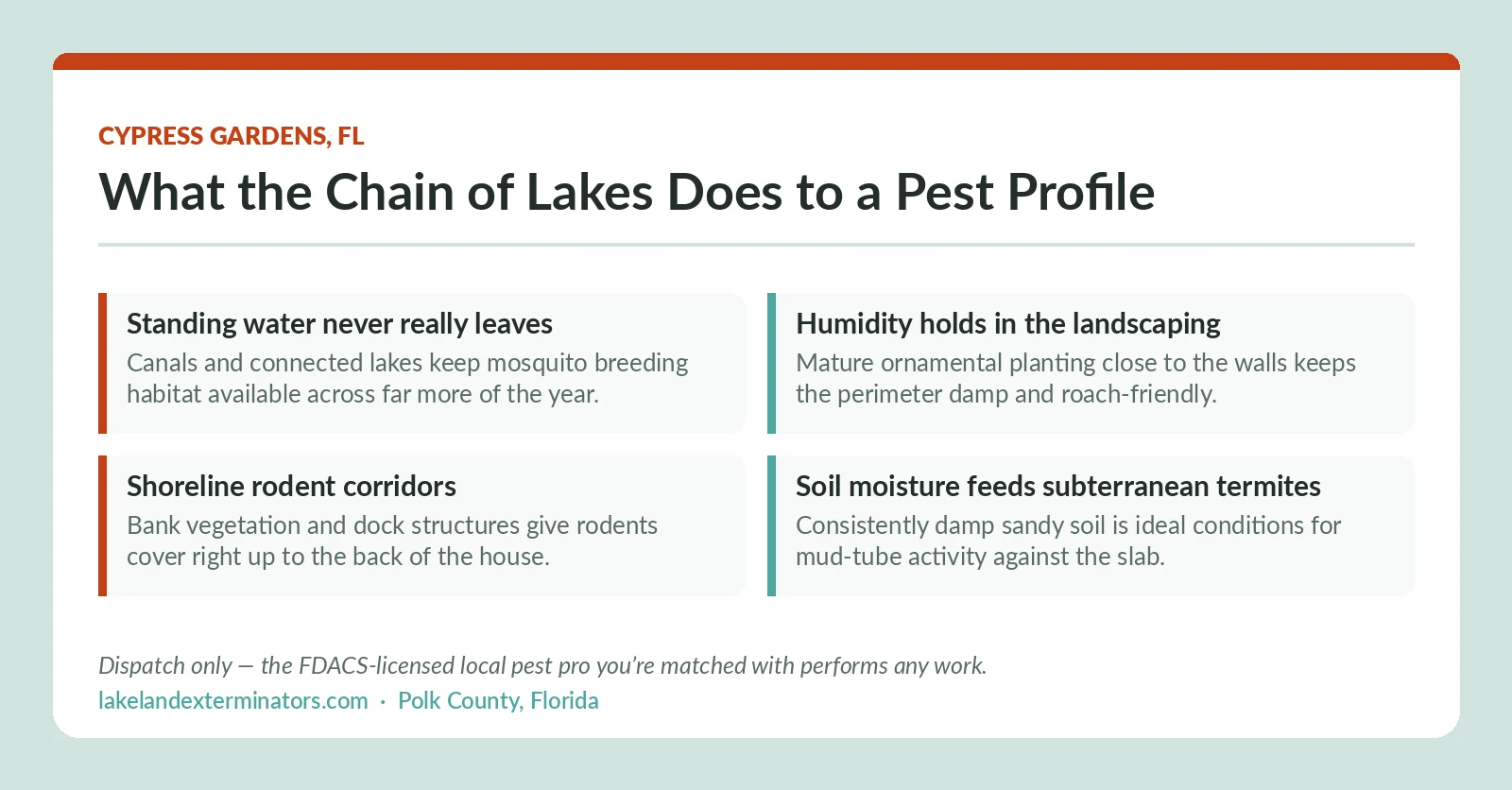
What the chain of lakes does to a pest profile
Shoreline property means constant moisture, and constant moisture is the master variable in Florida pest biology. American cockroaches — the palmetto bugs every Cypress Gardens homeowner knows on sight — breed in the leaf litter and seawall crevices along the chain and wander into lakefront homes on summer nights. Cypress and oak shade keeps mulch beds damp enough for earwigs, millipedes and centipedes to mass against foundations, and after heavy rain they come indoors in numbers that alarm people.
The rodent story is shoreline-shaped too. Roof rats run boathouse rafters, dock pilings and citrus remnants year-round, and the older tile-roof ranches off Cypress Gardens Boulevard give them easy attic access every fall. Where there are shoreline rodents there are also rat snakes working the same territory — usually harmless, occasionally in a garage.
And because so much of 33884 was built between the 1960s and 1980s, original fascia and window framing carries real drywood termite exposure, while slab-edge moisture from irrigation keeps subterranean termites interested.
The pests behind most Cypress Gardens calls
Palmetto bugs
Shoreline leaf litter is a breeding reservoir. Perimeter treatment plus door sweeps beats chasing them one by one.
Roof rats
Boathouses, docks and tile roofs are the 33884 rat circuit. Exclusion work ends what bait stations only manage.
Drywood termites
1960s–80s framing near the water. Pellet piles on sills and swarmers at dusk are the two signs worth a same-week call.
Earwigs & millipedes
Damp mulch against the slab pushes them indoors after every big rain. Moisture management plus perimeter treatment.
Snakes
Rat snakes and racers follow the shoreline rodent supply. Identification first — most are working for you, not against you.
Ghost & big-headed ants
Kitchen trails and pool-deck sand piles, the standard central-Florida pair. Colony baiting, not repellent spray.
Palmetto bugs greeting you at the lanai door again?
One call reaches a licensed, local exterminator who covers your address — and a real person answers, 24/7.
Talk to a licensed exterminator now
ZIP-only request. A dispatch coordinator connects you with an independent FDACS-licensed operator.
Free to get matched. No obligation. The independent licensed operator provides the estimate.
How getting matched works
You call the dispatch line
33884 routing includes operators who take lakefront work — seawall lines, boathouses and dock structures included.
We match, transparently
Lakeland Exterminators is a dispatch and matching service, not a pest control company. Your request routes to an independent FDACS-licensed operator.
The operator contacts you
You describe what you are seeing and where — shoreline side or street side matters here — and they schedule the inspection.
You get the real quote
Pricing, treatment plan and any bond come from the operator after inspection. Matching is free and carries no obligation.
A Cypress Gardens pest year
January–April: subterranean termite swarms on warm mornings after rain; wings on a windowsill facing the lake are the classic find. April–July: drywood swarmers at porch lights; older ranches should treat any indoor swarm as a same-week inspection trigger — the nine signs guide shows what to photograph. June–September: daily storms drive palmetto bugs, earwigs and millipedes indoors; ant pressure peaks. October–February: roof rats move off the shoreline into attics and boathouse ceilings; this is exclusion season. Buying on the chain? The WDO inspection matters more on waterfront housing stock than almost anywhere else in Polk.
Areas we route around Cypress Gardens
Dispatch covers the Cypress Gardens Boulevard corridor, the streets around Legoland Florida, Lake Eloise and Lake Ruby shorelines, Eloise Woods, Garden Grove, Lake Ned and Lake Daisy areas, and east toward Eagle Lake. The broader Winter Haven page covers the rest of the chain.
Verify before you sign: check any operator’s license number, category and status at the FDACS license search. Termite and WDO work requires the 8E category; snake and wildlife relocation runs under FWC rules. Legitimate operators volunteer this information — the good ones are proud of it.
Frequently asked questions
How much does pest control cost in Cypress Gardens?
The independent licensed operator prices after inspection — waterfront exposure, home age and the species involved all move the quote. The Polk County cost guide explains the variables; the number comes from the operator.
Why are palmetto bugs worse on the lake side of the house?
Because the shoreline is the nursery. Leaf litter, seawall gaps and irrigated beds hold breeding populations of American cockroaches, and night temperatures push wanderers toward warm structures. Perimeter treatment on the lake-facing side plus tightened door sweeps changes the equation fast.
I hear noises over the boathouse ceiling. Rats?
Roof rats treat boathouse rafters as premium real estate — sheltered, near water, near food. The same exclusion logic as attics applies: trap what is inside, seal the entries, cut back the branch bridges.
Are the snakes by my seawall dangerous?
Usually not — rat snakes, garter snakes and black racers dominate the chain-of-lakes shoreline and eat the rodents you do not want. Cottonmouths prefer quieter, marshier water than most maintained shorelines. Photograph from distance and use the identification guide before assuming the worst.
Do I need a termite bond on a 1970s Cypress Gardens ranch?
On waterfront housing of that era it is one of the more defensible recurring costs a homeowner carries. Moisture plus original framing is exactly the risk profile bonds exist for — the bond guide walks through retreat-only versus repair bonds and what to ask.
How fast can an operator reach 33884?
Routine service is usually scheduled within a few days; active findings get priority flagging. Same-day and 24/7 response depends on provider participation and technician availability in your ZIP.
Keep the lake view. Lose the freeloaders.
One call reaches a licensed, local exterminator who covers your address — and a real person answers, 24/7.
Talk to a licensed exterminator now
Routed to an independent FDACS-licensed operator serving your address.
Free to get matched. No obligation. The independent licensed operator provides the estimate.
Disclosure
Lakeland Exterminators is a dispatch and matching service. We connect Polk County callers with FDACS-licensed structural pest control operators. We are not a licensed pest control operator. We do not perform termite treatment, set prices, issue warranties, hold retreatment bonds, or carry pest control trade insurance. All pricing, scheduling, treatment plans, warranties, bonds and service terms are determined by the FDACS-licensed operator dispatched to your address under Chapter 482, Florida Statutes.
Same-day and 24/7 emergency services are subject to provider participation, location, technician availability, and demand. Availability is not guaranteed and may vary by market and appointment capacity.
License status of any operator you connect with is publicly verifiable at the FDACS license search.