Pencil-thin mud tubes on the slab? Meet Polk County’s busiest termite.
One call reaches a licensed, local exterminator who covers your address — and a real person answers, 24/7.
Talk to a licensed exterminator now
Call and we’ll connect you with a licensed, local exterminator who covers your address. It takes about two minutes, and a real person answers.
Free to call. Free to get matched. The licensed operator gives the quote.
24/7 line · A real person answers · Availability of same-day and emergency service depends on the provider.
How to identify Reticulitermes flavipes
You will almost never see the termites themselves — you see their infrastructure. The four castes and signs, in the order they matter:
Mud tubes — the diagnostic sign
Pencil-thin (about 1/4″) earth-colored tubes running up foundation walls, pier blocks, slab edges and plumbing penetrations. They are climate-controlled commuter tunnels between the soil colony and your framing. Break an inch out: workers repairing it within days means the line is active.
Swarmers — the February–May announcement
Dark brown to black, about 3/8″ long, two pairs of equal-length translucent wings. They erupt on warm, sunny mornings after rain — and the piles of identical shed wings on windowsills outlast the twenty-minute swarm by weeks.
Workers — the ones doing the eating
Cream-colored, soft-bodied, about 1/8″ long, never seen in the open unless you break a tube or lift infested wood. They eat cellulose — framing, paper, cardboard — and feed the whole colony by trophallaxis.
Soldiers — the ID feature
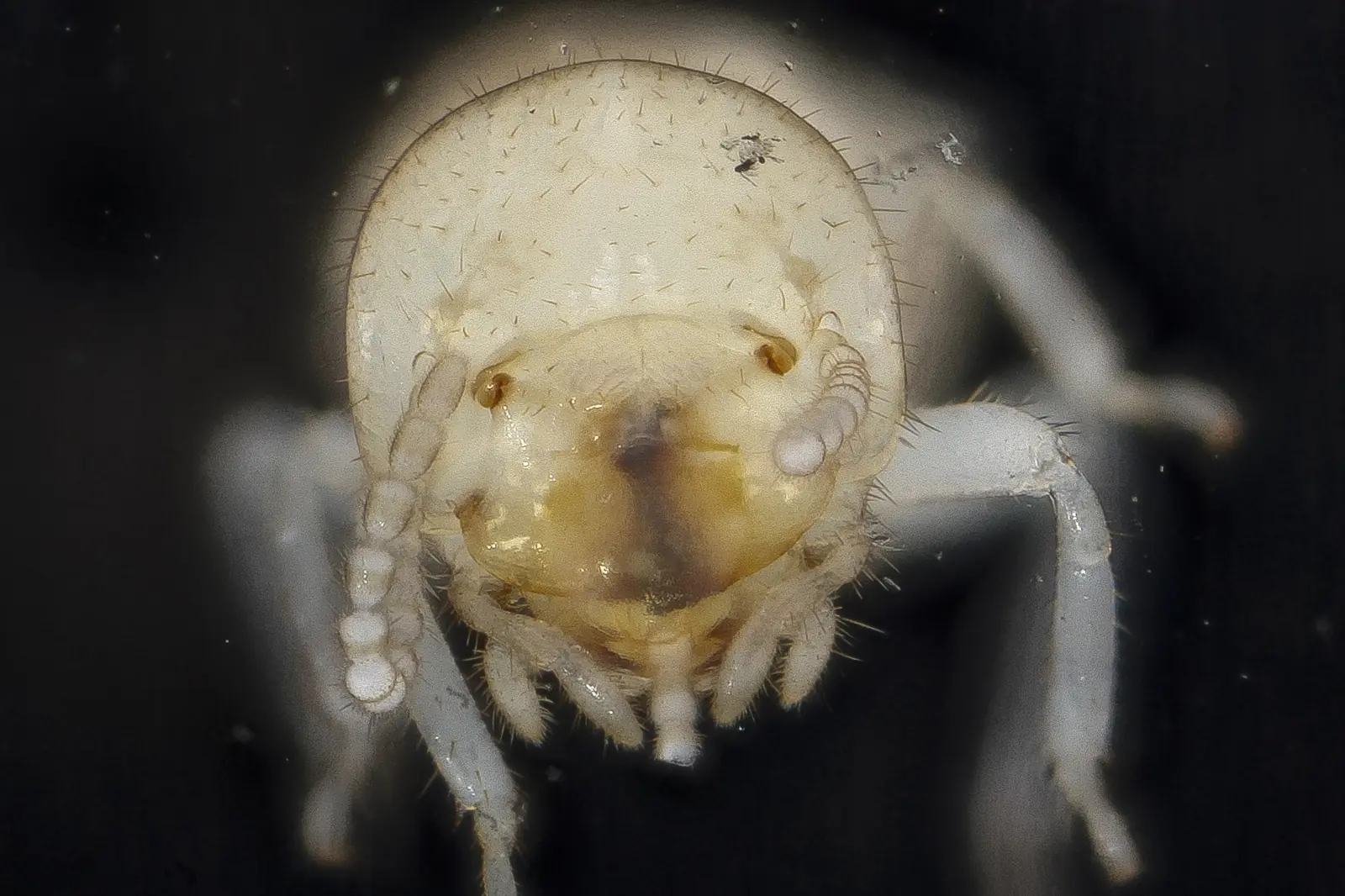
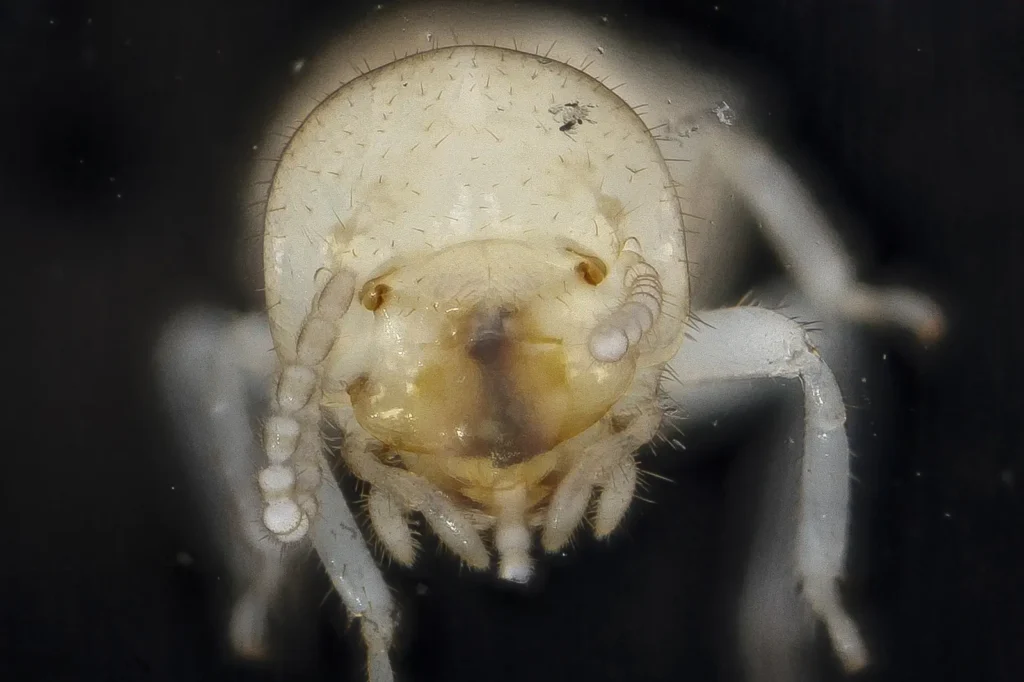
Yellow-orange rectangular heads with prominent dark mandibles, guarding tube breaks within minutes of a breach. Soldiers run only 1–3% of the colony, and their head shape is how an inspector separates natives from Formosans.
Why Polk County soil is a subterranean paradise
A mature eastern subterranean colony in central Florida runs anywhere from 60,000 to a million individuals, living in the soil and foraging up to 300 feet through tunnels and surface tubes — meaning the colony eating your garage may be nesting under your neighbor’s yard. Three local facts drive the pressure:
- Sandy soil, fast tunneling. Polk County’s sands let foragers extend galleries quickly and reach slab joints, expansion gaps and plumbing penetrations — the built-in doorways of every Florida slab home.
- No winter shutdown. Zone 9b soil never cools enough to stop feeding. A colony discovered in March has been eating since last March — there is no month where waiting is free.
- Pre-1980 neighborhoods. Dixieland, South Lake Morton, Cleveland Heights and the older cores of Winter Haven and Bartow combine decades-old slab construction, cypress and pine framing, and mature landscaping that holds soil moisture against the foundation.
Damage follows a pattern: hollow-sounding baseboards, doorframes and floor joists at ground level; wood that gives softly when probed with a screwdriver; blistered paint or distorted drywall over active galleries; doors that suddenly stick. The damage identification guide walks each sign with photos, and the termite signs guide covers the full checklist.
Broke a mud tube and it was rebuilt by the weekend?
One call reaches a licensed, local exterminator who covers your address — and a real person answers, 24/7.
Free to call. Free to get matched. The licensed operator gives the quote.
The mud tube decoder
| Tube type | What it looks like | What it means |
|---|---|---|
| Working tube | Solid, continuous, soil-to-wood run up the stem wall or pier | Active commuter line — the colony is feeding above it now |
| Exploratory tube | Thinner, branching, often dead-ending mid-wall | Foragers probing for wood contact — pressure, even without a hit |
| Drop tube | Hangs from framing down toward soil, lighter colored | Established infestation above, reconnecting to ground moisture |
| Swarm castle | Wide mud chimney, often at a slab crack, spring only | Colony staging a swarm launch — mature colony, close |
Any of the four justifies the call. The type tells the inspector where to start probing — note which one you saw. Full seasonal context lives on the Florida swarm calendar, and the drywood counterpart (frass, no tubes) is covered in the drywood species guide.
The two treatment paths a licensed operator will discuss
Florida puts subterranean termite treatment with FDACS-licensed companies, and two approaches dominate Polk County work. Which fits your structure is the operator’s call after inspection — here is what each involves.
Liquid soil barrier
A non-repellent termiticide (Termidor HE, Taurus SC, Altriset) trenched and treated around the foundation perimeter, with drilling at slab joints, porches and garage floors where needed. Foragers can’t detect it, walk through it and carry it back — colony-level control from a typical single day of work.
In-ground bait system
Stations (Sentricon AlwaysActive, Trelona ATBS) installed roughly every ten feet around the perimeter. Foragers recruit to the bait and the colony declines over weeks to months, with ongoing monitoring. Strong fit where drilling is impractical and for long-term prevention with a service agreement.
What decides the operator’s quote (we never set prices)
- Linear footage and foundation type — trenching a compact slab ranch and treating a pier-and-beam with additions are different days of work.
- Where the activity is — exterior-wall contact versus established interior feeding changes drilling scope.
- Bond and warranty terms — renewable retreatment bonds, annual inspections and damage-repair coverage all change what the number includes; the bond guide decodes the fine print.
- Barrier vs. bait economics — up-front single treatment versus recurring monitoring agreement. The cost guide breaks down every factor — without pretending we set the number.
How the termite dispatch works
Straight up: Lakeland Exterminators is a dispatch and matching service, not a licensed pest control operator. Here is the exact path your call takes.
Describe what you found
Tubes, wings, soft baseboards, blistered paint — tell the line what you’re seeing and where. A real person answers around the clock.
Your address picks the operator
The call routes to an FDACS WDO-licensed operator covering your part of Polk County — Lakeland, Winter Haven, Bartow, Lake Wales, the I-4 corridor, all of it.
Licensed inspection on site
The operator confirms the species, maps tubes and moisture conditions, probes suspect wood and writes the quote. Pricing comes from them, never from us.
Treatment and bond stay with the pro
Barrier, bait system, monitoring, retreatment bond — all owned by the licensed operator under Chapter 482, Florida Statutes.
Verify before you hire — any Florida termite company’s license status, categories and discipline history is public at the FDACS license search at aessearch.fdacs.gov. Check the operator you are matched with; the good ones expect it.
Eastern subterranean questions, answered straight
How fast do eastern subterranean termites damage a house?
Meaningful structural damage typically develops over six to twenty-four months of active feeding — faster where moisture is abundant and the colony is large. The practical takeaway: a mud tube found today is not an emergency measured in hours, but it is absolutely a this-month problem, not a next-year one.
Do mud tubes always mean termites?
Pencil-thin, earth-colored tubes climbing foundation walls or piers are diagnostic for subterranean termite activity — nothing else in Polk County builds them. What a tube can’t tell you is whether the line is currently active, which is why inspectors break a section and check for repair. Have an FDACS-licensed inspector confirm before anyone quotes anything.
Will they swarm inside my house?
If the colony is in or against the structure, yes — February through May, usually a warm morning after rain. An indoor swarm or wing piles on interior sills is the strongest evidence there is: it means reproductives emerged from inside the envelope. Bag some wings for the inspector and make the call the same week.
Is Termidor still effective against this species?
No field resistance has been documented in Reticulitermes flavipes populations — modern non-repellent chemistries remain effective in Polk County. Product choice, application rate and coverage matter more than brand names, and all three belong to the licensed operator applying them under label law.
Barrier or bait — which one should I ask for?
Neither, yet — ask for the inspection first. Barriers excel at immediate colony-level knockdown on treatable foundations; bait systems win where drilling is impractical, on well-and-septic lots with treatment-distance constraints, and for continuous prevention. The structure decides, and the side-by-side comparison preps you for the conversation.
Can I treat a subterranean colony myself?
Consumer spot products can kill the workers you can reach — and leave the 300-foot forage network untouched. Subterranean control is a coverage problem: continuous barrier or full-perimeter bait grid, applied under label requirements. This is one of the few categories where the DIY guide comes down firmly on the licensed side.
The colony has been eating all year. Today’s the day it stops being invisible.
One call reaches a licensed, local exterminator who covers your address — and a real person answers, 24/7.
Free to call. Free to get matched. The licensed operator gives the quote.
Disclosure
Lakeland Exterminators is a dispatch and matching service. We connect Polk County callers with FDACS-licensed structural pest control operators. We are not a licensed pest control operator. We do not perform termite treatment, set prices, issue warranties, hold retreatment bonds, or carry pest control trade insurance. All pricing, scheduling, treatment plans, warranties, bonds and service terms are determined by the FDACS-licensed operator dispatched to your address under Chapter 482, Florida Statutes.
Same-day and 24/7 emergency services are subject to provider participation, location, technician availability, and demand. Availability is not guaranteed and may vary by market and appointment capacity.
License status of any operator you connect with is publicly verifiable at the FDACS license search: aessearch.fdacs.gov.