One review that mentions a roach outlives a thousand clean nights.
This page is for the GMs and owners running rooms in Polk County — the I-4 corridor chain properties in Davenport and Haines City, the Lakeland business hotels, the older exterior-corridor motels along Memorial Boulevard and US 98. Enter your property’s ZIP and the 24/7 dispatch line matches you with an independent FDACS-licensed operator that runs hospitality accounts — kitchens, grounds, back-of-house and guest-room rotations, documented the way a brand audit expects.
Talk to a licensed exterminator now
Call and we’ll connect you with a licensed, local exterminator who covers your address. It takes about two minutes, and a real person answers.
Free to call. Free to get matched. The licensed operator gives the quote.
24/7 line · A real person answers · Availability of same-day and emergency service depends on the provider.
The hospitality stakes: a pest sighting is a published event
Every other business gets to handle a pest problem privately. A hotel doesn’t — the guest who saw it has a review platform open before housekeeping reaches the floor, and that review is permanent, searchable and attached to your property name. Add brand standards on top: flag properties run inspection regimes where pest findings carry real consequences for the franchise agreement, and even independents live under the same math, because the booking sites surface every mention.
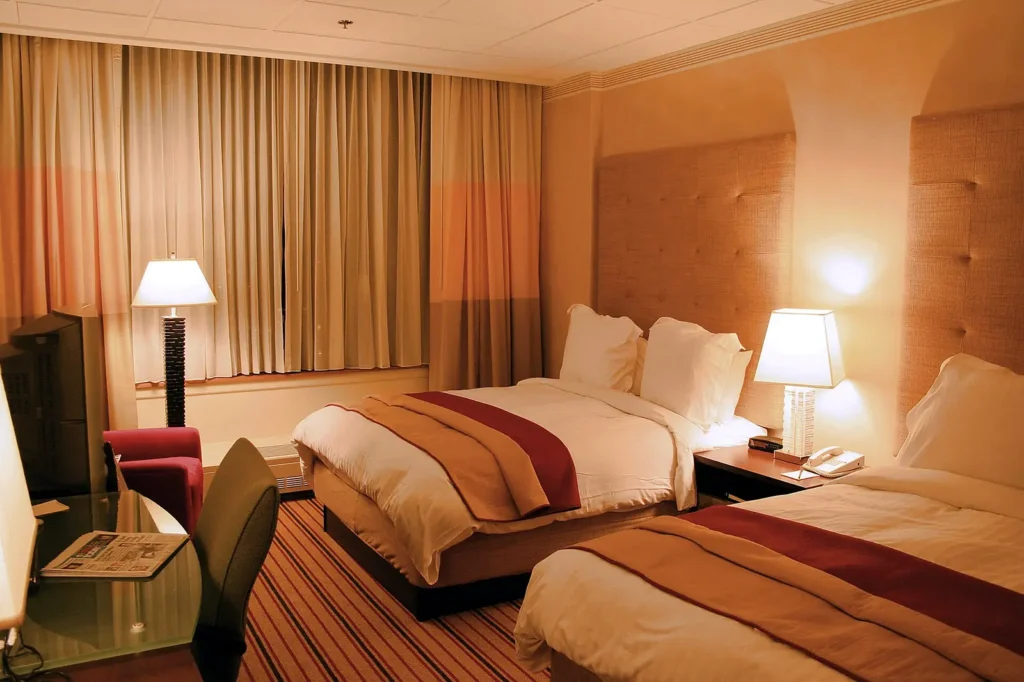
That’s why hospitality pest programs are built differently than restaurant or office programs: the pressure map covers four distinct zones — kitchen and laundry, pool and landscaping, dumpster corrals and loading areas, and the building fabric itself — and the reporting loop runs through housekeeping, the department that sees every room every day.
The four pressure zones of a Polk County property
Kitchens and laundry
German cockroaches treat a hotel kitchen and laundry room as one connected habitat — heat from dish machines and dryers, constant moisture, food residue and linen carts moving between floors. Breakfast bars are the quiet hotspot: juice machines and toaster stations get residential-grade cleaning but commercial-grade pressure.
Pool decks and landscaping
Irrigated planters, mulched beds and pavers around the pool are ant country — white-footed ants trail from landscaping into towel stations, vending alcoves and ground-floor rooms, and casual spraying just splits the colonies. Baiting the trails back to the source is the fix.
Dumpster corrals and loading areas
Rats and mice work the corral nightly and follow grease lines and utility penetrations toward the kitchen. Tight lids, clean pads, sealed penetrations and mapped exterior bait stations keep the pressure outside the wall line — exclusion first, trapping second.
Older exterior-corridor properties
The motel-era buildings along Memorial Boulevard and US 98 carry wood framing that faces the weather directly — railings, stair stringers, corridor ceilings, mansard trim. That’s termite exposure newer interior-corridor builds don’t have, and it belongs on an annual inspection rhythm, not a wait-for-swarmers plan.
The housekeeping-report-to-treatment loop
Every hotel already has its detection network on payroll: housekeeping sees every room, every day. The operators that run hospitality accounts build the program around that fact, and the loop looks like this:
- Flag at turnover — a housekeeper who spots droppings, live insects or ant trails logs the room and the evidence, on paper or in the property app. No diagnosis required, just the flag.
- Hold the room — the front desk pulls the room from inventory pending inspection. One night of lost revenue on one room beats a guest discovery every time.
- Operator inspects and treats — on the next route visit or as a call-out, the licensed operator inspects, treats what’s found and documents the work against the room number.
- Release with a record — the room returns to inventory with a dated entry in the property’s pest log: what was found, what was done, what to watch. Over a year, that log becomes the property’s pest map.
One scope note, stated plainly: bed bug remediation requires a specialized licensed provider and is outside what this dispatch line matches.
How getting matched works
Call the dispatch line or call the line
The 24/7 dispatch line takes the property ZIP and a few details. A real person answers — on the night-audit shift too.
Describe the property
Room count, interior or exterior corridors, food service on site, and what triggered the call — a guest report, a brand inspection coming, or program shopping.
Get connected with a licensed operator
You’re matched with an independent FDACS-licensed company that runs hospitality accounts in Polk County. Verify any operator’s license status yourself at aessearch.fdacs.gov before you sign.
The operator walks the property and quotes
Zone-by-zone walkthrough, a written cadence for kitchen, grounds, rooms and exterior, and the documentation format your brand or insurer expects. All pricing comes from the operator — never from this line.
Verify before you hire — any Florida pest control company’s license status, categories and discipline history is public at the FDACS license search. Check the operator you are matched with; the good ones expect it.
Guest report at checkout and a brand inspection next month?
One call reaches a licensed, local exterminator who covers your address — and a real person answers, 24/7.
Free to call. Free to get matched. The licensed operator gives the quote.
Kitchens change the program — and the paperwork
A property with a full restaurant, banquet kitchen or even a hot breakfast bar carries food-service obligations alongside hospitality ones: DBPR’s Division of Hotels and Restaurants licenses and inspects both sides of the house, and the food-service side runs on its own documentation standard — service tickets, an on-site logbook, device maps. The restaurant pest control page covers those inspection dynamics in depth; on a hotel account, a capable operator folds the kitchen cadence and the room-rotation cadence into one agreement, so neither side’s paperwork gaps at audit time.
Ask for proof: hospitality operators should be able to show documentation samples from existing hotel accounts — ask for them before you sign.
What a DBPR lodging inspection actually checks
Florida hotels and motels are licensed as public lodging establishments and inspected by DBPR’s Division of Hotels and Restaurants — unannounced, on a recurring cycle, with results published to the state’s public database. Vermin sits in the high-priority violation tier: evidence of rodents or live insect activity is the kind of finding that can trigger a follow-up inspection on a short clock, and in serious cases the division can order the affected area closed until the operator documents correction.
Two back-of-house rooms produce an outsized share of lodging write-ups. The laundry runs warm, humid and around the clock — dryer lint, floor drains and linen staged on the floor make it German-roach habitat that rarely gets the kitchen’s level of scrutiny. Employee breakrooms collect open food, microwaves and vending overflow behind a door inspectors absolutely open. A hospitality program worth signing covers both rooms on the same route as the kitchen, with the same monitor placements and the same log entries.
For hotel pest control in Lakeland and across Polk County, the practical standard is documentation parity: whatever the inspector can ask about, the binder can answer — device map, service tickets, corrective actions, and the operator’s license number ready to verify. Properties that run that standard treat the inspection as a formality instead of an event.
Polk County hotel pest questions, answered straight
Which pest shows up most in hotel guest reviews?
Roaches — usually German cockroaches that originate in the kitchen, breakfast bar or laundry and travel via carts, chutes and wall voids to guest floors. The review rarely says which floor the problem started on, which is why treating the guest room without treating the source zone just schedules the next review.
Why do ants keep appearing around the pool deck?
Because the colony isn’t on the pool deck — it’s in the irrigated landscaping, planters and mulch beds around it. White-footed and ghost ants trail from those nesting sites to water and food sources at towel stations and vending areas. Contact-spraying the trail can fragment colonies and multiply the problem; baiting back to the source is the professional fix.
How should an older exterior-corridor property think about termites?
As a standing line item. Motel-era buildings along Memorial Boulevard and US 98 expose wood framing — stairs, railings, corridor ceilings — directly to weather, which is termite-conducive in a way interior-corridor builds aren’t. Annual licensed inspection and a current treatment or bond arrangement is the rhythm; discovering activity during a renovation is the expensive version.
What should housekeeping do when they find pest evidence in a room?
Flag it, hold it, log it. The housekeeper logs the room and what was seen, the desk pulls the room from inventory, and the licensed operator inspects on route or as a call-out. The one-night revenue hold on a single room is the cheapest insurance in hospitality — far cheaper than a guest making the discovery.
Can pest service run without guests noticing?
Largely, yes — and hospitality operators plan for it. Common-area and kitchen work runs in off-peak windows, guest-floor work coordinates with housekeeping’s room-status board, and exterior work reads as groundskeeping. Scheduling and discretion practices are each operator’s call — raise it on the dispatch call so it shapes the match.
Does calling the dispatch line cost anything?
No. Free to call, free to get matched. The independent FDACS-licensed operator walks the property, sets the program and quotes directly with you — room count, zones and cadence drive the number, so a serious quote follows a site walk.
Reviews are forever. Pest problems don’t have to be.
One call reaches a licensed, local exterminator who covers your address — and a real person answers, 24/7.
Free to call. Free to get matched. The licensed operator gives the quote.
Disclosure
Lakeland Exterminators is a dispatch and matching service. We connect Polk County callers with FDACS-licensed structural pest control operators. We are not a licensed pest control operator and we do not perform inspections or treatments. We do not set prices, issue warranties, hold retreatment bonds, or carry pest control trade insurance. All pricing — including any inspection fee — scheduling, treatment plans, warranties, bonds and service terms are determined by the FDACS-licensed operator dispatched to your address under Chapter 482, Florida Statutes.
Same-day and 24/7 emergency services are subject to provider participation, location, technician availability, and demand. Availability is not guaranteed and may vary by market and appointment capacity.
License status of any operator you connect with is publicly verifiable at the FDACS license search.