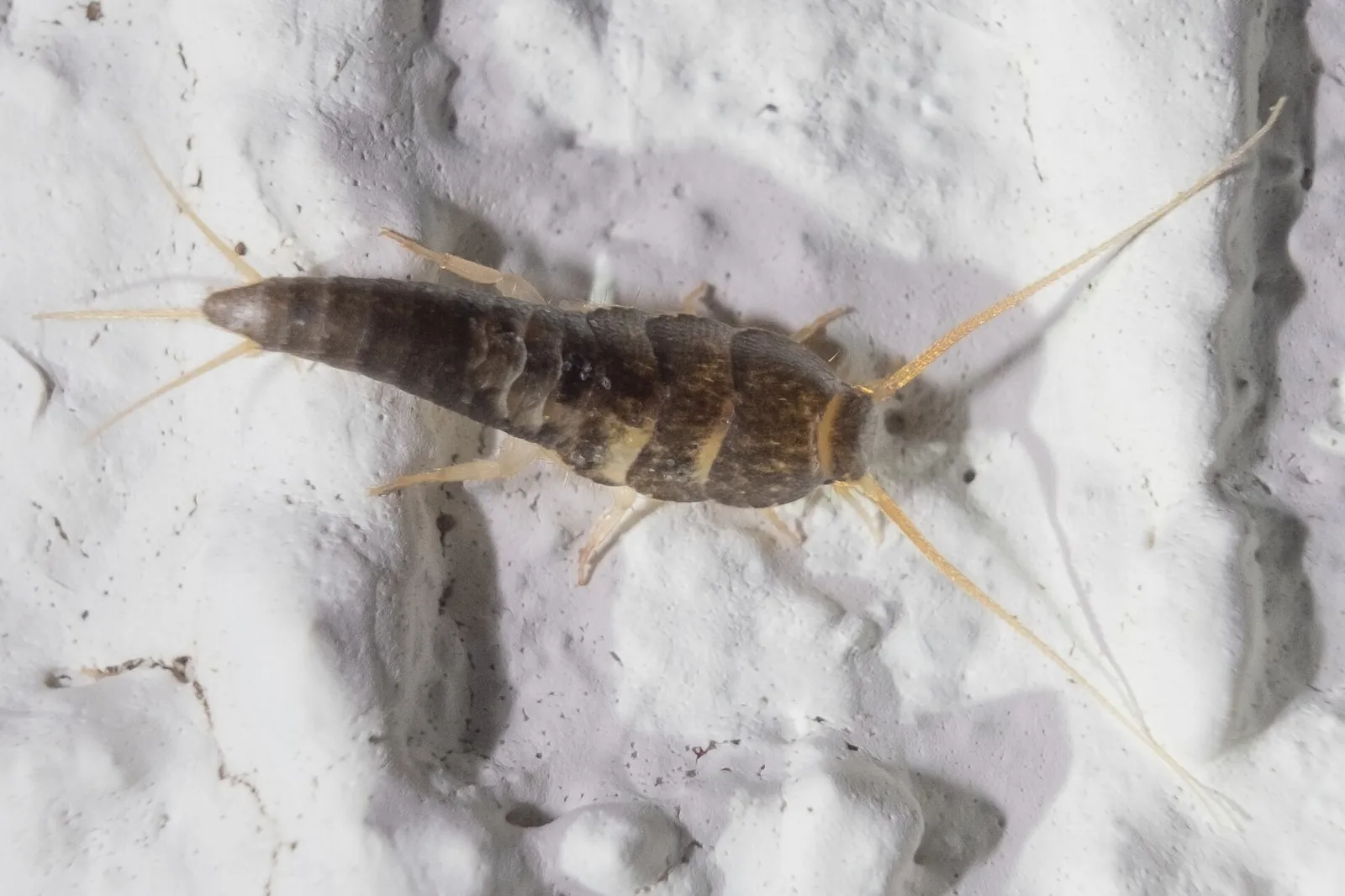
Silverfish in the bathroom, the bookshelf, the closet? Here is what is actually going on.
One call reaches a licensed, local exterminator who covers your address — and a real person answers, 24/7.
Talk to a licensed exterminator now
Call and we’ll connect you with a licensed, local exterminator who covers your address. It takes about two minutes, and a real person answers.
Free to call. Free to get matched. The licensed operator gives the quote.
24/7 line · A real person answers · Availability of same-day and emergency service depends on the provider.
First: confirm it is actually a silverfish
Three household insects get called “silverfish” in Lakeland, and the distinction changes the fix.
Silverfish
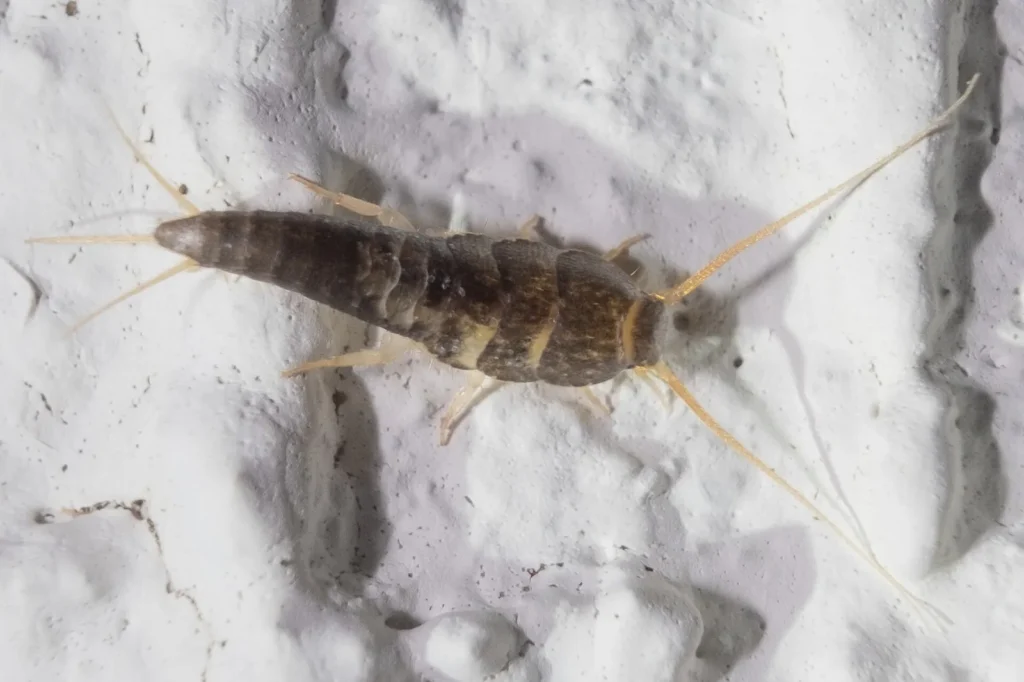
Lepisma saccharinum. Teardrop-shaped, silvery-gray, about half an inch, with three tail bristles. Wiggles side to side when it runs. Loves cool-to-warm damp spots: bathrooms, closets, garages, under sinks, cardboard storage. Eats starches — paper, glue, fabric sizing.
Firebrat
Same family, mottled gray-brown, and it prefers HOT damp spots — Florida attics, water heater closets, garage walls that bake all afternoon. If the sightings cluster around heat sources, you are looking at firebrats, and the harborage search moves up into the attic.
Not a silverfish
Tiny, pale, and crowding damp windowsills or new drywall? Those are usually booklice — a humidity indicator rather than a fabric-and-paper feeder. The moisture fix overlaps, but the treatment target is different, which is why the operator confirms the ID before quoting anything.
Why the ID matters
Silverfish and firebrats are long-haul residents — they live two to eight years, molt their whole lives, and a population you are seeing weekly took months to build. The ID plus the moisture map tells the operator where the population actually lives, which is what a real treatment plan targets.
Seeing them weekly? That is a population, not a coincidence.
One call reaches a licensed, local exterminator who covers your address — and a real person answers, 24/7.
Free to call. Free to get matched. The licensed operator gives the quote.
Why Lakeland is silverfish heaven
Humidity is the whole story
Silverfish need roughly 75 percent-plus relative humidity to thrive, and Polk County delivers it most of the year — outside and, in plenty of homes, inside. Bathrooms without exhaust fans, closets on exterior walls, garages, laundry rooms and under-sink cabinets all hold micro-climates silverfish colonize. Lakeland’s older housing stock — Dixieland, Lake Morton, the Garden District — adds two multipliers: decades of accumulated paper storage and original construction that breathes moisture. The fix always has two halves: treat the population, and dry out the micro-climate so the next one cannot build.
What they actually damage
- Books and documents — they graze the starch in bindings, glue and paper surfaces, leaving irregular scraped patches and notched edges. Boxed books in a garage are a buffet.
- Wallpaper and photos — the paste behind wallpaper and the gelatin in older photographs are both on the menu.
- Fabric — starched cotton and linen, and anything with sizing. (Wool damage with sand-like droppings points to clothes moths instead — a different accepted target the operator can also confirm.)
- Pantry starches — flour, oats, cereal in paper packaging. Contamination, more than consumption, is the issue.
What actually works (and what does not)
Squashing the one in the bathtub does nothing about the population; neither does a repellent aerosol from the grocery store, which mostly scatters activity to new rooms. The approach licensed operators use in Polk County pairs three things: targeted harborage treatment (crack-and-crevice work in the damp micro-climates, often with dusts in wall voids and attics), monitoring (sticky traps to confirm where the population lives and whether it is silverfish or firebrats), and moisture correction — exhaust fans that actually vent, dehumidification in the worst rooms, and getting paper out of cardboard and into sealed bins. Ask the operator which of the three your quote includes; the good ones include all three.
The Lakeland silverfish calendar
| Season | What happens | What you will notice |
|---|---|---|
| June – September | Rainy-season humidity peak | Sightings spike in bathrooms and garages; populations grow fastest. |
| October – November | First dry-downs | Activity concentrates in the dampest rooms as the rest of the house dries. |
| December – February | Heating season | Firebrat activity holds near water heaters and warm interior walls. |
| March – May | Pre-rain dry season | The quietest window — and the smartest time to fix exhaust fans and storage before the rains return. |
How getting matched works
Call the dispatch line
The line routes by ZIP to operators covering your part of Polk County — Lakeland, Winter Haven and the surrounding towns.
A real person answers, 24/7
Describe where you are seeing them and when — bathrooms at night, garage boxes, attic edges. Location is the diagnostic.
An FDACS-licensed operator takes it
The call routes to an independent, licensed and insured Polk County operator. Verify any company at the FDACS license search — thirty seconds, free, and honest companies expect it.
The operator inspects and quotes
Pricing, scheduling and the treatment plan come from the licensed operator — never from us. You owe nothing until you accept their quote.
Straight up: Lakeland Exterminators is a dispatch and matching service, not a licensed pest control operator. Related reading: the complete Lakeland pest guide, roach control (the other humidity pest), and what drives pest control pricing.
Silverfish questions, answered straight
Are silverfish harmful to people or pets?
No — they do not bite, sting, or carry disease. The harm is to belongings: books, documents, photos, wallpaper, fabrics and pantry starches. The real signal value of silverfish is what they say about humidity — a thriving population means a moisture condition that also invites roaches, mold and, in the worst cases, the moist wood that termites and carpenter ants exploit.
Why do I only see them in the bathroom at night?
They are nocturnal and moisture-seeking, so the bathroom after dark is their commute. The population itself usually lives elsewhere — wall voids, the closet next door, boxed storage, or the attic if firebrats. That is why the one-room spray never solves it and why operators set monitors before treating.
What does silverfish treatment cost in Lakeland?
Set by the licensed operator after inspection — the size of the harborage area, attic involvement and whether moisture correction is needed all move the number. We do not set or publish prices. The Polk County cost guide explains what drives each category.
Can I handle silverfish myself?
Small, recent problems sometimes — sealed storage bins, a working exhaust fan, a dehumidifier and sticky traps genuinely help. What DIY cannot do well is treat wall voids and attic harborage where an established population lives, and repellent sprays make things worse by scattering it. Seeing them weekly across multiple rooms is the line where professional harborage treatment earns its keep. The DIY guide is honest about both sides.
Are the operators this line routes to actually licensed?
Yes — structural pest control in Florida legally requires an FDACS license under Chapter 482. Every operator in the network holds the categories their work requires, and you can verify any company at the FDACS license search before you sign anything.
Protect the books, the photos and the pantry — make the call.
Free to call. Free to get matched. The licensed operator gives the quote.
Free to call. Free to get matched. The licensed operator gives the quote.
Related Polk County occasional-invader reading
The other humidity-driven indoor pests that turn up in the same closets, garages and bathrooms as silverfish.
- Clothes moths in Lakeland closets and attics — humidity, wool and the early signs before the damage shows
- Crickets in the house in Lakeland — why the chirping starts mid-summer, and how to stop it
- House cricket control in Lakeland, FL — harborage, entry points and the exclusion work that ends it
Disclosure
Lakeland Exterminators is a dispatch and matching service. We connect Polk County callers with FDACS-licensed structural pest control operators serving Lakeland, Winter Haven and the surrounding Polk County area. We are not a licensed pest control operator. We do not perform pest control work, set prices, issue warranties, or carry pest control trade insurance. All pricing, scheduling, treatment plans, warranties and service terms are determined by the FDACS-licensed operator dispatched to your address under Chapter 482, Florida Statutes.
Same-day and 24/7 emergency services are subject to provider participation, location, technician availability, and demand. Availability is not guaranteed and may vary by market and appointment capacity.
License status of any operator you connect with is publicly verifiable at the FDACS license search.