A mobile home isn’t a small house. Its pest problems start underneath.
One call reaches a licensed, local exterminator who covers your address — and a real person answers, 24/7.
Talk to a licensed exterminator now
Call and we’ll connect you with a licensed, local exterminator who covers your address. It takes about two minutes, and a real person answers.
Free to call. Free to get matched. The licensed operator sets any service fee and quote.
24/7 line · A real person answers · Availability of same-day and emergency service depends on the provider.
Why a manufactured home has its own pest anatomy
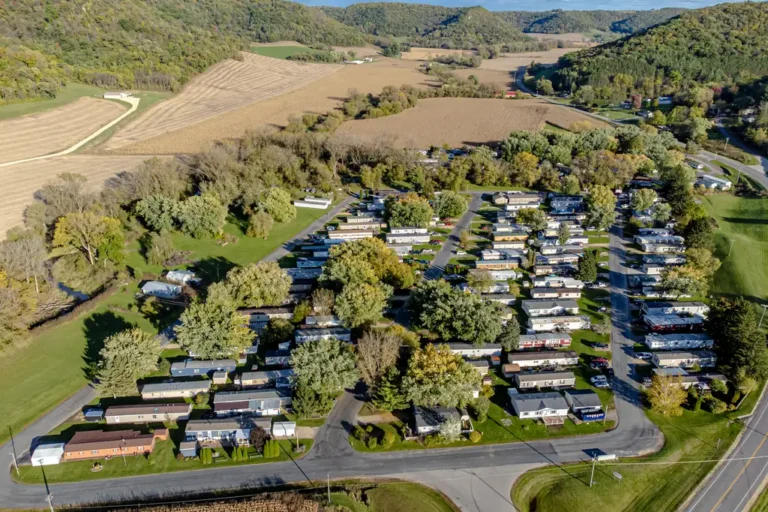
Polk County carries one of Florida’s largest concentrations of manufactured-home communities — dozens of 55+ parks and all-ages communities around Lakeland, Winter Haven and the highway corridors between them. That’s a lot of homes built on a chassis instead of a slab, and the difference matters more to pests than it does to people. A site-built home meets the ground with a sealed concrete edge. A manufactured home meets the ground with a skirt, an air gap, a fabric underbelly and a grid of piers — four different invitations, each with its own species list.
The skirting perimeter
Vinyl skirting is a weather screen, not a seal. Panels shift with settling, access doors sag, and the bottom edge rarely meets grade evenly all the way around. A gap the width of your thumb admits a rat; half that admits a house mouse. Once inside the skirt, pests own the entire undercarriage.
The underbelly
The vapor barrier — the “belly board” — sags and tears wherever a plumber has been. Torn sections spill insulation, and that insulation is premium nesting material: warm, dry, hidden and directly beneath your floor. Scratching under the hallway at night almost always traces back to a belly tear.
Penetrations and pier voids
Water lines, drain stacks, HVAC ducts and electrical chases all pass through the floor. Every penetration cut oversize is a doorway from the underbelly into the kitchen cabinet or the water heater closet. Below, tie-down anchors and pier voids harbor ant colonies and give termites soil contact.
The entry map an operator walks on a mobile home
Skirting line
Panel-to-panel gaps, the access door fit, dryer vent terminations, and anywhere the bottom rail has pulled away from grade. This is the outer wall of the pest problem — if the skirt is open, everything behind it is exposed.
Underbelly and vapor barrier
Tears, sagging sections, insulation fall-out, rub marks and droppings along duct runs. Rodents nest in the belly and travel the duct chases like hallways from one end of the home to the other.
Floor and wall penetrations
Under-sink supply lines, tub drain boxes, the water heater closet and the AC chase. These are the last doors between the undercarriage and your living space — and the ones foam-only sealing jobs always lose.
Roofline and roof-over seams
Older units with a roof-over carry a second cavity above the original ceiling. Roof rats reach it from fences, carports and adjacent trees, entering at seams, J-channel and gable trim.
One risk deserves its own sentence: piers do not protect a manufactured home from termites. Eastern subterranean termites build mud tubes straight up pier faces and tie-down anchors to reach the frame and floor joists, and because the tubes are behind the skirt, nobody sees them without a flashlight and a crawl. If you’ve seen mud lines on a pier or soft spots in the floor, start with the eastern subterranean termite guide — then get a licensed set of eyes underneath.
Scratching under the floor? Ants trailing from the cabinet base?
One call reaches a licensed, local exterminator who covers your address — and a real person answers, 24/7.
Free to call. Free to get matched. The licensed operator sets any service fee and quote.
In a park community: whose job is the pest problem?
Most Lakeland-area manufactured-home communities work on a land-lease model — you own the home, the park owns the lot. That split creates a genuinely confusing question: when rats are coming from the retention area behind your row, or ants are trailing in from the common-area irrigation, who’s responsible for treatment?
The honest answer is that it depends on your lot agreement and the park’s own service contracts, and the only reliable way to find out is to ask the park operator directly before assuming anything. Some communities carry a contracted operator for common areas; almost none cover the individual home structure. In practice, treatment of your home — skirt to roof — is nearly always the homeowner’s arrangement, made directly with a licensed company.
When you make that call, go in prepared. The questions-to-ask guide covers what to confirm before anyone starts work — license category, what the service covers, what’s excluded, and how re-treatment is handled — and it applies double when a park office and a homeowner are both in the conversation.
How getting matched works
Call the dispatch line or call
The 24/7 dispatch line covers Lakeland, Winter Haven and all of Polk County. A real person answers — describe what you’re seeing and where the home sits.
We match by job and location
Manufactured-home work is routed to independent FDACS-licensed operators who actually service mobile homes — companies comfortable opening skirting, crawling underbellies and treating pier lines.
The operator contacts you
The licensed company inspects the home, explains findings, and quotes its own fee directly to you. We never set, mark up or publish prices.
You decide — no obligation
Before anyone starts work, verify the company’s license status, categories and discipline history yourself at the FDACS license search: aessearch.fdacs.gov. It’s public and takes two minutes.
What moves the fee on a manufactured home (we never set prices)
Every independent operator prices their own work. On mobile homes specifically, these are the levers that make one quote different from another:
- Underbelly access and condition — a clean, intact belly is a fast inspection; a torn, sagging one with soaked insulation means more crawl time and often repair scope before treatment holds.
- Skirting length and repair scope — sealing a double-wide’s full perimeter with hardware cloth and proper fasteners is a different job than patching two panels.
- Species and extent — a mouse population and an established Norway rat burrow network under the home carry very different trap-out timelines and follow-up visits.
- Termite treatment path — pier-line and perimeter soil treatment versus bait stations, and how many piers and anchors the structure carries.
- One-time correction vs recurring program — many operators price exclusion and initial knockdown separately from an ongoing quarterly service.
- Sanitation add-ons — insulation replacement and droppings cleanup in the belly is usually quoted as its own line item, not folded into pest work.
Ask each operator to walk you through which of these applies to your home. The good ones will do it unprompted — fee logic that can be explained is fee logic you can trust.
Mobile home pest questions, answered straight
Is pest control different for a mobile home than a site-built house?
Structurally, yes. The pressure points are the skirting perimeter, the underbelly, floor penetrations and pier lines — zones a slab home doesn’t have. The chemistry is similar; the inspection route and the exclusion work are not. That’s why the dispatch line routes manufactured homes to operators who work them regularly.
Who handles pest control in a Lakeland park community — me or park management?
It depends on your lot agreement. Some parks contract an operator for common areas, but the home structure itself is nearly always the homeowner’s responsibility. Ask the park operator what the agreement covers before assuming — then arrange treatment of the home directly with a licensed company.
Can subterranean termites really reach a home sitting on piers?
Yes. Eastern subterranean termites build mud tubes up pier faces and tie-down anchors to reach the steel frame, floor joists and subfloor. The air gap slows them down; it does not stop them. Mud lines on piers behind the skirting are the classic evidence.
Why do rodents keep coming back after I set traps?
Because traps address the animals, not the openings. If the skirting gaps and belly tears stay open, the undercarriage keeps re-filling from outside. The sequence that holds is trap-out plus sealing — skirting line, belly repairs and floor penetrations — verified on a follow-up visit.
Will the operator actually go under the home?
A thorough one will — through the skirting access panels, with a light, checking piers, anchors, the belly and duct runs. If a company quotes a manufactured home without looking underneath, that’s a reason to keep shopping.
Does the dispatch service charge me anything?
No. Calling and getting matched are free. Lakeland Exterminators is a dispatch and referral service — any inspection fee, treatment quote, warranty or service term comes from the independent FDACS-licensed operator you’re connected with, and you deal with them directly.
The skirt hides the problem until it’s expensive.
One call reaches a licensed, local exterminator who covers your address — and a real person answers, 24/7.
Free to call. Free to get matched. The licensed operator sets any service fee and quote.
Disclosure
Lakeland Exterminators is a dispatch and matching service. We connect Polk County callers with FDACS-licensed structural pest control operators. We are not a licensed pest control operator and we do not perform inspections or treatments. We do not set prices, issue warranties, hold retreatment bonds, or carry pest control trade insurance. All pricing — including any inspection fee — scheduling, treatment plans, warranties, bonds and service terms are determined by the FDACS-licensed operator dispatched to your address under Chapter 482, Florida Statutes.
Same-day and 24/7 emergency services are subject to provider participation, location, technician availability, and demand. Availability is not guaranteed and may vary by market and appointment capacity.
License status of any operator you connect with is publicly verifiable at the FDACS license search: aessearch.fdacs.gov.