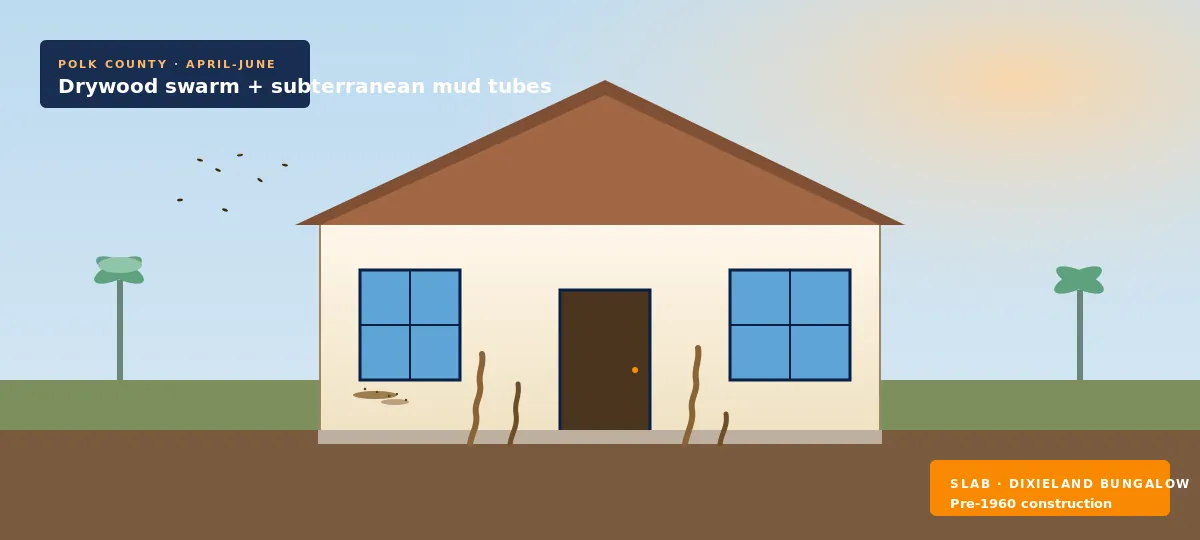
Mud tubes on the slab? Sentricon is one of the two ways a Lakeland operator goes after the colony.
One call reaches a licensed, local exterminator who covers your address — and a real person answers, 24/7.
Talk to a licensed exterminator now
Call and we’ll connect you with a licensed, local exterminator who covers your address. It takes about two minutes, and a real person answers.
Free to call. Free to get matched. The licensed operator gives the quote.
24/7 line · A real person answers · Availability of same-day and emergency service depends on the provider.
What Sentricon actually is, in plain English
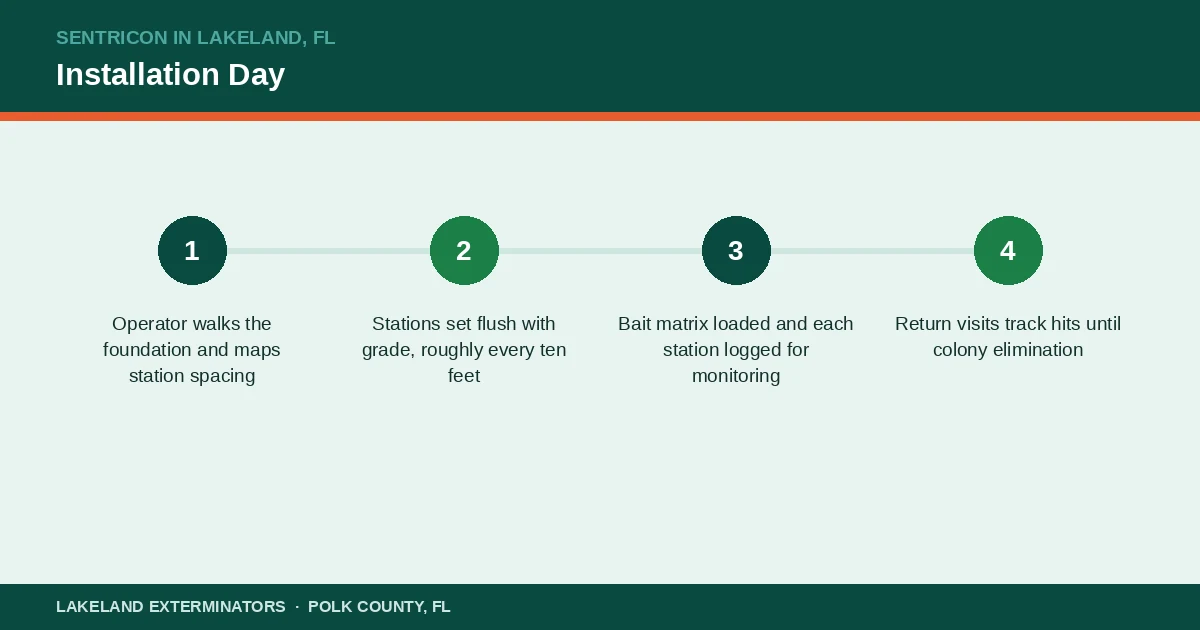
Sentricon is a termite baiting system made by Corteva. A certified operator installs plastic stations in the soil around the perimeter of your house — roughly every ten feet, flush with grade — and loads each one with a cellulose bait matrix treated with noviflumuron, an insect growth regulator. Foraging subterranean termites find the bait the same way they find your fascia board: by wandering into it. They eat it, they carry it home, they feed it to nestmates, and the colony stops being able to molt. Over time it collapses.
That’s the important distinction from a liquid termiticide. A liquid soil treatment creates a treated zone in the soil around the structure — a defended perimeter. Baiting goes after the colony. Neither one is universally “the right one”; they solve the problem from different directions, and a licensed operator picks based on your slab, your landscaping, your soil and whether you’ve got active infestation or you’re playing defense. We lay the two side by side on Sentricon vs. Termidor in Lakeland.
One legal note worth knowing before you go shopping online: you cannot install Sentricon yourself. The system and its bait are restricted to certified operators licensed by FDACS under Chapter 482, Florida Statutes. If you find someone selling you the stations out of a truck, that’s a problem, not a bargain.
What the licensed operator does on installation day
We don’t install anything — here’s what the operator will walk you through when they’re on your property.
Perimeter inspection
They walk the foundation and map it: slab penetrations, plumbing entries, attached porches and lanais, pool decks, downspouts, irrigation heads, ornamental beds. Anything that changes where a station can go, or where termites are likely already foraging.
Station placement
Stations go into the soil on roughly a ten-foot grid around the structure, set flush with grade so the mower goes right over them. Placement flexes around driveways, patios and tree roots — the grid is a guide, not a religion.
Bait load and logging
Each station gets the noviflumuron bait matrix, and each one is logged and typically GPS-marked so it can be found again on every monitoring visit — including three years from now, after you’ve re-landscaped.
Paperwork and monitoring schedule
The operator files the FDACS Notice of Treatment with the Bureau of Entomology and Pest Control, enrolls you in whatever bond or warranty they offer, and sets the monitoring cadence — commonly quarterly or twice a year.
Installation itself is usually a short job — often an hour or two on a typical Lakeland lot. Nobody drills your slab, nobody trenches your beds, and nothing gets sprayed inside the house. That’s a big part of why homeowners in HOA neighborhoods and homes with mature landscaping ask about it by name.
Want a licensed operator to look at your foundation?
One call reaches a licensed, local exterminator who covers your address — and a real person answers, 24/7.
Talk to a licensed exterminator now
Call and we’ll connect you with a licensed, local exterminator who covers your address. It takes about two minutes, and a real person answers.
Free to call. Free to get matched. The licensed operator gives the quote.
The timeline — what “colony elimination” actually looks like
Baiting is not a same-afternoon fix, and any operator who implies otherwise is overselling. Here’s the honest shape of it:
| Stage | Typical window | What’s happening |
|---|---|---|
| Install | Day one, 1–2 hours | Stations go in the soil, bait is loaded, everything is logged and the Notice of Treatment is filed. |
| Interception | Days to weeks | Foraging workers find a station. Subterranean colonies routinely forage well over a hundred feet from the nest, so they’re already crossing your yard — the stations sit in the path. |
| Colony decline | Roughly 2 weeks to 6 months from first hit | Workers carry noviflumuron back and share it. The colony can’t molt, worker numbers crash, and the nest fails. The operator tracks station activity visit to visit. |
| Ongoing monitoring | Quarterly or twice yearly, indefinitely | Stations are checked, bait replenished as consumed, damaged stations replaced. This is the part that keeps the bond alive. |
Two things to sit with. One: the clock starts at the first station hit, not at installation — and that’s driven by termite behavior, not by how much you paid. Two: baiting only works if somebody keeps showing up. Skip the monitoring visits and the stations become plastic yard decorations. For how this compares against other termite methods, see how long termite treatment takes in Lakeland.
Where Sentricon tends to fit a Lakeland house
Slabs you don’t want drilled
Attached lanais, screened pool decks, Florida rooms and tiled patios all sit on slab that a liquid treatment may need drilled to reach. Across South Lakeland, Highland City and Christina, that’s most of the housing stock. Bait stations go in the dirt outside, not through your pool deck.
Mature landscaping
Dixieland, the Garden District, Cleveland Heights and the streets around Lake Hollingsworth are full of homes with forty-year-old plantings hugging the foundation. Trenching means demolishing them. Stations don’t.
Active infestation, not just insurance
When there’s a live colony — mud tubes, damaged wood, a spring swarm inside — the operator may want colony elimination rather than a defended perimeter. That’s baiting’s home turf. Eastern subterranean termite in Polk County →
Houses you plan to keep
The bond mechanic rewards long holds: keep the monitoring current and the coverage stays current. If you’re flipping in eight months, the math is different and you should say so out loud when you get quoted. Is an annual termite bond worth it? →
And where it doesn’t fit: drywood termites. Sentricon is a soil-and-colony system for subterranean species. If what you’re finding is little six-sided pellets under a window sill rather than mud tubes on the block, you’re in a different conversation entirely — start with no-tent termite treatment in Lakeland or drywood termite tenting.
Why Polk County soil makes this a real conversation
Central Florida’s sandy, well-drained soils are easy digging for a subterranean colony, and the water table and summer storm cycle keep them working year-round. Swarm season is the tell: eastern subterranean termites in Polk County typically swarm February through May, usually in the day or two after a warm rain, and the Formosan subterranean termite — the aggressive one, with the much bigger colonies — tends to swarm on humid late-spring evenings and will come to porch lights in clouds.
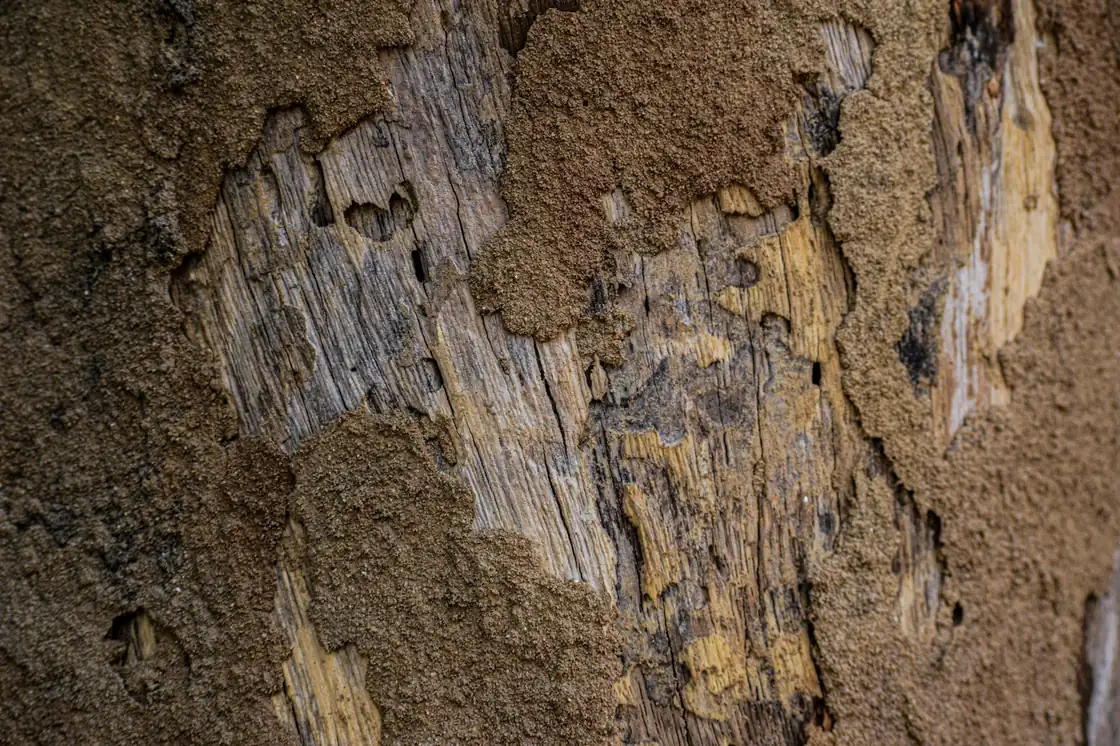
Add the Chain of Lakes humidity, irrigation running against foundations, mulch beds stacked over the slab edge, and the old citrus-grove tree lines out toward Kathleen and the I-4 corridor — and you get steady, unglamorous termite pressure that doesn’t care what year your house was built. Homes from the 1980s and newer sit on monolithic slabs where expansion joints and plumbing penetrations are the highway. Older frame homes give them more to chew once they’re in. Different route, same destination.
If you want the full inspection-and-treatment picture across every termite type in Polk County, our termite control in Lakeland hub is the place to start, and Formosan subterranean termite in Polk County covers the species that gets the most urgent responses.
What operators typically quote — and what to read in the bond
We don’t set prices and we never quote them. What we’ll do is tell you what to actually look at on the proposal, because the sticker number is the least interesting part of a baiting contract.
- Install vs. annual renewal. Baiting is a two-number product: the up-front installation and the recurring monitoring/renewal. A low install with a steep renewal is a different deal than the reverse. Ask for both, in writing, before you compare anything.
- What the bond covers. “Retreat only” means they come back and re-treat. “Retreat and repair” means they also cover new termite damage — usually up to a stated cap. Those are very different products with similar-sounding names.
- The damage cap and the exclusions. Read what’s excluded. Pre-existing damage almost always is. So is damage from a species the bond doesn’t cover.
- Monitoring cadence. Quarterly and twice-yearly both exist. More visits usually means more money and faster detection.
- What voids it. Grading changes, new mulch depth, irrigation soaking the stations, a landscaper ripping one out — ask what breaks your coverage before a landscaper does it for you.
- Transferability. If you sell, does the bond move with the house? For resale in Polk County, that’s worth real money.
For the broader cost picture, see termite treatment cost in Lakeland. Whatever the licensed operator quotes, that’s their number, set after they’ve walked your foundation — not ours.
Get a Sentricon-certified operator on your address
One call reaches a licensed, local exterminator who covers your address — and a real person answers, 24/7.
Talk to a licensed exterminator now
Call and we’ll connect you with a licensed, local exterminator who covers your address. It takes about two minutes, and a real person answers.
Free to call. Free to get matched. The licensed operator gives the quote.
Sentricon questions, answered straight
How long until Sentricon eliminates a colony?
Commonly two weeks to six months from the first station hit — not from installation day. Workers have to find the bait, feed on it, and carry it back before the colony starts failing. The operator monitors station activity and confirms decline over successive visits. Anyone promising a specific date is guessing about termite behavior.
Will the stations attract termites to my house?
No. Subterranean colonies are already foraging across a wide radius — well over a hundred feet from the nest — which means they’re crossing your yard whether the stations are there or not. The stations intercept foraging that’s already happening; they don’t create it.
Can I buy and install Sentricon myself?
No. In Florida the system and its bait are restricted to certified operators licensed under Chapter 482, Florida Statutes. Homeowners can’t legally buy or install it. Verify any operator’s license yourself at the FDACS license search before work starts.
How long does the system last?
Indefinitely, as long as the bond and monitoring are maintained. Bait is replenished as it’s consumed, and individual stations get replaced when a mower, a landscaper or a few Florida summers do them in. Stop the monitoring and you’ve stopped the system — that’s the honest trade.
Does Sentricon work on drywood termites?
No. It’s a soil-based system aimed at subterranean colonies. Drywood termites live entirely inside the wood with no soil contact, so there’s nothing for a ground station to intercept. Pellets under a window sill point to drywood — see no-tent termite treatment or tenting instead.
Is baiting better than a liquid treatment?
Neither one wins in the abstract — they work differently. Baiting targets the colony over months; a liquid termiticide creates a treated zone in the soil that works immediately at the perimeter. Slab type, landscaping, whether there’s active infestation, and how long you’re keeping the house all push the decision. The side-by-side is on Sentricon vs. Termidor in Lakeland.
Do the stations bother my lawn, pets or kids?
Stations sit flush with grade and are locked. Ask the operator directly about placement around play areas and pet runs, and about what to tell your lawn crew so nobody mows one out of the ground. Any product-specific safety question belongs to the licensed operator and the product label, not to us — we’re a dispatch service.
How do I find a Sentricon installer in Polk County?
One call reaches a licensed, local exterminator who covers your address — and a real person answers, 24/7.
Disclosure
Lakeland Exterminators is a dispatch and matching service. We connect Polk County callers with FDACS-licensed pest control operators. We are not a licensed pest control operator. We do not perform treatment, set prices, issue warranties, hold bonds, or carry pest control trade insurance. All pricing, scheduling, treatment plans, warranties and service terms are determined by the FDACS-licensed operator dispatched to your address under Chapter 482, Florida Statutes.
Same-day and 24/7 emergency services are subject to provider participation, location, technician availability, and demand. Availability is not guaranteed and may vary by market and appointment capacity.
License status of any operator you connect with is publicly verifiable at the FDACS license search. Sentricon is a registered trademark of Corteva Agriscience. We describe it factually as a product that licensed operators install; we do not sell, endorse, apply or profit from any product, and we have no affiliation with Corteva.