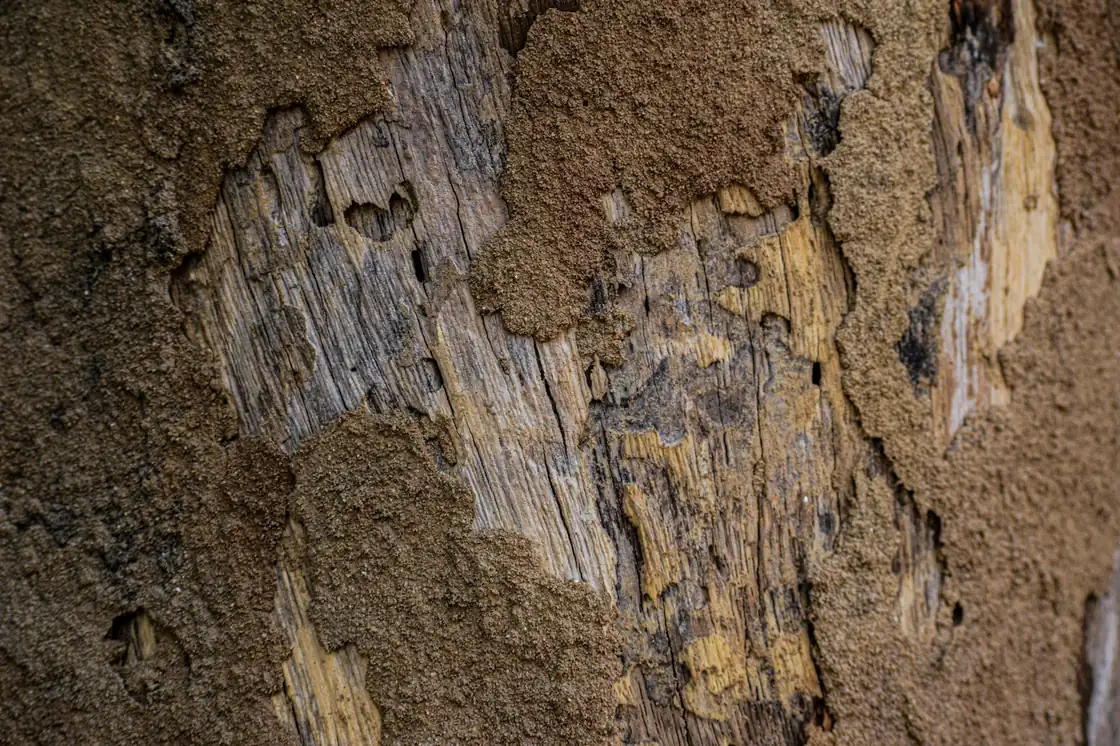
The water’s gone. The pest clock just started. Here’s the 30-day recovery order.
One call reaches a licensed, local exterminator who covers your address — and a real person answers, 24/7.
Talk to a licensed exterminator now
Call and we’ll connect you with a licensed, local exterminator who covers your address. It takes about two minutes, and a real person answers.
Free to get matched. The licensed operator gives the quote.
24/7 line · A real person answers · Availability of same-day and emergency service depends on the provider.
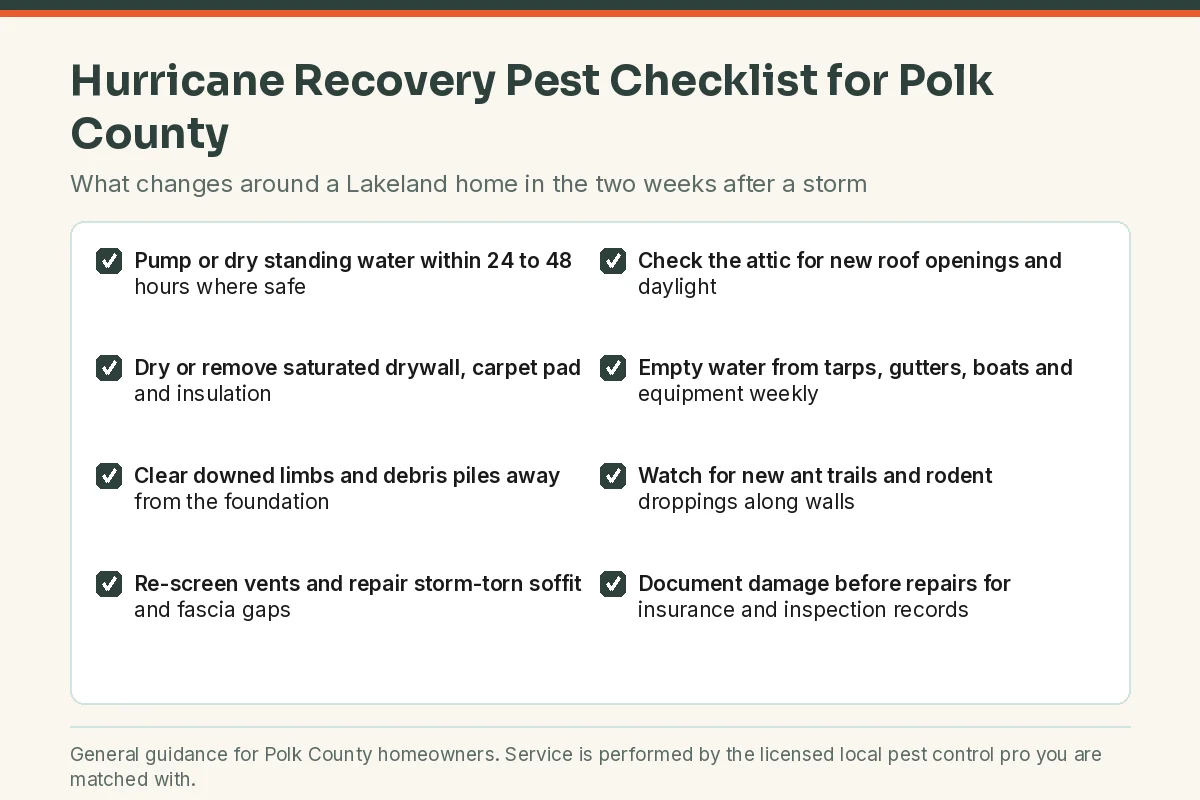
The post-storm pest sequence, in order
After every named storm that affects Polk County, pest pressure changes in a repeatable pattern. Handle it in this order:
| Priority | Action | Timing |
|---|---|---|
| 1 | Remove wet wood and standing water; ventilate damp areas to stop wood-decay fungi from establishing. | Immediately |
| 2 | Rodent inspection and re-exclusion — displaced mice and rats are seeking dry shelter now. | ~14 days |
| 3 | WDO inspection on any moisture-damaged structure — wet framing is a termite and fungus magnet. | ~30 days |
| Ongoing | Mosquito surge is handled by the county — see the mosquito section below for who to contact. | 5–10 days |
Wet wood & wood-decay fungi — the immediate job
The most time-sensitive post-storm threat isn’t an insect at all — it’s moisture. Wood-decay fungi can establish in moisture-damaged structural lumber within 14–30 days if the wood stays wet. That soft, damp framing then becomes exactly what subterranean and Formosan termites are drawn to. The recovery move is fast and physical: remove saturated wood and materials, pull standing water, run fans and dehumidification, and get damp areas ventilated before fungi and termites move in. Document any framing you can’t immediately dry — it becomes the target list for the 30-day WDO inspection.
Rodent displacement — the 14-day window
Why they come in now
Flooding drives rodents out of yards, groves, burrows, and drainage systems into the nearest dry structure. Post-storm is peak rodent-migration season in Polk County — and a home with new storm-opened gaps is an easy target.
What the operator does
Inspects for new entry points (storm damage opens fresh gaps), traps interior activity, and re-seals exclusion barriers. Storms routinely break the dryer-vent dampers, door seals, and soffit gaps you sealed before — so re-exclusion is the core of post-storm rodent work.
If you’re seeing droppings, scratching, or gnaw marks in the two weeks after a storm, treat it as the expected pattern and get an inspection — details on the rodent control and exclusion pages.
Termite pressure & the 30-day WDO inspection
Sudden heavy rain after a warm dry spell can trigger termite swarms, and — more importantly — storm moisture makes framing far more attractive to subterranean and Formosan termites. Any structure that took water intrusion should get a WDO (wood-destroying organism) inspection around the 30-day mark, once you know which areas stayed damp. A licensed operator checks the wet zones for early termite activity and fungal decay before it becomes structural. This is also the point to decide on treatment or a bond if activity turns up — see termite treatment in Lakeland.
The mosquito surge — who to call
Within 5–10 days of storm flooding, floodwater mosquito species emerge across Polk County in large numbers. This is a community-scale response: the Polk County Mosquito Control District conducts county-funded area larviciding and truck spraying during post-storm outbreaks — contact the District directly for neighborhood mosquito response. Structural pest operators focus on the pests you exclude and treat at the building: rodents, termites, ants, and roaches displaced by the storm.
Post-storm damage to inspect? Get a licensed operator on it.
One call reaches a licensed, local exterminator who covers your address — and a real person answers, 24/7.
Free to get matched. The licensed operator gives the quote.
Post-storm pest FAQs
What’s the first pest priority after a hurricane?
Why do rodents show up about two weeks after a storm?
When should I get a termite inspection after a storm?
Who handles the post-storm mosquitoes?
Are you the pest control company?
Related Polk County pages
Disclosure
Lakeland Exterminators is a dispatch and matching service. We connect Polk County callers with FDACS-licensed structural pest control operators. We are not a licensed pest control operator. We do not perform treatment, set prices, issue warranties, or carry pest control trade insurance. All pricing, scheduling, treatment plans, and service terms are determined by the FDACS-licensed operator dispatched to your address under Chapter 482, Florida Statutes.
Same-day and 24/7 emergency services are subject to provider participation, location, technician availability, and demand. Availability is not guaranteed and may vary by market and appointment capacity.
License status of any operator you connect with is publicly verifiable at the FDACS license search.