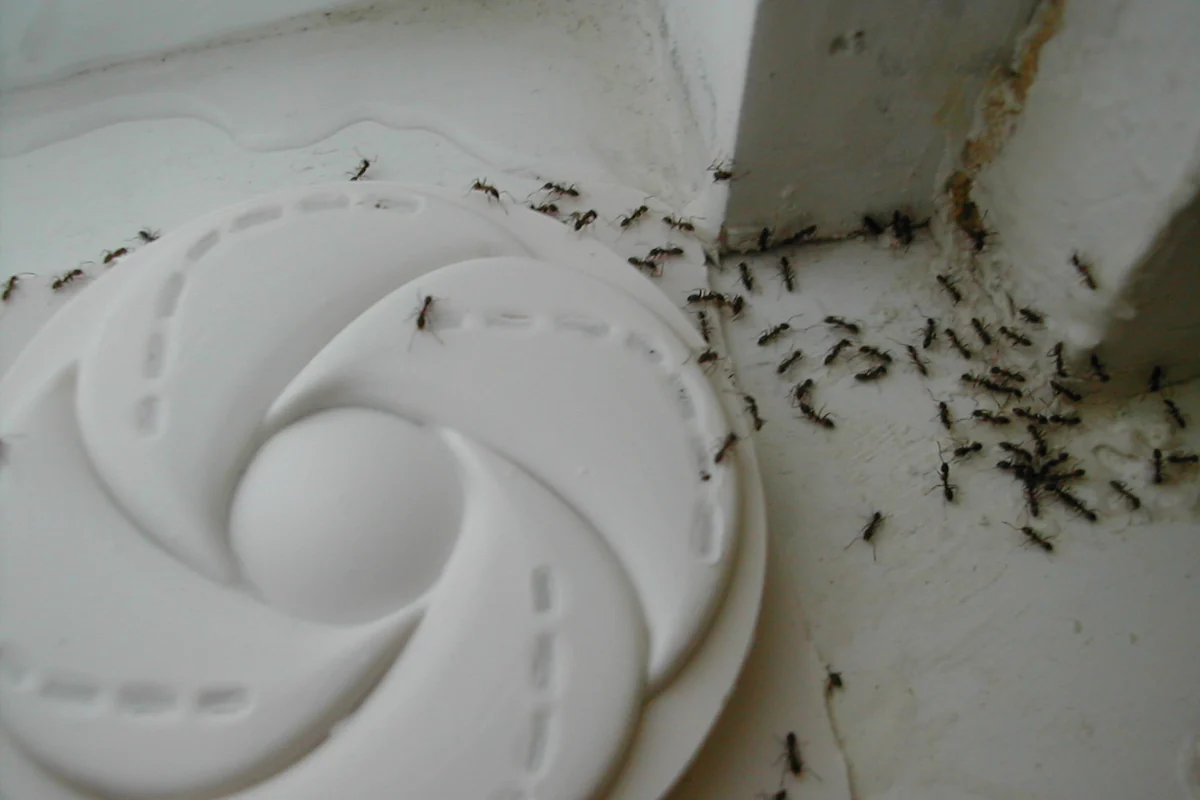
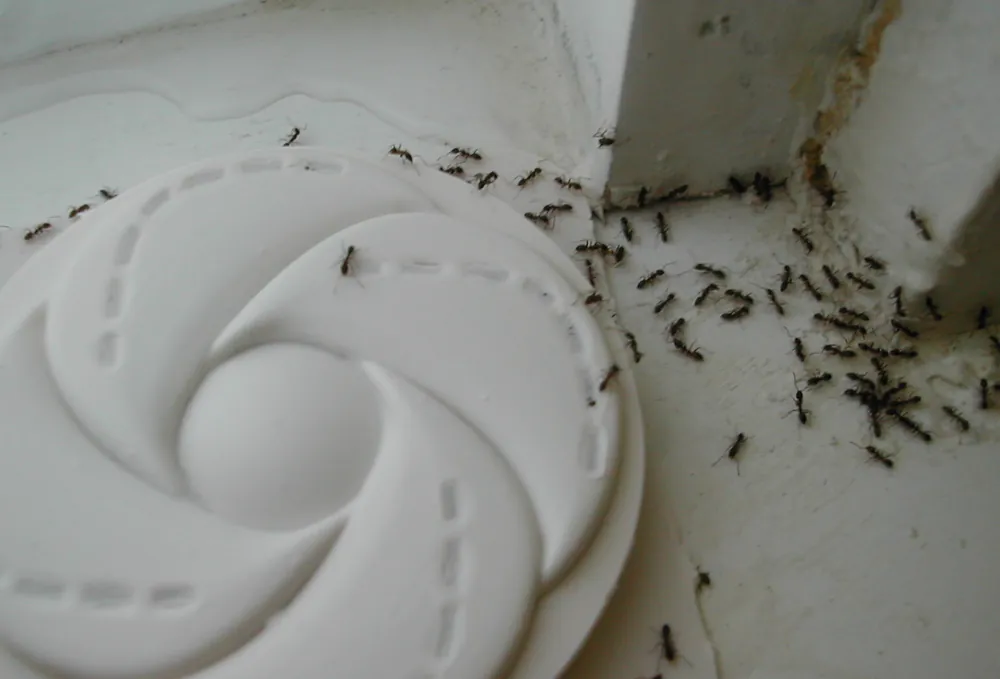
One ant highway up the wall, and it never seems to end. That’s an Argentine ant supercolony.
One call reaches a licensed, local exterminator who covers your address — and a real person answers, 24/7.
Talk to a licensed exterminator now
Call and we’ll connect you with a licensed, local exterminator who covers your address. It takes about two minutes, and a real person answers.
Free to call. Free to get matched. The licensed operator gives the quote.
24/7 line · A real person answers · Availability of same-day and emergency service depends on the provider.
How to know it’s an Argentine ant
Linepithema humile. Not flashy, not painful, not dramatic — just relentless. Here’s what separates it from the other ants Polk County homeowners deal with:
- Uniform brown. Light to medium brown, top to bottom. No pale translucent abdomen (that’s a ghost ant), no red-and-black (carpenter ant), no reddish fuzz (tawny crazy ant).
- Small, but not tiny. Roughly an eighth of an inch. Workers are all the same size, which is a real ID cue — fire ants come in a range of sizes in the same nest.
- Broad, orderly trails. Argentine ants build genuine highways: dense two-way traffic along a mortar joint, a fence rail, an irrigation line, a tree trunk, the edge of the driveway. They’re organized, and they stay on the road.
- Musty smell when crushed. Stale, slightly greasy. Not the coconut note of a ghost ant.
- No sting. They can bite, barely. The problem is numbers and persistence, not pain.
The supercolony problem — and why spraying makes it worse
Most ant species defend a territory. Two colonies of the same species meet, and they fight. Argentine ants, in their introduced range, largely stopped doing that. Nests recognize each other as kin, workers move freely between them, and the whole thing behaves as one unicolonial supercolony with countless queens spread across countless nest sites.
Practically, that means three things for your house:
- There is no “the nest.” Under the mulch, under the pavers, under the AC pad, in the potted plants, in a wall void, in the neighbor’s flower bed. Finding one and killing it accomplishes very little.
- Repellent sprays cause budding. Same story as ghost ants. Hit a trail with a hardware-store aerosol and the colony reads it as pressure, splits, and relocates queens and brood to new sites. You trade one trail for three.
- Your property line means nothing. If the supercolony runs the block, a treated yard is a treated island. Suppression holds while the program is running; it isn’t a permanent extermination, and honest operators say so.
What actually works is the slow, unglamorous version: non-repellent exterior treatments the ants can’t detect, sweet liquid bait placed in enough volume to matter, and cutting off the honeydew supply that feeds the population.
The honeydew connection nobody mentions
Argentine ants are farmers. They tend aphids, scale insects and mealybugs on your ornamentals, protecting them from predators in exchange for honeydew — a steady sugar supply that fuels colony growth. That’s why the ants are running up the crape myrtle and along the hedge line, and it’s also why that hedge looks sick and sooty.
Two consequences worth knowing before you pay anyone:
- Bait competes with the buffet. If the landscape is loaded with honeydew, a bait station is a mediocre offer. Operators who handle the scale and aphid problem — or coordinate with someone who holds the right license for ornamental work — get better ant results.
- Trails climb, so ground barriers leak. Ants that live in a tree and forage on branches touching your roof never cross the perimeter treatment at ground level. Trimming vegetation back off the structure is unglamorous, free, and one of the highest-return things you can do.
The Polk County Argentine ant calendar
| When | What’s happening | What you’ll see |
|---|---|---|
| Mar – May dry season | Polk’s driest stretch. Soil moisture drops and colonies chase water. | Indoor trails to sinks, tubs, pet bowls and A/C condensate. Not a food problem — a water problem. |
| Jun – Sep storm season | Daily afternoon storms flood shallow nests under mulch, pavers and slab edges. Colonies relocate en masse. | The indoor surge. Trails appear overnight after a heavy afternoon downpour, often along the same line every time. |
| Oct – Nov | Rain eases; honeydew production on ornamentals declines. | Foraging swings toward the pantry — sugar, syrup, pet food. Good window for bait work. |
| Dec – Feb | Cooler weather concentrates colonies in warm, protected sites. | Fewer outdoor trails; activity clusters near water heaters, dishwashers and sunny south walls. The population is still there. |
Same trail, same wall, every single summer?
That’s a supercolony, not bad luck. A licensed operator can build a program around it.
Talk to a licensed exterminator now
Call and we’ll connect you with a licensed, local exterminator who covers your address. It takes about two minutes, and a real person answers.
Free to call. Free to get matched. The licensed operator gives the quote.
Where they nest around Polk County homes
Argentine ants want moist soil under cover, close to food. In practice, that’s a list you can walk right now:
Outside
Under mulch against the foundation. Under pavers, stepping stones and the A/C pad. In potted plants and their saucers. Along irrigation lines and sprinkler heads. Under landscape timbers, boards, tarps and stacked material. In tree cavities and under loose bark.
Inside
Wall voids next to plumbing. Under dishwashers and behind the fridge. In the toe-kick of kitchen cabinets. Around the water heater. Anywhere warm, dark and damp — usually a stone’s throw from where the trail comes through the wall.
The Polk County geography that keeps them going: irrigated St. Augustine on sandy, well-drained soil, mulch beds pushed right up against block-and-stucco walls in the newer South Lakeland and Highland City subdivisions, and old shaded plantings and settled foundations in the Dixieland and Lake Morton neighborhoods. Same species, two different entry stories.
How the dispatch works — four steps, no phone tag
You call the dispatch line
That’s the whole form. It tells us which part of Polk County you’re in and who covers it.
A coordinator reaches out
A real person. They’ll ask where the trails run, when they started, and what’s been sprayed already — that last one shapes the bait plan.
You’re matched to a licensed operator
An independent, FDACS-licensed pest control company covering your address. Verify their license yourself before anyone treats.
The operator inspects and quotes
They set the price, the products, the schedule and any terms — we don’t. Free to call, free to get matched, and the quote comes from the licensed pro.
What the licensed operator will ask you
- Where does the trail enter, and where does it go? Photograph it before you wipe it down.
- What have you sprayed, and how recently? Repellent residue can push foragers off a bait placement for weeks.
- Any moisture issue? A leaking hose bib, a sprinkler hitting the wall, a clogged A/C condensate line.
- Are the ants climbing plants or trees? That’s the honeydew tell, and it changes the plan.
- Is the neighbor dealing with it too? With a supercolony species, that’s a real and useful question.
- Kids, pets, garden, pond? Constrains the product choices.
What Argentine ant work costs in Polk County
We never set or quote prices. How operators here typically structure it:
- Initial service. Non-repellent exterior perimeter and harborage treatment, plus interior bait placements where the trails are. Priced by home size and how much landscape harborage is in play.
- Follow-up. Usually at least one, because bait works over weeks and the colony keeps surfacing new trails. Ask whether it’s included or billed separately — before you book.
- Recurring exterior program. The common Florida answer for a supercolony species, since outdoor pressure never stops.
- Ornamental work. If scale and aphids are feeding the population, that’s often a separate scope or a separate license holder.
See the Lakeland pest control cost breakdown for how these programs compare with termite and general pest work. The number comes from the licensed operator after inspection.
Other ants and pests we route in Polk County
All ant species
Not sure which one you’ve got? The hub covers every ant we dispatch for across Lakeland and Polk County.
Ant control in Lakeland →White-footed ants
The other huge-colony species, and the one that laughs hardest at bait.
White-footed ants →Tawny crazy ants
Reddish, frantic, and drawn to electrical equipment. Worse than what you’ve got, honestly.
Tawny crazy ants →Ghost ants
Tiny and pale, indoors on the counter. Also a budding species — also made worse by spraying.
Ghost ant control →General pest service
Roaches, spiders, rodents and ants on one recurring program across Lakeland.
Exterminator in Lakeland →County-wide service
Winter Haven, Bartow, Auburndale, Haines City, Lake Wales — same dispatch, same licensed network.
Pest control in Polk County →Break the highway. Keep it broken.
One ZIP. A real person on the line. An FDACS-licensed operator who treats supercolonies for a living.
Talk to a licensed exterminator now
Call and we’ll connect you with a licensed, local exterminator who covers your address. It takes about two minutes, and a real person answers.
Free to call. Free to get matched. The licensed operator gives the quote.
Argentine ant questions, answered straight
How do I tell an Argentine ant from the other small brown ants?
Uniform light-to-medium brown from head to abdomen, workers all about the same size, and broad, orderly two-way trails rather than scattered movement. Crushed, they give off a musty, stale smell — not the coconut note of a ghost ant. Ghost ants have a pale, see-through abdomen; tawny crazy ants are reddish and move erratically; fire ants come in mixed sizes and sting.
What is a supercolony, and why does it matter for my house?
In their introduced range, Argentine ant nests don’t fight each other. Workers and queens move freely between nest sites, so an entire neighborhood’s worth of nests can function as one cooperating population with many queens. It matters because there’s no single nest to destroy, and because a treated yard sitting inside an untreated supercolony gets re-invaded from the fence line. Control means an ongoing program, not a one-time kill.
Why did spraying make the trails multiply?
Repellent sprays trigger budding. The colony perceives chemical pressure, splits, and relocates queens and brood to new nest sites. You kill the foragers you can see and end up with more trails in more rooms. Non-repellent products, which the ants can’t detect, and slow-acting sweet baits do the opposite — foragers keep behaving normally and carry the active ingredient back to the queens.
Why do they show up indoors right after a summer storm?
Because their nests are shallow — under mulch, pavers, the A/C pad, the slab edge — and Polk County’s June-through-September afternoon storms flood them. The colony relocates, and the closest dry void is inside your wall. The mirror image happens in the March-to-May dry season, when they come in looking for water at sinks, tubs and condensate lines.
Do Argentine ants sting, bite, or damage the house?
No meaningful sting, a barely noticeable bite, and no structural damage — they don’t tunnel wood like carpenter ants. What they do is contaminate food, farm honeydew-producing insects that damage your ornamentals, and occupy the property in numbers that wear people down.
Why are they all over my hedge and citrus?
They’re farming. Argentine ants tend aphids, scale and mealybugs for honeydew and protect them from predators, which is why a heavily trailed plant often looks sick and sooty. It also means the landscape is feeding the ant population directly — so treating the honeydew producers is frequently part of getting the ants under control.
How long does it take to get control?
Weeks, with a program rather than a single visit. Non-repellent exterior treatment plus sufficient bait volume knocks the local population down over several weeks; keeping it down means recurring service, because the supercolony beyond your property line doesn’t go anywhere. Anyone promising a permanently ant-free yard from one visit is describing something that doesn’t happen with this species.
Is the pest control company actually licensed?
Every operator in the network is a licensed Florida pest control business, and you never have to take our word for it. License status is public: search the company at the Florida Department of Agriculture and Consumer Services license lookup before anyone treats your home. Florida pest control is regulated under Chapter 482, Florida Statutes.
Disclosure
Lakeland Exterminators is a dispatch and matching service. We connect Polk County callers with FDACS-licensed pest control operators. We are not a licensed pest control operator. We do not perform treatment, set prices, issue warranties, hold bonds, or carry pest control trade insurance. All pricing, scheduling, treatment plans, warranties and service terms are determined by the FDACS-licensed operator dispatched to your address under Chapter 482, Florida Statutes.
Same-day and 24/7 emergency services are subject to provider participation, location, technician availability, and demand. Availability is not guaranteed and may vary by market and appointment capacity.
License status of any operator you connect with is publicly verifiable at the FDACS license search.