Snake on the lanai? Don’t reach for the shovel — reach for the ZIP box.
One call reaches a licensed, local exterminator who covers your address — and a real person answers, 24/7.
Talk to a licensed exterminator now
Call and we’ll connect you with a licensed, local exterminator who covers your address. It takes about two minutes, and a real person answers.
Note: this line is for snake identification and removal specifically. If your issue is ants, roaches, termites, rodents indoors, or other general household pests, use our main pest match instead.
Free to call. Free to get matched. The licensed operator gives the quote.
24/7 line · A real person answers · Availability of same-day and emergency service depends on the provider.
The four Polk County snakes that actually warrant the call
Eastern diamondback rattlesnake
Crotalus adamanteus. North America’s largest rattlesnake — pine flatwoods, palmetto scrub, and the overgrown lot edges of south and north Lakeland. Distinct diamond pattern, heavy body, and a rattle it doesn’t always use. Give it the whole yard.
Pygmy rattlesnake
Sistrurus miliarius. Polk County’s bite-count leader — small enough to hide in mulch beds and garden borders, with a rattle too faint to hear. Most encounters happen during weeding. Gloves are not armor; the operator’s tongs are.
Cottonmouth / water moccasin
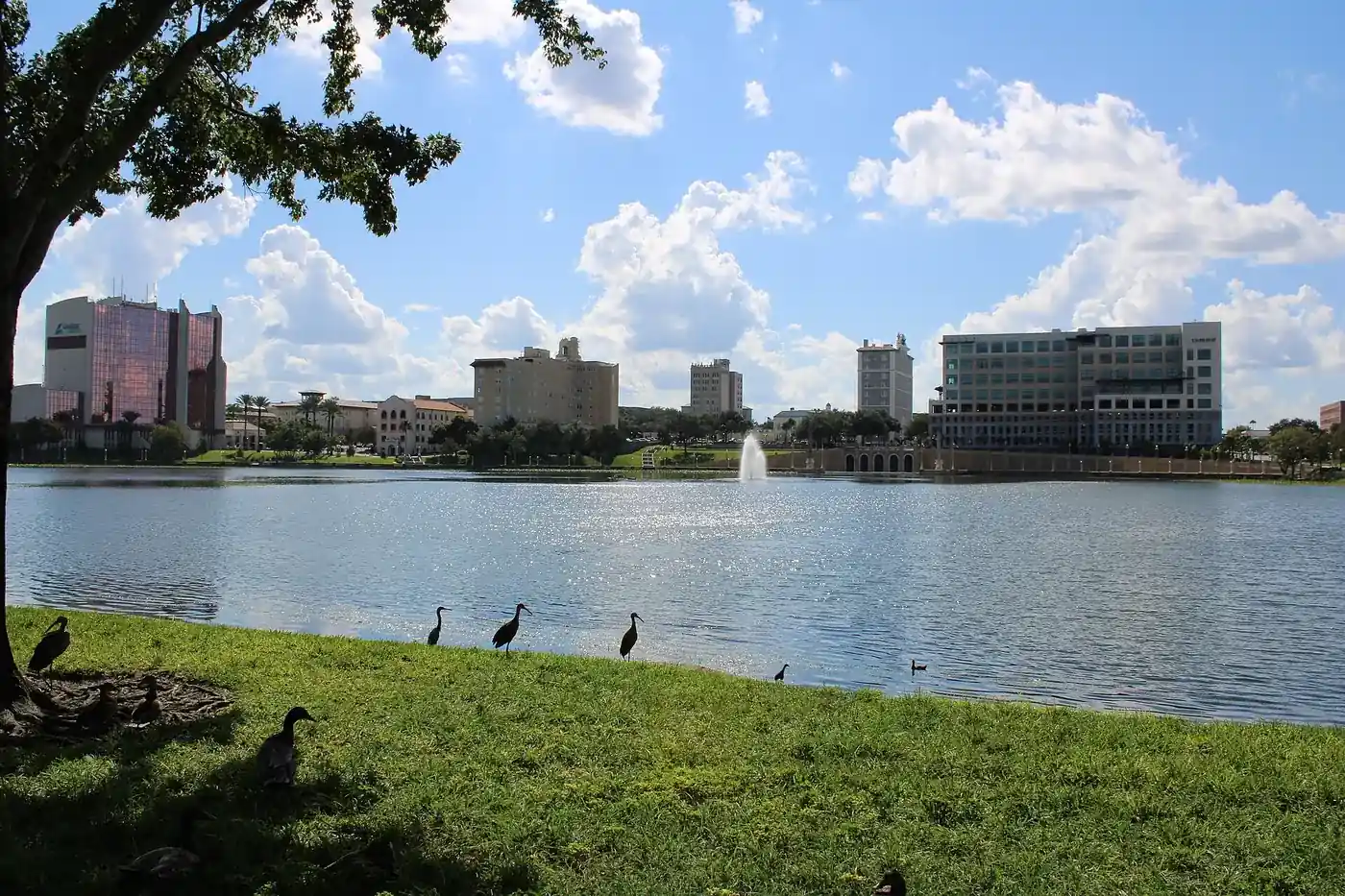
Agkistrodon piscivorus. Lake and canal shorelines, retention ponds, wet ditches — which in the City of 38 Lakes means many backyards. Famous for the white-mouth defensive gape. Most “cottonmouths” reported are actually harmless banded water snakes; the operator confirms before anyone panics.
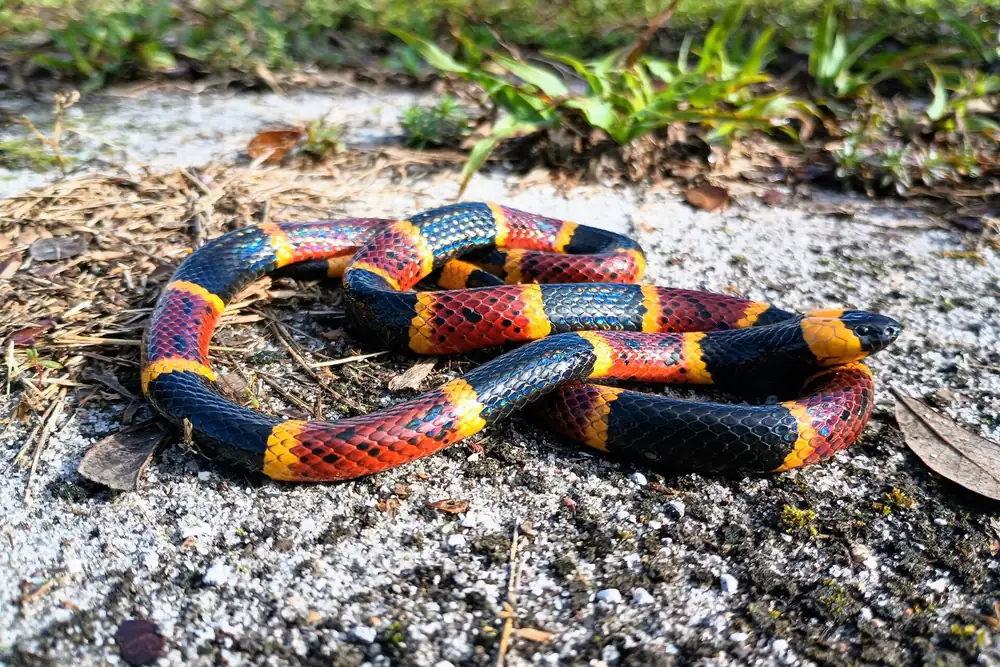
Eastern coral snake
Micrurus fulvius. Red-yellow-black banding with red touching yellow. Reclusive, rare, and responsible for very few bites — but its venom is the most potent in the state. The mimic scarlet kingsnake (red touching black) takes the blame for most sightings.
The harmless majority — free pest control in scales
- Black racer — jet black, thin, fast; the snake you see most. Eats rodents and pygmy rattlesnakes. Harmless.
- Rat snake (yellow/eastern) — long, yellowish stripes, climbs like a cable installer; your attic’s roof rat problem is its dinner. Harmless.
- Banded water snake — the cottonmouth’s stunt double at every lake edge. Harmless, ill-tempered, endlessly misidentified.
- Garter and ring-necked snakes — garden-bed regulars. Harmless.
Florida rule of thumb: a snake moving away from you at speed is almost never venomous — the dangerous four stand their ground. Either way, distance plus a zoomed photo beats any field test.
Snake in the garage, pool cage or lanai right now?
One call reaches a licensed, local exterminator who covers your address — and a real person answers, 24/7.
Free to call. Free to get matched. The licensed operator gives the quote.
What to do in the moment (and what not to)
Back up and keep watch
Six feet of distance removes essentially all risk — no Florida snake pursues people. If it’s indoors or in the pool cage, watch it from distance so the operator doesn’t have to search; a snake that disappears into a garage takes far longer to clear.
Photograph from distance, zoom in later
A phone photo settles the venomous question in seconds and tells the operator what equipment the call needs. Never move closer for a better shot — crop later.
Do not kill or handle it
Most Florida snakebites happen during kill-or-move attempts, a dead snake’s reflex bite still envenomates, and the harmless species you’re most likely to kill were eating your rodents. Leave the capture to tongs, hooks and secure transport.
Close the door behind it
After removal, the operator addresses why it came: rodent activity (the number-one snake attractant), debris piles, gaps under garage doors and slab-level openings. Fix the buffet, lose the diner — rodent control is snake prevention.
What moves a snake removal quote (we never set prices)
- Venomous vs. non-venomous — venomous captures involve specialized equipment and handling protocols.
- Accessible vs. hidden — a visible snake on a lanai is a short call; one that vanished behind the water heater is a search.
- Removal vs. prevention scope — habitat reduction, slab-gap exclusion and the rodent program that removes the food source are each scoped separately.
- After-hours response — subject to provider availability, and priced by the operator. The cost-factor guide explains quote levers generally — the number always belongs to the licensed operator on site.
Verify before you hire — snake handling runs under FWC rules, and any operator also doing structural pest work carries FDACS licensing you can check at the FDACS license search at aessearch.fdacs.gov. For raccoons, squirrels and bats, see the wildlife removal guide.
Snake questions, answered straight
How do I know if it’s a cottonmouth or a harmless water snake?
From a safe distance: cottonmouths have a thick body, a blocky triangular head with an eye-hiding brow ridge, and swim with the head held high out of the water; banded water snakes are slimmer, round-pupiled, and swim body-submerged. Honest answer: even Floridians get this wrong constantly, which is exactly why the photo-from-distance plus licensed operator combination exists.
A snake keeps showing up in my yard. Why me?
Food and cover. Rodent activity is the number-one attractant — a yard with roof rats is a snake restaurant — followed by brush piles, dense ground cover, water features and slab gaps that hold cool shade. Remove the food and the cover and the visits stop; that’s why serious snake prevention usually starts with a rodent inspection.
Are snakes protected in Florida? Can I just kill it?
Native snakes are part of Florida’s wildlife and FWC rules govern their handling; some, like the eastern indigo, are fully protected by state and federal law. Beyond legality, the practical math is against it: most bites happen during kill attempts, and the species most often killed are the harmless rodent-eaters. Relocation by a licensed operator is the clean path.
What if someone is bitten before the operator arrives?
Call 911 immediately — not the dispatch line. Keep the person calm and still, remove rings and tight items near the bite, keep the limb roughly level with the heart, and do NOT cut, suck, ice or tourniquet the wound. Florida hospitals stock antivenom; time-to-ER is the variable that matters. A photo of the snake helps the ER, but never delay transport to get one.
Do snake repellent granules work?
Independent testing has repeatedly found commercial snake repellents unreliable, and some are just naphthalene doing nothing outdoors. What measurably works: rodent control, cutting ground cover, sealing slab and garage gaps, and raising firewood off the ground. Spend the repellent money on the door sweep.
Safe for you. Humane for the snake. Handled today.
One call reaches a licensed, local exterminator who covers your address — and a real person answers, 24/7.
Free to call. Free to get matched. The licensed operator gives the quote.
Disclosure
Lakeland Exterminators is a dispatch and matching service. We connect Polk County callers with licensed, insured wildlife and pest control operators. We are not a licensed pest control operator or wildlife trapper. We do not perform removal or exclusion, set prices, issue warranties, or carry trade insurance. All pricing, scheduling, treatment plans, warranties and service terms are determined by the licensed operator dispatched to your address, under FWC rules and — for structural pest work — Chapter 482, Florida Statutes.
Same-day and 24/7 emergency services are subject to provider participation, location, technician availability, and demand. Availability is not guaranteed and may vary by market and appointment capacity.
License status of any pest control operator you connect with is publicly verifiable at the FDACS license search: aessearch.fdacs.gov. For a snakebite or any medical emergency, call 911 first.