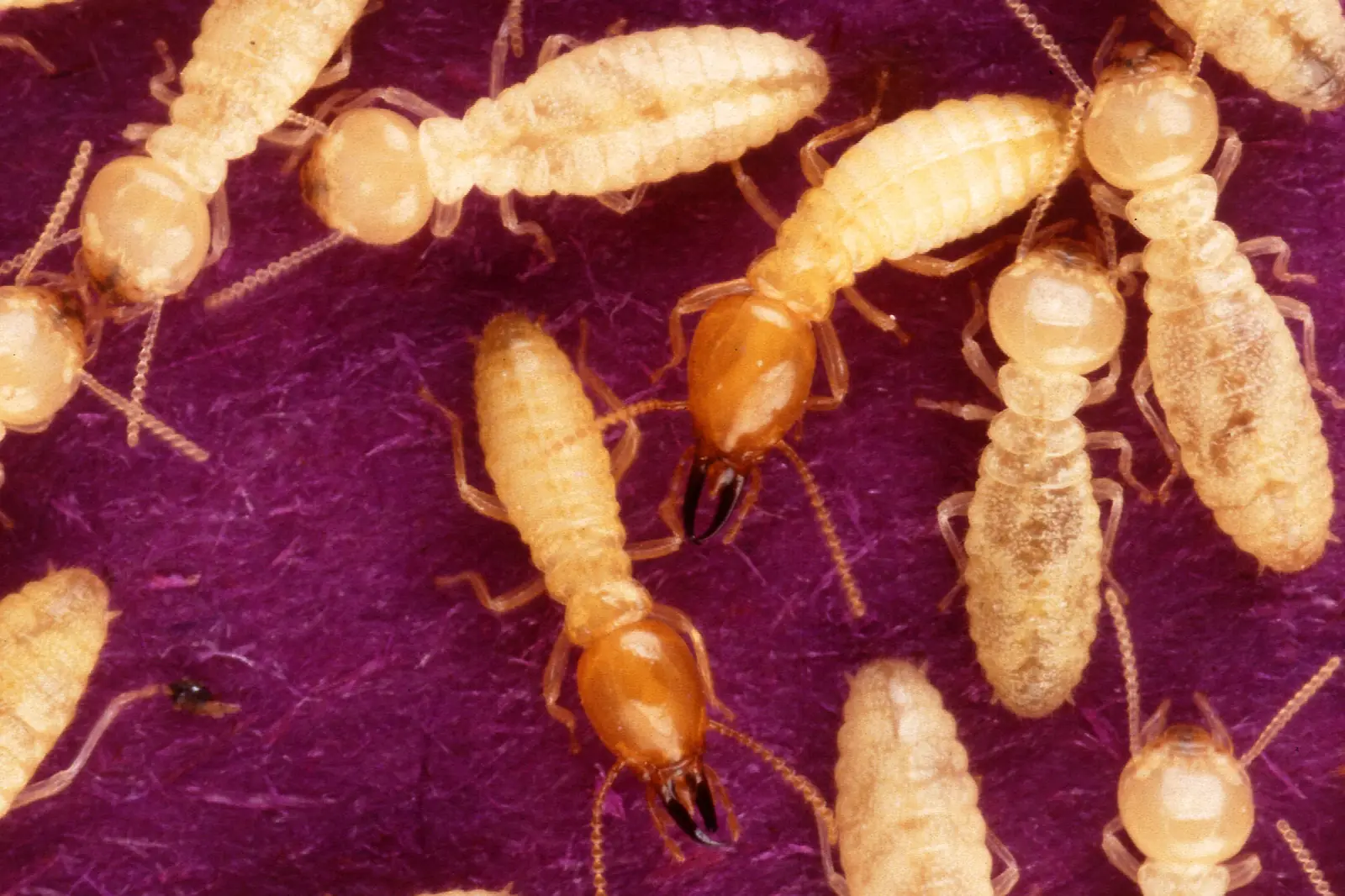
The Formosan termite is the one Lakeland can’t afford to misidentify.
Coptotermes formosanus is established in Lakeland and working outward through Polk County. Colonies run several times larger than our native subterranean termites, eat faster, and can nest above ground inside your walls. If the evidence points Formosan, the treatment conversation changes completely — which is why the species ID comes first.
Talk to a licensed exterminator now
Call and we’ll connect you with a licensed, local exterminator who covers your address. It takes about two minutes, and a real person answers.
Free to get matched. The licensed operator inspects and gives the quote.
24/7 line · A real person answers · Availability of same-day and emergency service depends on the provider.
How to tell a Formosan from every other termite in Polk County
Three details separate Formosans from the native Eastern subterranean termites behind most Polk County mud tubes — and from the drywood termites that drift in through soffit vents. None of them require a microscope, but all of them require leaving the evidence where you found it.
The swarmers
Formosan alates are yellowish-brown, about half an inch long with wings, and noticeably hairy-winged under a phone-camera zoom. The giveaway is behavior: they swarm at dusk on warm, humid late-spring evenings, mobbing porch lights and streetlamps by the hundreds. Natives swarm in daylight, earlier in the year.
The soldiers
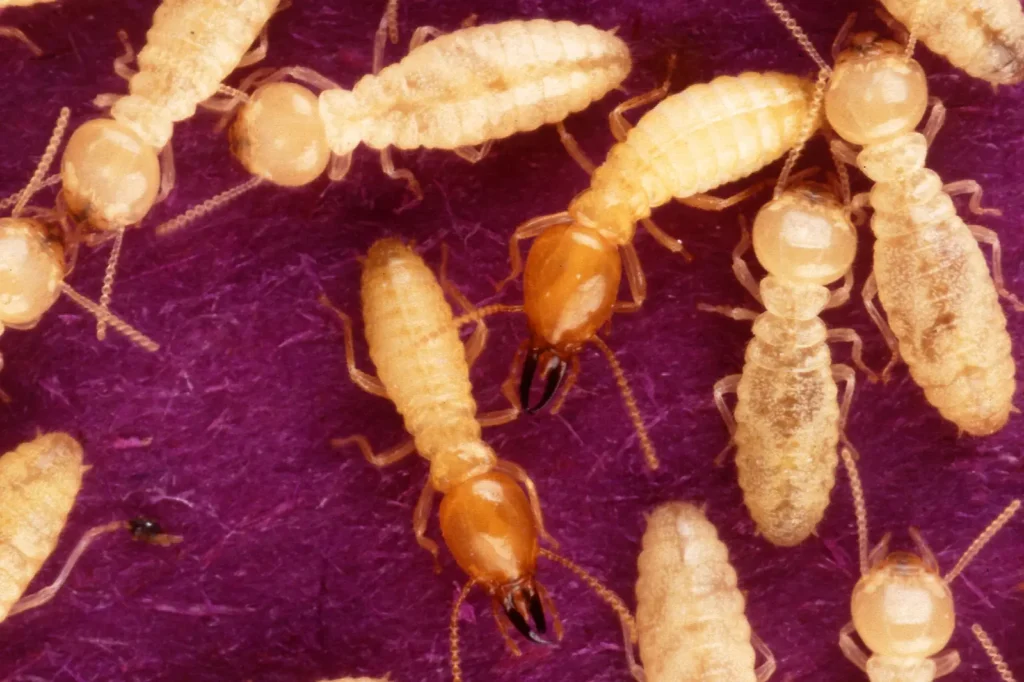
Break open a mud tube and look at the defenders: Formosan soldiers have oval, teardrop-shaped heads and make up a much larger share of the colony than natives, whose soldiers have long rectangular heads. Soldiers rushing out in numbers and even exuding a white fluid from the head is classic Formosan.
The carton nests
The trait that changes everything: Formosans build carton — a papery nest material of chewed wood and soil — inside wall voids, attics, and even boat hulls. A carton nest holds its own moisture, so the colony no longer needs daily soil contact. That’s why a soil-only mindset can miss them.
Why Lakeland is a Formosan town now
Formosan termites reached Florida decades ago and have been confirmed across the I-4 corridor, with established activity in Lakeland itself. Polk County gives them everything they want: sandy soils that stay warm year-round, lake-effect humidity off the Lakes Hollingsworth-Morton-Mirror chain, irrigated landscaping that keeps soil moisture up through the dry season, and mile after mile of mid-century housing stock with wood framing sitting on slab.
The numbers explain the urgency better than adjectives do. A mature native subterranean colony holds a few hundred thousand termites; a mature Formosan colony can hold several million, foraging across more than an acre. More mouths, more tunnels, more entry attempts on more houses per colony — and damage that accumulates in two or three years instead of eight.
One more Polk-specific wrinkle: Formosans are notorious for colonizing live trees — oaks lining older Lakeland streets, and citrus — then moving from the tree to the house. If an operator finds carton in a yard tree, the property conversation has to include the structure too.
- Swarm season: late April through June, at dusk, around lights — later and darker than native swarms. The full calendar is on the Florida swarming season guide.
- Highest-pressure settings: older neighborhoods with mature trees, lakefront blocks, and any structure with a past moisture problem.
- Most-missed evidence: carton in attic voids and behind bathroom walls — places a flashlight rarely goes.
Saw a dusk swarm around the porch light?
Leave the wings where they fall — they’re how the inspector confirms species. Get matched with a licensed operator tonight.
Talk to a licensed exterminator now
Free to get matched. The licensed operator gives the quote.
What treatment looks like when the ID comes back Formosan
Formosan jobs are won or lost on thoroughness, not product names. Because colonies are huge and can live above ground in carton, the licensed operator’s plan usually combines approaches rather than picking one.
Full-structure inspection
Slab edges, plumbing penetrations, attic voids, and yard trees. The inspector maps activity and looks specifically for carton — the finding that rules treatment options in or out.
Soil and structure treatment
Non-repellent liquid barriers handle the soil route; carton nests found in voids get treated directly. Baiting systems — compared on the Sentricon vs. Termidor page — are a strong fit for Formosans because the colony shares the bait widely.
Moisture correction
Formosans follow water. Expect the operator to flag gutter overflows, AC condensate drips, irrigation hitting the slab, and wood-to-soil contact — fixing those is part of the treatment, not an upsell.
Bond and monitoring
In Formosan territory a retreatment bond matters more than anywhere else in Florida. Ask what the bond covers — retreat only or repairs — and get renewal terms in writing. The termite bond guide walks through the fine print.
Verify before you hire — any Florida termite company’s license status, categories and discipline history is public at the FDACS license search. Check the operator you are matched with; the good ones expect it.
Formosan termites in Polk County — common questions
How do I know it’s Formosan and not the regular Florida termite?
Are Formosan termites really established in Lakeland?
How fast can a Formosan colony damage a house?
Do Formosans mean the house has to be tented?
Can Formosan termites live in my oak tree?
Is this site the company that does the treatment?
Related termite pages
Disclosure
Lakeland Exterminators is a dispatch and matching service. We connect Polk County callers with FDACS-licensed structural pest control operators. We are not a licensed pest control operator. We do not perform termite treatment, set prices, issue warranties, hold retreatment bonds, or carry pest control trade insurance. All pricing, scheduling, treatment plans, warranties, bonds and service terms are determined by the FDACS-licensed operator dispatched to your address under Chapter 482, Florida Statutes.
Same-day and 24/7 emergency services are subject to provider participation, location, technician availability, and demand. Availability is not guaranteed and may vary by market and appointment capacity.
License status of any operator you connect with is publicly verifiable at the FDACS license search.