Bed bug (Cimex lectularius) infestations in Lakeland and Polk County are most commonly introduced through travel — Tampa International Airport visitors, Disney/Orlando-area tourism, business travel, college students returning from out-of-state, and Polk County’s substantial short-term rental market (particularly the Davenport corridor near the Disney parks). Bed bug treatment in Lakeland is performed by independent, FDACS-licensed pest-control companies, who typically schedule inspection and treatment within a few days.
Dealing with a pest problem right now?
📞 Call now — get matched with a licensed local exterminator: (888) 295-0220When you call, stay on the line for a few seconds while we match you with the licensed local exterminator for your area. Have your address and a quick description of the problem ready.
Licensed local pros · Fast response, subject to availability · No obligation
How bed bug service typically works in Polk County
- Step 1TriageAn independent operator reviews the situation — bites, sightings, hotel return, secondhand furniture, tenant or guest report — for your Polk County area.
- Step 2Confirmation inspectionA licensed inspector confirms bed bug presence (vs. carpet beetles, fleas, bat bugs), scopes the harborage points, and provides a written quote.
- Step 3TreatmentChemical, heat, or integrated IPM treatment by the licensed technician, with mattress encasements for long-term monitoring.
- Step 4Follow-upMost operators schedule follow-up inspections at 14 and 30 days to confirm the infestation is cleared.
Bed Bug Treatment FAQ — Polk County
Heat treatment vs. chemical — which is better?
Heat treatment raises the structure to ~120–135°F for several hours, lethal to all bed bug life stages including eggs in a single visit. Chemical treatment uses residual pesticides (cyfluthrin, deltamethrin, lambda-cyhalothrin) plus dust applications, requiring 2–3 visits over 4–6 weeks to interrupt the egg-to-adult lifecycle. Heat: single-day, no chemical residue, though pricing is set individually by the independent licensed operator based on property and job specifics, and it risks damaging electronics, candles, vinyl. Chemical: pricing is also set individually by the independent licensed operator, and it requires preparation and multiple visits. Many Polk County operators recommend integrated IPM (steam + chemical + encasements) for severe infestations.
How long does bed bug treatment take?
Heat treatment: 6–10 hours of heat exposure in a single visit. Chemical treatment: each visit 1–3 hours, with 2–3 visits over 4–6 weeks. Integrated IPM: 2–4 hours per visit, typically 2–3 visits. Most Polk County operators provide follow-up inspection 14 and 30 days after treatment to confirm elimination.
Are bed bug treatments safe for kids and pets?
Yes when applied by an FDACS-licensed operator following EPA-registered product label directions. Standard residual pesticides used (cyfluthrin, deltamethrin) are EPA-approved for use in occupied dwellings with re-entry intervals typically 2–4 hours after treatment. Heat treatment is chemical-free entirely. Pets and humans should vacate during active application; the operator specifies re-entry timing. For pregnancy or chemical sensitivity concerns, ask about heat treatment.
Is re-treatment included?
Most Polk County bed bug operators include a follow-up visit at 14 days and a 30-day inspection in the original quote. If activity is detected at follow-up, the standard protocol is included re-treatment within the original scope. Severe infestations may require additional visits at additional cost — specified in writing upfront.
What does bed bug treatment cost in Polk County?
Inspection only, chemical treatment (multi-visit), heat treatment (single-visit), integrated IPM (combined), mattress encasement, and canine inspection are all priced individually by the independent licensed operator, based on property size, infestation severity, and job scope. Full cost guide →
I just got back from Disney/Tampa — should I get inspected?
If you have bites, see live bugs, or found dark stains on luggage seams: yes. If you’re symptom-free but want a precautionary check: inspection-only is priced individually by the independent licensed operator, and catching bed bugs in the first 1–2 weeks (before they reproduce) is dramatically cheaper than treating an established infestation. Bag and high-heat-dry all clothing from the trip; vacuum luggage seams.
What’s the service area?
All of Polk County: Lakeland, Winter Haven, Bartow, Plant City, Lake Wales, Auburndale, Haines City, Mulberry, Davenport (high short-term rental density — 33837 / 33896 / 33897), Polk City, plus Kathleen and Lake Hamilton.
Are the technicians actually licensed?
Yes. Bed bug treatment in Florida falls under the FDACS General Household Pest Control (GHP) category, regulated under Chapter 482, Florida Statutes. License status is verifiable via the FDACS public license search.
How Bed Bugs Spread Into Polk County Properties
Travel. Tampa International Airport handles ~22 million passengers annually. Orlando International handles ~50 million. Both feed visitor flow through Polk County hotels, short-term rentals, and resident return travel.
Short-term rentals (Davenport / Disney corridor). Polk County’s Davenport area, particularly the 33837 / 33896 / 33897 zip codes near the Disney parks and the broader ChampionsGate / Reunion vacation rental communities, hosts thousands of short-term vacation rental properties. High-turnover rental properties are statistically more likely to harbor bed bug populations than long-term residences.
Used furniture. Secondhand mattresses, couches, recliners, and upholstered furniture acquired from estate sales, garage sales, or Craigslist/Facebook Marketplace are a frequent introduction pathway.
Multi-family housing migration. Within apartment complexes, bed bugs migrate through shared wall voids, plumbing chases, and electrical chase routes.
Student housing. Polk State College, Florida Southern College, and Southeastern University all generate student housing transitions where bed bugs can be introduced via dormitory return, used furniture, and study-abroad travel.
How To Identify Bed Bugs
- Bites. Small red welts in lines or clusters, often on exposed skin (arms, neck, ankles). Bites may not appear for hours to days after exposure.
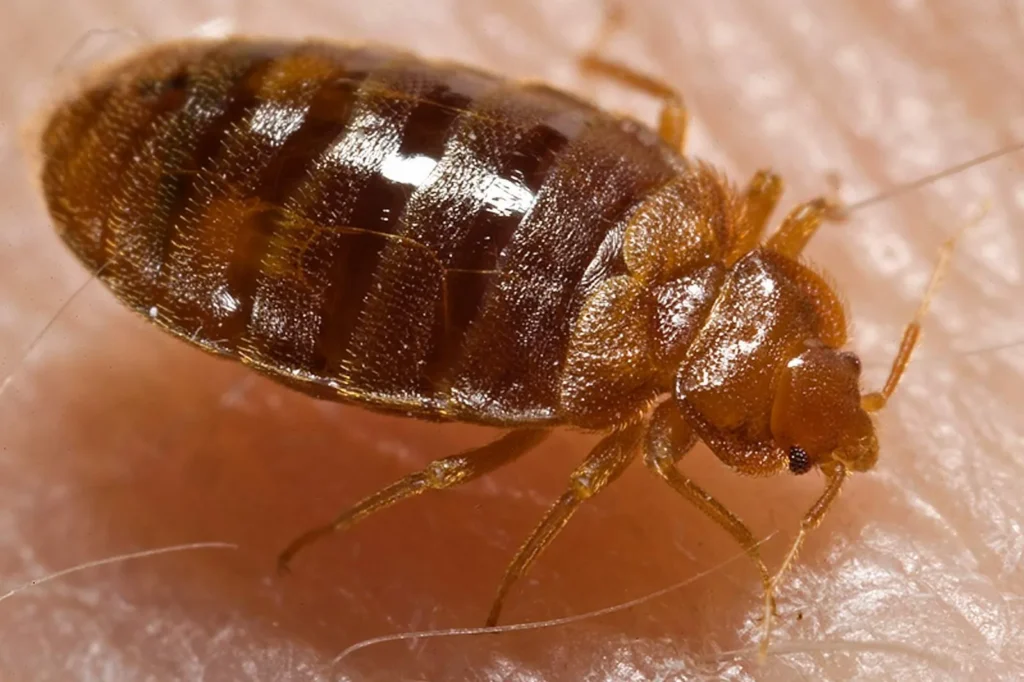
- Live bugs. Adult bed bugs are ~3/16″ long, oval, flat, reddish-brown when unfed.
- Cast skins. Translucent shells accumulating in harborage areas.
- Fecal stains. Small dark spots on mattress seams, box spring corners, headboard joints.
- Blood spots. Small reddish stains on sheets from crushed engorged bugs.
- Sweet musty odor. Heavy infestations produce a distinctive sweet musty smell.
- Harborage areas. Mattress seams, headboard cracks, bed frame joints, baseboards, behind picture frames, upholstered furniture seams.
Treatment Approaches
Chemical Treatment (Most Common)
Multi-treatment protocol using liquid residual pesticides (cyfluthrin, deltamethrin, lambda-cyhalothrin), dust applications (silica-based or diatomaceous earth) in wall voids, and aerosol/contact spray for visible adults. Repeat treatments every 2 weeks for typically 2–3 treatments. Typical Polk County cost: set by the independent licensed operator, based on property size, treatment scope, and severity.
Heat Treatment
Specialized equipment raises the temperature of the entire structure to ~120–135°F for several hours, lethal to bed bugs and their eggs. Pros: Single-day treatment, kills all life stages, no chemical residue. Cons: Higher cost, heat can damage sensitive items. Typical Polk County cost: set by the independent licensed operator, based on property size, treatment scope, and severity.
Integrated Pest Management (IPM)
Combined: chemical treatment + steam treatment of mattresses + targeted heat for specific zones + encasement of mattresses in bed-bug-proof covers. Typical Polk County cost: set by the independent licensed operator, based on property size, treatment scope, and severity.
Polk County Service Areas Covered
- Lakeland — All eight zip codes
- Winter Haven — 33880, 33881, 33884
- Bartow — 33830
- Plant City — 33563–33567
- Lake Wales — 33853, 33859, 33898
- Auburndale — 33823
- Haines City — 33844, 33845
- Mulberry — 33860
- Davenport — 33837, 33896, 33897 — high short-term rental density
- Polk City — 33868
- Kathleen · Lake Hamilton
Related Pages
- Heat vs. Chemical Bed Bug Treatment in Lakeland
- Bed Bug Exterminator Cost in Lakeland
- How to Prepare for Bed Bug Heat Treatment
- Termite Treatment in Lakeland
- Mosquito Control in Lakeland
- Rodent Control in Lakeland
- Back-to-School Season Is Bed Bug Season in Florida
Disclaimer: Lakeland Exterminators is a local dispatch and referral service, not a licensed pest-control operator. We connect Polk County, Florida homeowners with independent, FDACS-licensed and insured pest-control companies. All inspections and treatments are performed by those independent providers, who set their own pricing, scheduling, and service terms.
Any reference to same-day, emergency, or 24/7 service describes the typical scheduling of matched independent providers and is not guaranteed; actual response times vary by provider, season, location, and demand.