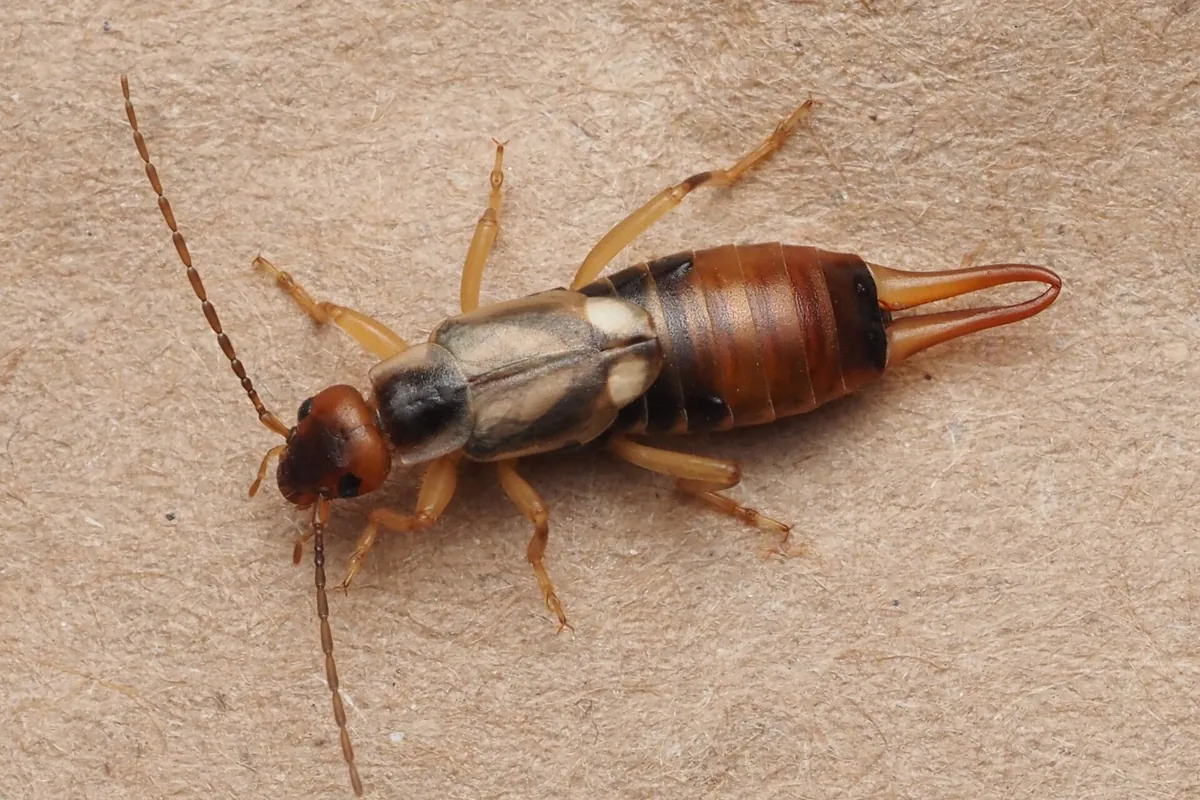
Unsettling, not dangerous
Earwigs are one of the most-feared-looking pests that are actually among the least harmful. The pincers (cerci) on the rear of an earwig look intimidating, and they can pinch if an earwig is handled directly, but they don’t sting, don’t transmit disease, and don’t damage structures. The reaction they trigger is almost entirely about appearance — most Lakeland homeowners who call about earwigs are dealing with a nuisance and a “gross factor” problem rather than any real health or property risk.
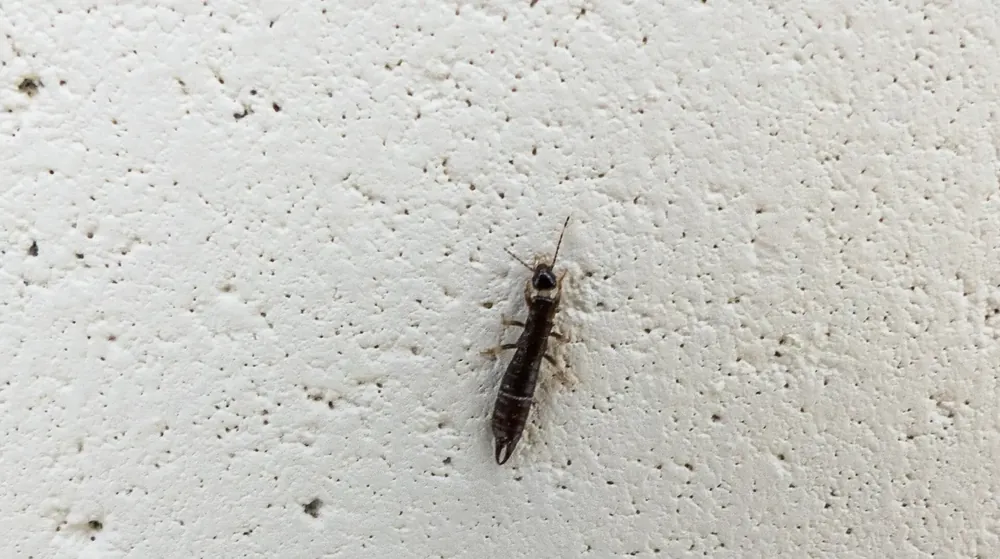
That said, a sudden spike in earwig sightings almost always means something in the yard changed — usually moisture — and it’s worth understanding why before deciding whether to just sweep them up or bring in a professional.
Why earwigs show up around Lakeland homes
Earwigs are nocturnal and strongly moisture-dependent. During the day they hide in tight, damp, dark spaces, and at night they come out to feed on decaying plant material, mulch, and other small insects. Central Florida’s landscaping style — heavy mulch beds, dense ornamental plantings, and irrigation systems running several times a week — creates ideal earwig habitat right up against the house.
Common daytime hiding spots around Lakeland properties include:
- Mulch beds, especially thick layers next to the foundation.
- Under landscaping stones, pavers, and potted plants.
- Piles of leaf litter or grass clippings left along fence lines or garden edges.
- Door thresholds and window frames with worn weatherstripping.
- Damp crawlspace vents on older homes without a vapor barrier.
Neighborhoods with mature, heavily landscaped yards — parts of South Lakeland, Dixieland, and areas near the Chain of Lakes where irrigation and natural humidity combine — tend to report more earwig activity than newer, more sparsely landscaped subdivisions.
Seasonal patterns in Polk County
Earwig activity in Central Florida tracks rainfall and irrigation closely. Expect the heaviest outdoor populations, and the highest odds of indoor wandering, during Florida’s wet season (roughly June through September) and after any stretch of consistent watering or heavy rain. During drier winter months, earwig activity drops off substantially as the moist hiding spots they need dry out.
Indoor sightings spike specifically when outdoor mulch beds or soil become oversaturated — earwigs move toward the nearest dry, dark refuge, and a house foundation with gaps at the threshold or weep holes is a convenient option.
What draws earwigs indoors specifically
Earwigs don’t seek out houses to nest or breed indoors the way German cockroaches do — they wander in incidentally while looking for a dry hiding spot, often following the same entry points ants and other small invaders use:
- Gaps under exterior doors, especially garage service doors and sliders.
- Unsealed weep holes on brick or block exterior walls.
- Gaps around plumbing and utility penetrations.
- Openings around window screens and frames.
Once inside, earwigs typically stay in bathrooms, laundry rooms, and other consistently damp interior spaces rather than spreading through dry living areas.
Professional control approach
- Inspection of the foundation perimeter, mulch beds, irrigation patterns, and entry points to confirm the source of activity.
- Perimeter treatment at the foundation line and known entry points, timed around irrigation cycles for durability.
- Moisture and habitat recommendations — pulling mulch back a few inches from the foundation, adjusting irrigation timing, and clearing leaf litter piles near the house.
- Interior spot treatment in bathrooms, laundry rooms, or any room with recurring sightings.
- Follow-up during peak wet-season months, since a single treatment often doesn’t hold through Florida’s full rainy season without a check.
Why DIY spray-and-sweep doesn’t hold
Homeowners frequently spray or sweep up visible earwigs without addressing the mulch bed or irrigation pattern feeding the population outdoors. Because earwigs are constantly replenished from a healthy outdoor colony, indoor-only efforts get overrun again within a week or two, especially during summer rains. A licensed operator treats the perimeter and habitat conditions, not just what’s already crossed the threshold.
When to call a pro
If earwig sightings are frequent, concentrated in one room, or spiking after rain or irrigation, it’s a good sign to bring in a professional rather than keep sweeping nightly. A licensed Lakeland-area pest control operator can identify the specific moisture source and entry points driving the activity.
Get matched with a licensed Lakeland-area pest pro
One call reaches a licensed, local exterminator who covers your address — and a real person answers, 24/7.
Free to call. Free to get matched. The licensed operator gives the quote.
Related Lakeland Exterminators pages
- Silverfish Control in Lakeland, FL
- Centipede and Millipede Control in Lakeland, FL
- Lawn Pest Control in Lakeland, FL
Verify before you sign: structural pest control in Florida requires an FDACS license under Chapter 482, Florida Statutes. Every operator this line matches is independent, licensed and insured — and you can check any company yourself in thirty seconds at the FDACS license search.
Frequently asked questions
Are earwigs actually dangerous?
No. Earwigs can pinch with their rear pincers if handled directly, but they don’t sting, don’t carry disease, and don’t damage wood, wiring, or fabric. Most of the concern around earwigs is about their appearance rather than any real risk.
Why am I suddenly seeing so many earwigs in my yard?
A sudden increase almost always tracks moisture — heavy rain, increased irrigation, or thick mulch beds holding dampness. Earwigs thrive in consistently damp, dark conditions, and Central Florida’s landscaping style creates exactly that environment.
Do earwigs bite people or pets?
Earwigs don’t bite in the way mosquitoes or fleas do. The pincers on their rear end can pinch if the insect is picked up or trapped against skin, but it’s uncommon and not a health concern for people or pets.
Will earwigs damage my house or garden plants?
Structurally, no — they don’t chew wood, wiring, or fabric. In gardens, they can feed on soft plant tissue and some seedlings, but the damage is usually minor compared to other common garden pests.
What time of year are earwigs worst in Polk County?
Florida’s wet season, roughly June through September, produces the heaviest earwig activity because of consistent rainfall and humidity. Activity drops noticeably in the drier winter months.
Does pulling mulch away from my house actually reduce earwigs?
Yes, generally. Thick mulch against the foundation is one of the most common earwig hiding spots near a house. Keeping a few inches of clearance between mulch and the foundation, along with reducing irrigation runoff toward the house, cuts down on the population right at the entry point.
How much does earwig control cost in Lakeland?
Pricing is set independently by the licensed pest control operator based on property size, the extent of moisture conditions, and whether follow-up treatment is needed. Call to get matched with an operator and ask for a quote for your home.