Can You Trap Wildlife Yourself in Polk County? Florida Rules
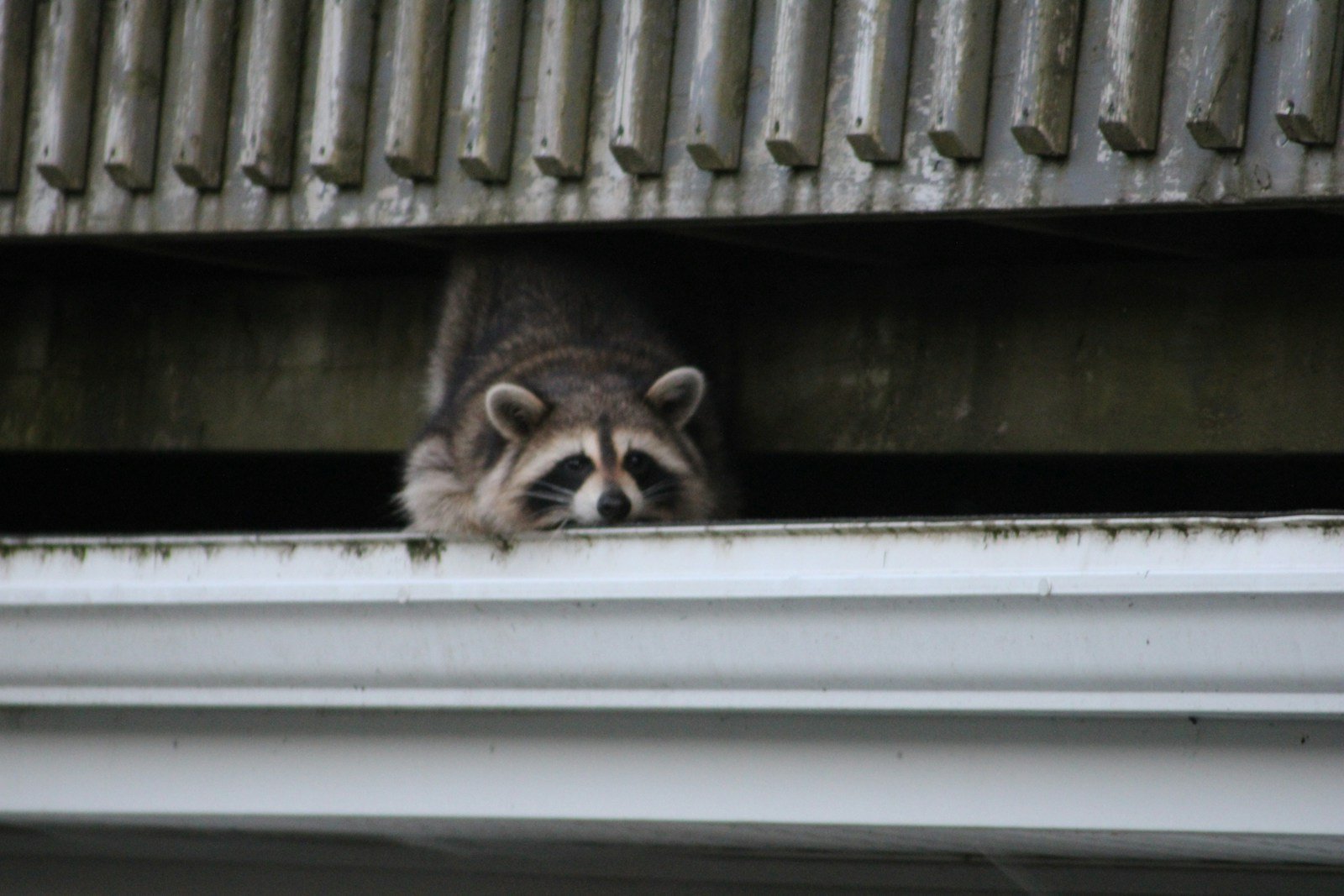
Florida lets property owners trap nuisance wildlife, but the 24-hour, 40-acre and nonnative rules catch most people out. Here’s what FWC’s rule actually says for Polk County homes.
 Lakeland Exterminators Editorial Team
Florida lets property owners trap nuisance wildlife, but the 24-hour, 40-acre and nonnative rules catch most people out. Here’s what FWC’s rule actually says for Polk County homes.
Most opossums under a Polk County deck or crawl space move on in days, but some don’t. Here’s how to tell, what Florida’s trapping rules allow, and how a licensed pro evicts and seals.
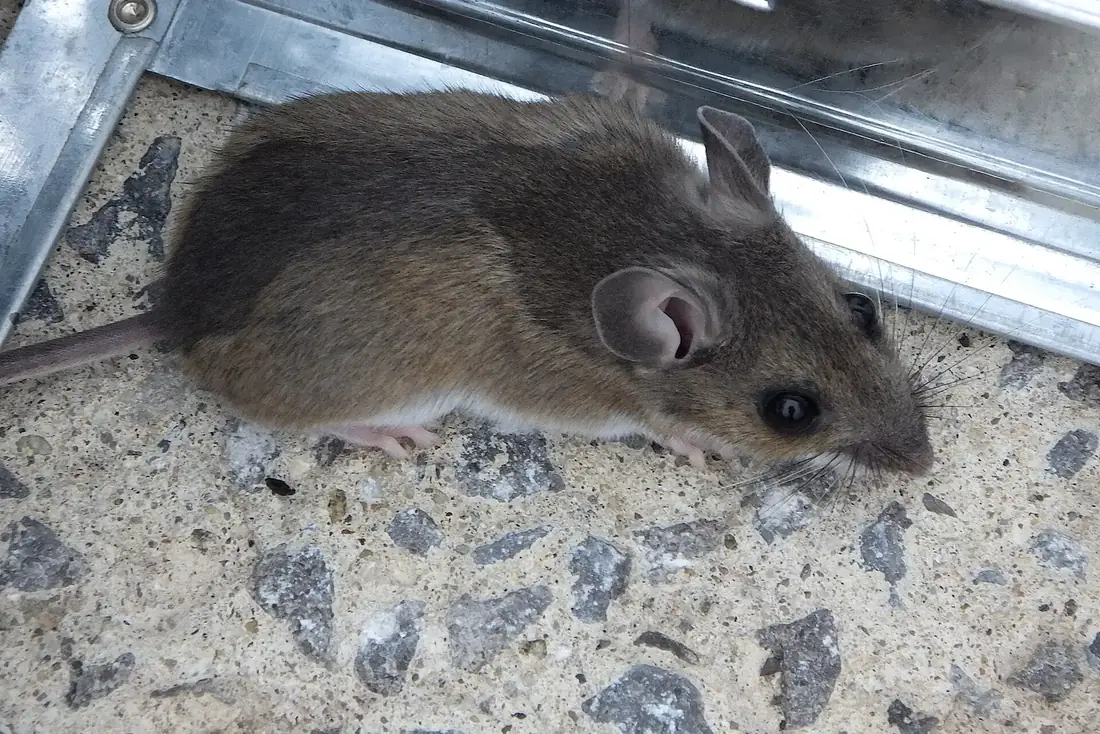
Mice start working their way into Polk County homes as October nights cool. Here’s how real mouse removal works, from the gap map to trap-out and sealing, and what to do while you wait.
Fall armyworms chew a lawn from the edges of the blade inward and move across it like a wave — you’ll see a ragged, advancing front with green grass on one side and shredded stubble on the other. Sod webworms graze in scattered patches, leave notched blades that look like a bad mowing job, and … Read more
For most routine interior pest control, kids and pets can come back in once the treated surfaces are completely dry — usually 2 to 4 hours. Exterior perimeter sprays are typically 30 minutes to 2 hours. Baits and gels often need no wait at all. Whole-structure fumigation is the outlier: 24 to 72 hours, and … Read more
Bed bug bites usually show up in short lines or tight clusters on skin that was covered by sheets and pajamas — arms, shoulders, upper back, neck. Flea bites are scattered red dots below the knee, mostly ankles and shins. Chigger bites ring the sock line, waistband, and behind the knees. Mosquito bites are single … Read more
Quick answer: Water-damaged wood is typically soft, swollen, or crumbly along a clear moisture path — near a roof leak, a plumbing line, or a window seal — and doesn’t hollow out from the inside. Termite-damaged wood keeps its outer shell mostly intact while the interior gets hollowed into layered galleries following the wood grain, … Read more
Quick answer: Florida homes see roach activity in every month of the year because the state never has a real winter die-off. German cockroaches live entirely indoors and breed continuously wherever there’s warmth, moisture, and food — conditions a Florida kitchen provides 365 days a year — while American cockroaches and other outdoor species keep … Read more
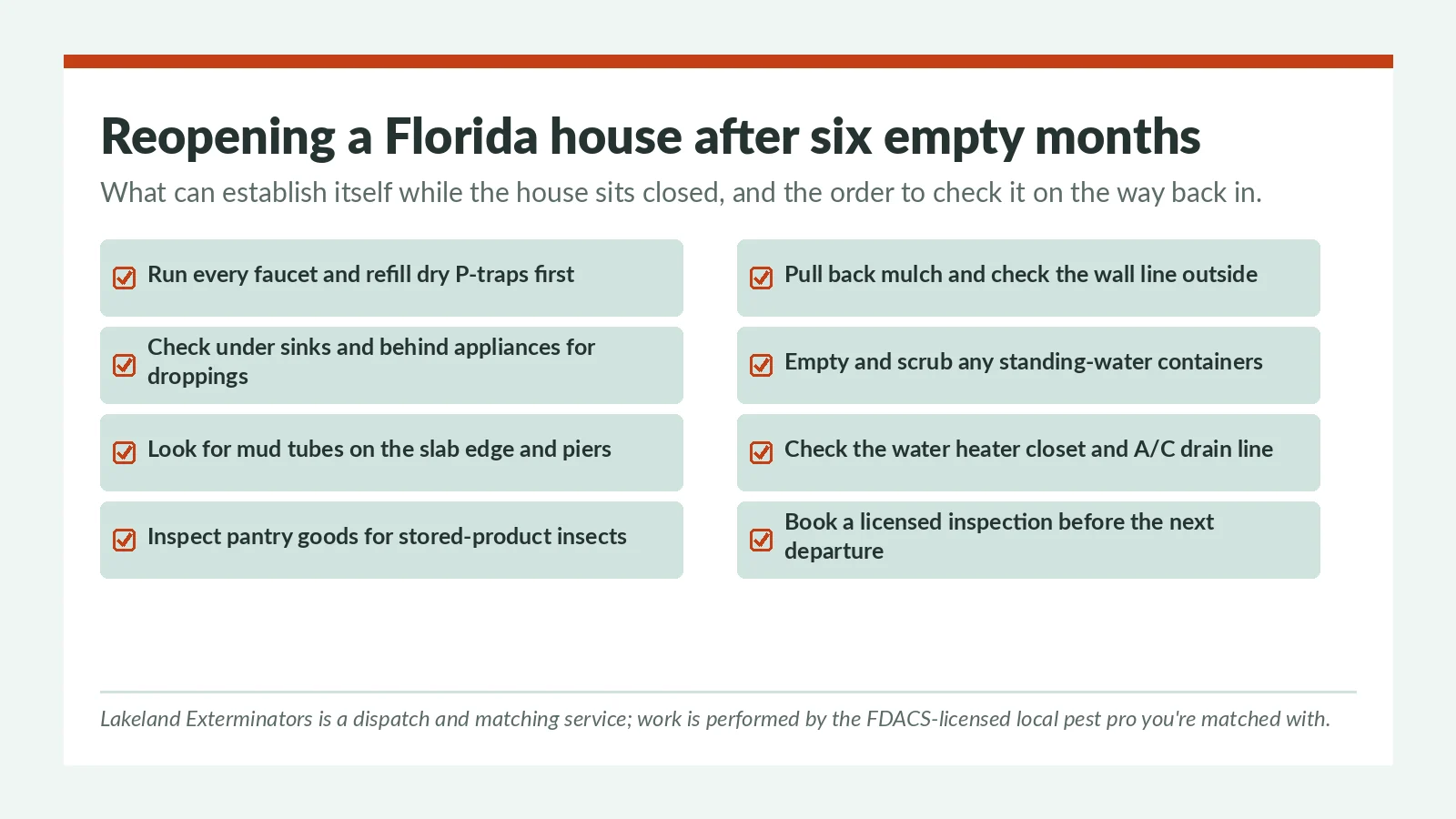
Seasonal Homes · Florida Field Notes · Updated August 2026 A Florida house does not pause while you summer up north. Six quiet months is exactly how long several pests need to turn a closed home into an occupied one. Every October and November, tens of thousands of seasonal residents unlock Florida doors that have … Read more
Rodent Season · Florida Field Notes · Updated August 2026 Florida’s rats do not wait for winter. They move indoors when the first dry-season signals hit — and the calendar says that is closer than it feels. Every October, dispatch lines across Florida record the same pattern: rodent calls that ran flat all summer start … Read more