Quick answer: Floodwater does not drown a fire ant colony — it relocates it. When Lakeland yards flood during summer storms, red imported fire ants link their bodies into floating rafts that carry the entire colony, queen included, until they hit dry ground. That is why new mounds appear in yards that never had them within days of a storm. Do not touch a floating mat of ants, keep pets and kids away from post-storm debris piles, and have new mounds treated at the colony level by the licensed local exterminator you’re matched with.
Dealing with a pest problem right now?
📞 Call now — get matched with a licensed local exterminator: (888) 295-0220When you call, stay on the line for a few seconds while we match you with the licensed local exterminator for your area. Have your address and a quick description of the problem ready.
Licensed local pros · Fast response, subject to availability · No obligation
Every August, the same pattern repeats across Polk County: an afternoon storm stalls, a low-lying yard takes on water, and a week later a homeowner who has never had a fire ant problem is staring at three fresh mounds along the fence line. It is not a coincidence. Flooding is one of the main ways fire ant colonies spread into new yards in Lakeland, and mid-August through October — the wettest, stormiest stretch of the Florida year — is when it happens.
What happens to a fire ant colony when a yard floods?
Red imported fire ants (Solenopsis invicta) nest in soil, but a colony is not helpless when that soil goes underwater. As water rises, workers evacuate the tunnels and grip one another’s legs and jaws, weaving a living mat that traps enough air to float. The queen, the brood — eggs, larvae, and pupae — and the winged reproductives ride in the protected center of the raft. The Alabama Cooperative Extension System notes that floodwaters will not kill fire ants; colonies emerge from the soil, form a loose floating ball, and drift with the current until they reach dry ground or something they can climb.
A raft can drift for days if it has to. When it bumps into a fence post, a tree trunk, a porch step, or simply higher ground, the colony climbs off, regroups, and starts digging — often within hours.
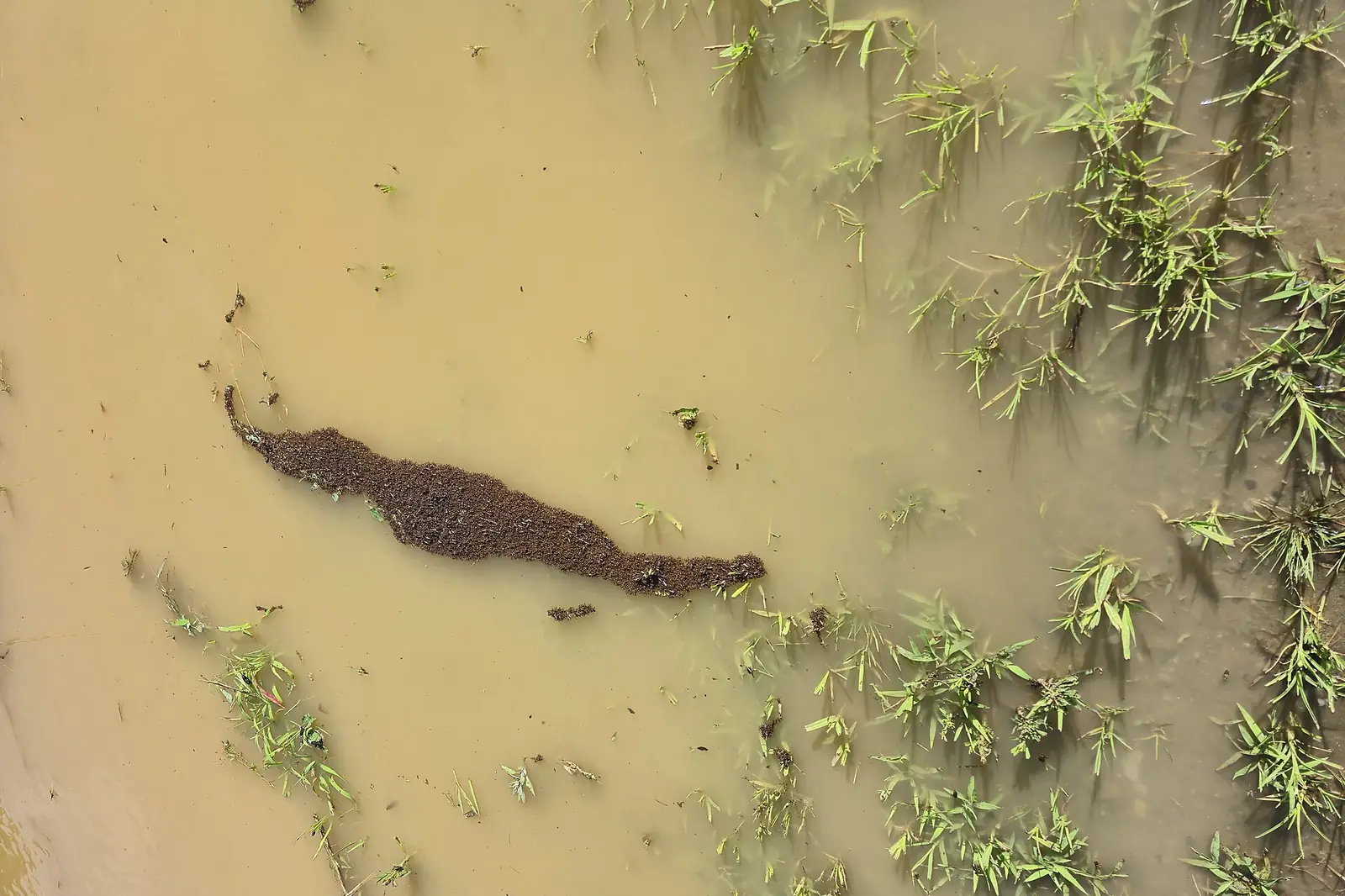
What does a fire ant raft look like on the water?
Most people describe it as a patch of floating debris until they get close: a tan-to-reddish mat, anywhere from the size of a saucer to several feet across, that ripples as thousands of ants shift position. Rafts can also string out into ribbons that snag on grass stems and mailbox posts. Treat anything that looks like it as live and defensive. Ants on a raft are agitated, quick to swarm anything solid they touch — including a boot, a paddle, or a wading pet — and a single grab of your pant leg can put hundreds of stinging workers on you in seconds.
Why does Lakeland see displaced colonies in August and September?
Three local facts stack on top of each other:
- Storm pattern. Lakeland’s daily summer thunderstorms peak from June through September, and the heart of Atlantic hurricane season runs mid-August through October. Both produce the short, intense flooding events that lift colonies without killing them.
- Water table and terrain. The Chain of Lakes city holds dozens of named lakes, retention ponds, and low swales between them. Yards near Lake Bonny, Lake Parker, and the flatter neighborhoods of North Lakeland shed water slowly, so even a routine storm can pond long enough to float a colony out of a neighboring lot, a park strip, or a pasture edge.
- Background pressure. Polk County’s mix of pasture, citrus, and new construction keeps fire ant populations high in exactly the open, sunny ground that borders subdivisions. Every flood event reshuffles those colonies toward whatever ground drains first — which is frequently a graded residential yard.
Where do rafting colonies end up after the water drops?
Wherever they made landfall. After a storm, the common landing zones in a Lakeland yard are:
- Fence lines and the base of posts, where drifting rafts snag;
- Debris piles — downed limbs, wet mulch, sandbags, and storm cleanup heaps make ready-made first shelters;
- Raised beds, tree rings, and the high side of a graded lawn;
- Under slabs, pavers, and A/C pads, where soil stays workable and protected.
Expect the first visible mounds two days to two weeks after the water recedes. A brand-new mound in a spot that has always been clean is the signature of a relocated colony, not a slowly growing old one.
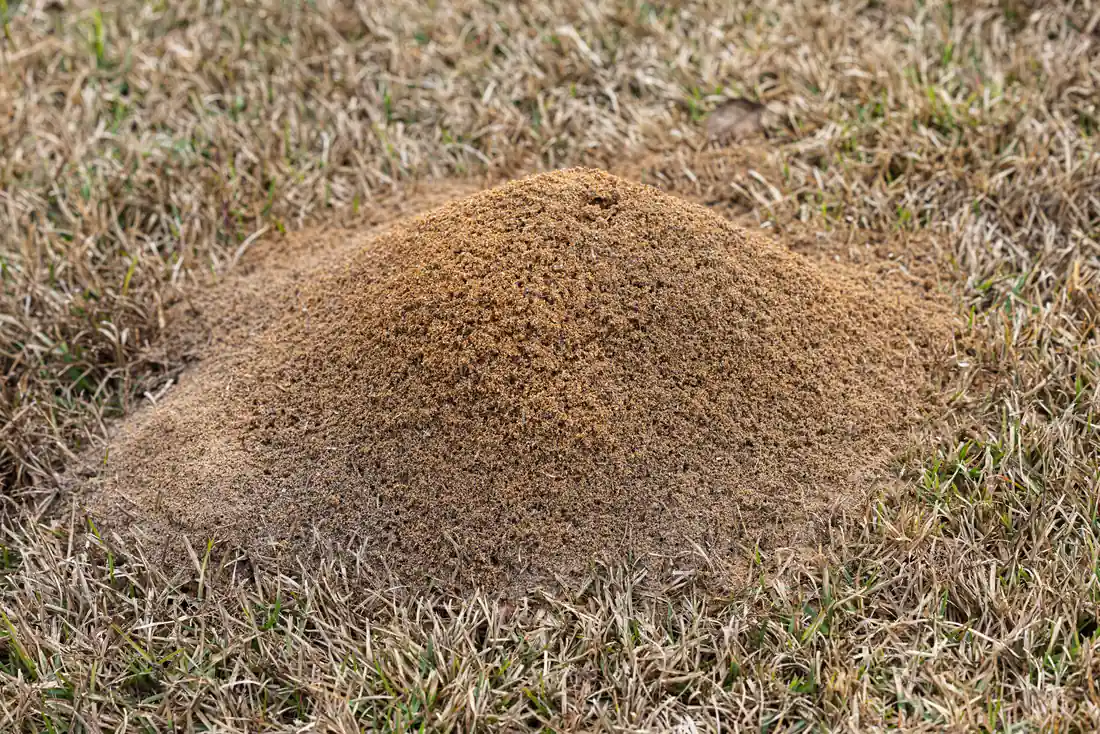
How should you handle mounds that show up after a storm?
- Do not kick, flood, or shovel the mound. Disturbing it scatters workers, triggers stinging, and often just splits the colony — the ants rebuild a few feet away.
- Skip the home-remedy list. Grits, boiling water, and gasoline are somewhere between useless and dangerous, and none of them reach the queen.
- Wear cuffed rubber boots and gloves during storm cleanup. The extension guidance for flood recovery applies in a backyard too: displaced ants hide in wet debris and swarm the first thing that disturbs the pile.
- Watch the yard for two to three weeks. Mark new mounds as they appear rather than treating one at a time — a flood event often drops more than one colony on a property.
Colony-level treatment is what actually ends it: fresh broadcast bait that foraging workers carry to the queen, plus direct mound treatment where mounds threaten walkways, patios, or play areas. Because the treatment window and product choice depend on rain timing and soil moisture, this is a job for licensed fire ant control in Lakeland — the licensed local operator you’re matched with can bait the whole property in one visit and time it around the afternoon storm cycle. And if the storm that brought the ants also left standing water, soaked wood, or roof damage, run through the Polk County hurricane recovery pest checklist so the fire ants are not the only pest problem you catch early.
Frequently asked questions
Can fire ants sting while they are floating?
Yes. Rafting ants are defensive and will swarm and sting anything solid they contact. Never touch a floating mat with a bare hand, a paddle you will handle later, or a wading pet nearby.
How long do fire ant rafts last?
Colonies can stay afloat for days, riding the current until they reach dry ground. Short ponding of even a few hours is enough to move a colony across a yard or in from a neighboring lot.
Do new mounds after rain always mean a flooded-in colony?
Not always — established colonies also rebuild taller mounds in soft, wet soil, which makes them suddenly visible. Either way, mounds that appear after a storm are active colonies and worth treating before they mature and spread reproductives of their own.
Will the ants leave on their own once the yard dries out?
No. Once a relocated colony digs in and the queen resumes laying, the colony is established. Untreated, a single mature colony can send out new queens on mating flights the following spring.