Quick answer: Central Florida’s rainy season — roughly June through September — resets your yard’s mosquito population every five to seven days. The species biting you at the grill, the container-breeding Aedes aegypti and Aedes albopictus, can go from egg to biting adult in under a week in a bottle cap of warm water, and they rarely fly more than a few hundred feet from where they hatched. That means most rainy-season mosquito problems are bred on your property or your immediate neighbors’ — and a weekly ten-minute container audit after each big rain does more than any zapper, candle or fogger you can buy.
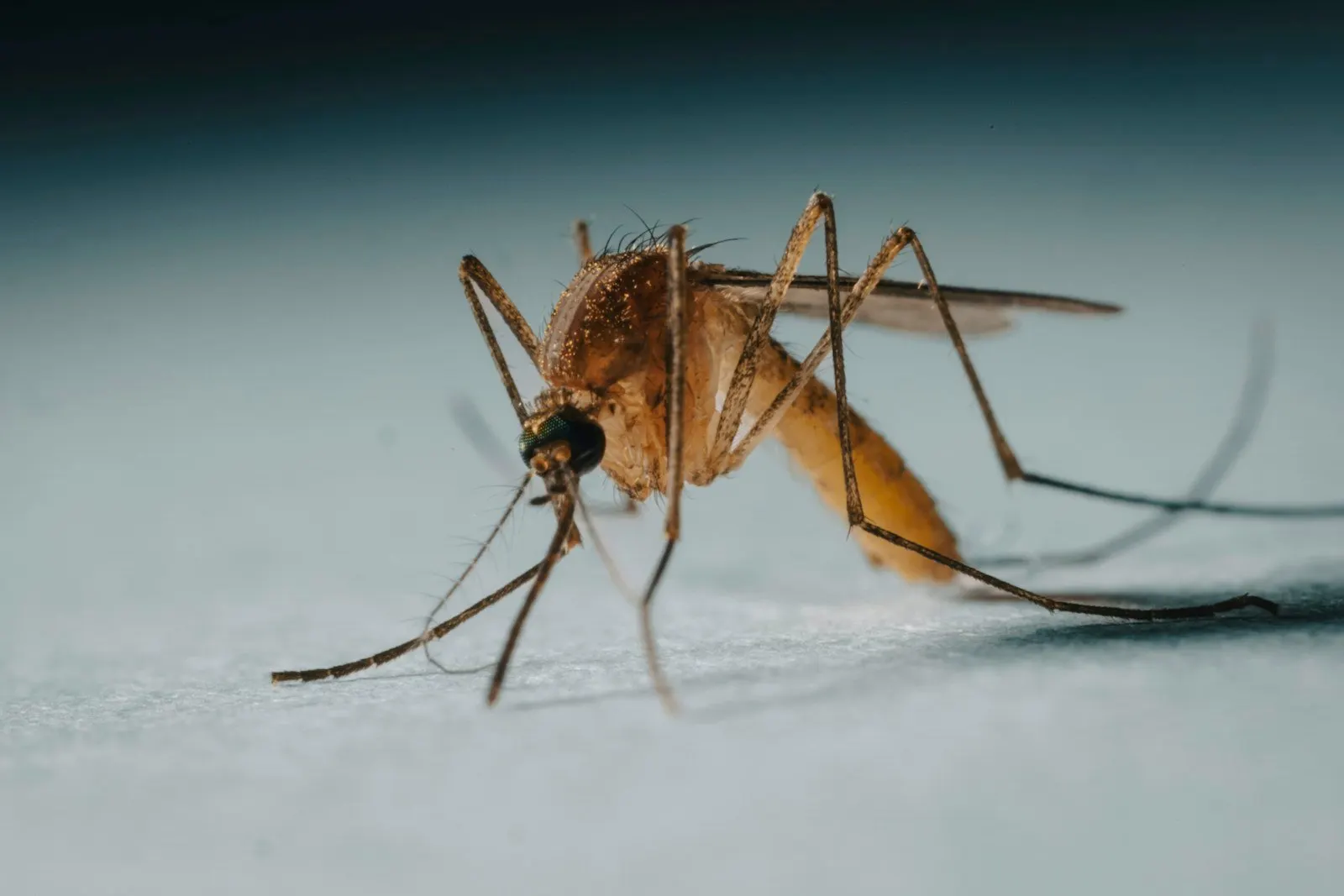
Why do mosquitoes explode five days after every big rain?
Because of a trick called egg banking. Container Aedes females do not lay eggs on water — they glue them to dry surfaces just above a waterline: the inside rim of a plant saucer, the fold of a tarp, the lip of a clogged gutter. Those eggs sit dormant, sometimes for months, until rain raises the water to touch them. Then the whole bank hatches at once. That is why a dry June week feels fine and the Saturday after a Thursday downpour feels like an ambush: the rain did not “bring” mosquitoes, it activated eggs your yard had already stockpiled.
The development math is brutal in Florida heat. At summer water temperatures, egg to larva to pupa to flying adult takes five to seven days. A single female lays 100–200 eggs per batch. Left alone, one overlooked bucket runs continuous production from June to October.
What actually holds water in a Central Florida yard?
Walk the property after the next storm and check these in order — this list comes from what licensed operators find on real service calls:
- Plant saucers and cache pots — the number-one urban breeding site. Empty weekly or fill saucers with sand.
- Bromeliads — the central cups are natural water tanks and Central Florida landscaping is full of them. Flush with a hose weekly or treat the cups with Bti granules, which target larvae and spare bees, butterflies and lizards.
- Clogged gutters — invisible from the ground and warm, which accelerates breeding. If mosquitoes appear near the roofline at dusk, this is the suspect.
- Tarps, toys, and trampoline covers — every fold is a nursery. Re-tension or flip after each rain.
- Rain barrels without screens — fit a fine mesh over every inlet or the barrel becomes a production plant.
- Boat and pool covers, wheelbarrows, tires, trash-can lids — flip, drain, drill drainage holes.
- French drains and yard low spots that hold water past four days — regrade or treat; if it dries within three days it cannot complete a mosquito life cycle.
Note what is not on the list: lakes, retention ponds and swales with fish and movement are rarely your backyard-biter source — predators and wave action suppress the container species. The mosquito control districts handle the marsh and floodwater species; the bottle-cap breeders in your hedge line are on you.
Do foggers, zappers and citronella actually work?
Zappers: no — studies consistently show they kill mostly harmless night insects and very few biting female mosquitoes. Citronella candles: marginal, a few feet of partial suppression in still air. Store foggers: real but brief — they knock down adults present at that moment, then new adults fly in from the untouched breeding sites within a day or two. EPA-registered skin repellents (DEET, picaridin, oil of lemon eucalyptus) genuinely protect the person wearing them. A box fan on the patio is honestly one of the better tools available — Aedes are weak fliers and cannot hold position in a crosswind.
What a licensed operator adds beyond all of this is the systematic version: a walked inspection that finds the sites you missed, larvicide placed in the water that cannot be dumped, a barrier treatment on the shaded resting foliage where adults wait out the heat, and a service interval matched to the rainy-season hatch cycle. If the yard is already doing everything on the list above and the bites keep coming, the source is usually a site you cannot see or cannot reach — a neighbor’s gutter, a vacant lot, an abandoned pool — and that conversation is worth having with a professional.
Yard audit done and still getting eaten alive?
A dispatch coordinator can match you with an FDACS-licensed mosquito operator serving your Central Florida ZIP — inspection, larviciding and barrier treatment are their call to quote.
Free to call · 24/7 · The licensed operator you’re matched with gives the quote.
When in the rainy season should treatment start?
Before the first June deluge, ideally — because the egg banks load in spring. A yard that gets its containers controlled and its first barrier treatment in May enters the rainy season with an empty bank, while the yard that starts in August is fighting three months of accumulated production. Mid-season starts still work; they just take two to three service cycles to pull the population down because new adults keep emerging from sites treated after their eggs were already laid.
The same logic scales by city. Container pressure looks different against Tampa’s dense older neighborhoods, Orlando’s stormwater-pond suburbs and Miami’s year-round season. The month-by-month Polk County picture is in the Polk mosquito calendar.
Rainy-season rhythm: a simple weekly routine
- After every storm: flip or drain anything that catches water; re-check tarps and toys.
- Weekly: flush bromeliads, empty saucers, check the rain barrel screen, run a hand along the gutter downspout outflow for standing backup.
- Monthly: drop Bti dunks in fountains, French drain boxes and anything that must hold water.
- At dusk gatherings: fan on the patio, repellent on the people — not sprays into the air.
Ten minutes a week, timed to the rain, beats any gadget on the market — and it makes whatever professional program you add dramatically more effective, because the operator is no longer treating around a yard that restocks itself every storm.
Disclosure: Lakeland Exterminators is a dispatch and matching service. We connect callers with FDACS-licensed pest control operators. We are not a licensed pest control operator and do not perform treatment, set prices, or issue warranties. All pricing, scheduling and treatment plans are determined by the FDACS-licensed operator dispatched to your address under Chapter 482, Florida Statutes.