The big roach flying at the porch light isn’t breeding indoors — but here’s why it keeps coming in.
One call reaches a licensed, local exterminator who covers your address — and a real person answers, 24/7.
Talk to a licensed exterminator now
Call and we’ll connect you with a licensed, local exterminator who covers your address. It takes about two minutes, and a real person answers.
Free to get matched. The licensed operator gives the quote.
24/7 line · A real person answers · Availability of same-day and emergency service depends on the provider.
Quick answer: what is a palmetto bug?
In Polk County, “palmetto bug” most often means the American cockroach (Periplaneta americana) — reddish-brown, 1.5–2 inches long, with a pale yellow figure-eight pattern on the pronotum. Two relatives share the label: the Florida wood roach (Eurycotis floridana) and the Australian cockroach (Periplaneta australasiae). All three are large, outdoor-associated roaches that fly short distances on warm humid nights and enter homes seasonally.
The good news: unlike the German cockroach, palmetto bugs don’t establish self-sustaining indoor populations. They’re intruders, not colonizers. So control is an outside-in job — an exterior perimeter barrier plus sealing the plumbing, sewer, and vent penetrations they use to get in.
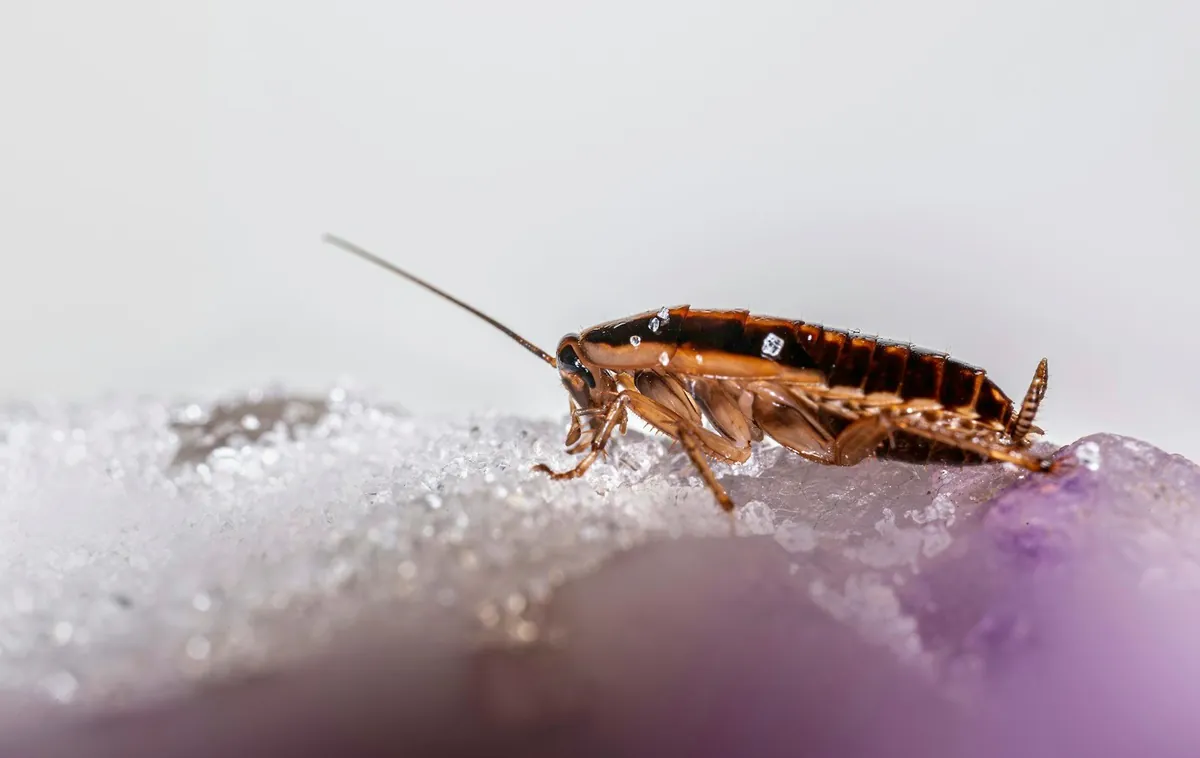
Which cockroach is actually in your home?
American cockroach (palmetto bug)
1.5–2 inches, reddish-brown, pale figure-eight on the pronotum, flies short distances. Outdoor-associated; enters seasonally through penetrations.
Florida wood roach
1.25–1.5 inches, glossy reddish-brown to mahogany. Prefers outdoor wood debris; an occasional indoor intruder, not a colonizer.
Australian cockroach
About 1.25 inches, reddish-brown with yellow markings on the pronotum and yellow wing edges. Outdoor-associated, similar habits.
German cockroach
Only half an inch, light brown with two dark stripes. Indoor-breeding — a fundamentally different (and harder) problem. See the German cockroach page.
The ID matters because the treatment diverges completely: palmetto bugs are handled from the perimeter, German roaches from interior harborage with gel bait and IGRs.
Why palmetto bugs keep coming inside
Polk County’s warm, humid climate and abundance of decaying organic matter — palm fronds, mulch beds, oak-leaf litter, compost — support enormous outdoor American cockroach populations. Damp sub-structures and cool interiors draw them in during heat, drought, and heavy rain. Common entry routes:
- Plumbing penetrations under sinks and behind appliances.
- Floor and sewer drains — a classic nighttime entry point.
- Weep holes in masonry and block walls.
- Dryer-vent exits and gaps around the dryer duct.
- Gaps under exterior doors and garage-door seals.
- Soffit and attic gaps near tree contact.
A daytime sighting or a heavy nighttime influx usually points to a strong outdoor population plus an open highway inside — which is exactly what a licensed operator’s inspection maps.
How a licensed operator keeps them out
Exterior perimeter barrier
A residual band around the foundation, eaves, soffits, window frames, and door thresholds — intercepting roaches before they reach the entry points.
Entry-point sealing
Sealing plumbing penetrations, capping unused drains, screening weep holes and vents, and adding door sweeps — the durable half of the fix.
Harborage reduction
Pulling mulch and palm litter back from the foundation, clearing leaf debris, and fixing moisture that feeds the outdoor population.
Most quarterly perimeter programs keep palmetto bugs suppressed with routine exterior service. For whole-home coverage this pairs with roach extermination in Lakeland and general Polk County pest control.
Palmetto bugs marching in every night? Treat the outside.
One call reaches a licensed, local exterminator who covers your address — and a real person answers, 24/7.
Free to get matched. The licensed operator gives the quote.
Palmetto bug FAQs
Do palmetto bugs mean my house is dirty?
Are palmetto bugs the same as German roaches?
Why doesn’t indoor spraying stop them?
Will a quarterly plan handle them?
Are you the pest control company?
Related Polk County pages
Disclosure
Lakeland Exterminators is a dispatch and matching service. We connect Polk County callers with FDACS-licensed structural pest control operators. We are not a licensed pest control operator. We do not perform treatment, set prices, issue warranties, or carry pest control trade insurance. All pricing, scheduling, treatment plans, and service terms are determined by the FDACS-licensed operator dispatched to your address under Chapter 482, Florida Statutes.
Same-day and 24/7 emergency services are subject to provider participation, location, technician availability, and demand. Availability is not guaranteed and may vary by market and appointment capacity.
License status of any operator you connect with is publicly verifiable at the FDACS license search.