Termite treatment in Tampa isn’t one decision. It’s three: which species, which structure, which method.
Tampa runs all three Florida termite problems at once. Formosan subterranean colonies — the imported species with carton nests that can live inside walls without touching soil — are established along the waterfront from Davis Islands up Bayshore. Native Eastern subterranean termites work the post-war slab ranches of Town ’n’ Country and Temple Terrace, where 1970s soil barriers expired decades ago. And drywood termites ride the old wood of Seminole Heights, Ybor and Hyde Park bungalows, leaving pepper-grain pellet piles under window sills. Each one calls for a different treatment — and paying for the wrong one is the most expensive mistake in Tampa pest control. The dispatch line matches you by ZIP with an FDACS-licensed termite operator who names the species with evidence before naming a method.
Talk to a live dispatch coordinator now
Mud tubes on the stem wall, pellets under a Seminole Heights window, swarmers at the porch light on a May night — describe it and get routed to a licensed Tampa termite operator.
(863) 445-9190Tap to call — 24/7 dispatch
Free to call. Free to get matched. The licensed operator you’re matched with gives the quote.
24/7 line · A real person answers · Availability of same-day and emergency service depends on the provider.
Need termite treatment in Tampa, FL? Call (863) 445-9190 and a dispatch coordinator matches you with an FDACS-licensed termite operator serving your Tampa ZIP — liquid soil treatments and bait systems for subterranean and Formosan colonies, tent and no-tent options for drywood. Lakeland Exterminators is a dispatch service: the licensed local operator inspects, confirms the species, and quotes the treatment.
Which termite treatment does a Tampa home actually need?
It depends entirely on what the evidence proves. Subterranean evidence is mud — pencil-width shelter tubes climbing a slab edge or crawl-space pier, moisture-blistered baseboards, hollow framing packed with soil. That points to ground-based treatment: a non-repellent liquid termiticide trenched around the foundation so foragers carry it back through the colony, or an in-ground bait system that eliminates the colony over a season. Drywood evidence is dry — six-sided pellet piles the color of the wood they came from, kick-out holes the size of a pinhead, blistered paint over galleries. That points at wood-level work: structural fumigation when colonies are spread through a roof structure, or localized spot treatment when an inspector can prove the infestation is contained.
Tampa adds a third layer: the Formosan subterranean termite. Established along the bay from Davis Islands through Bayshore and into South Tampa’s older blocks, Formosan colonies run far larger than native ones and build carton nests — chewed wood, soil and saliva — inside wall voids, sometimes with no soil contact at all. That matters for method: a home with an active Formosan carton nest can be tented for drywoods and reinfested from the ground the same year, or soil-treated while the nest upstairs keeps working. Formosan jobs often need combined soil and structural work, and they reward operators who’ve handled them before. When you call the line, the coordinator asks what you’re seeing precisely because a Davis Islands mud-and-carton problem and a Seminole Heights pellet pile route to different specialists.
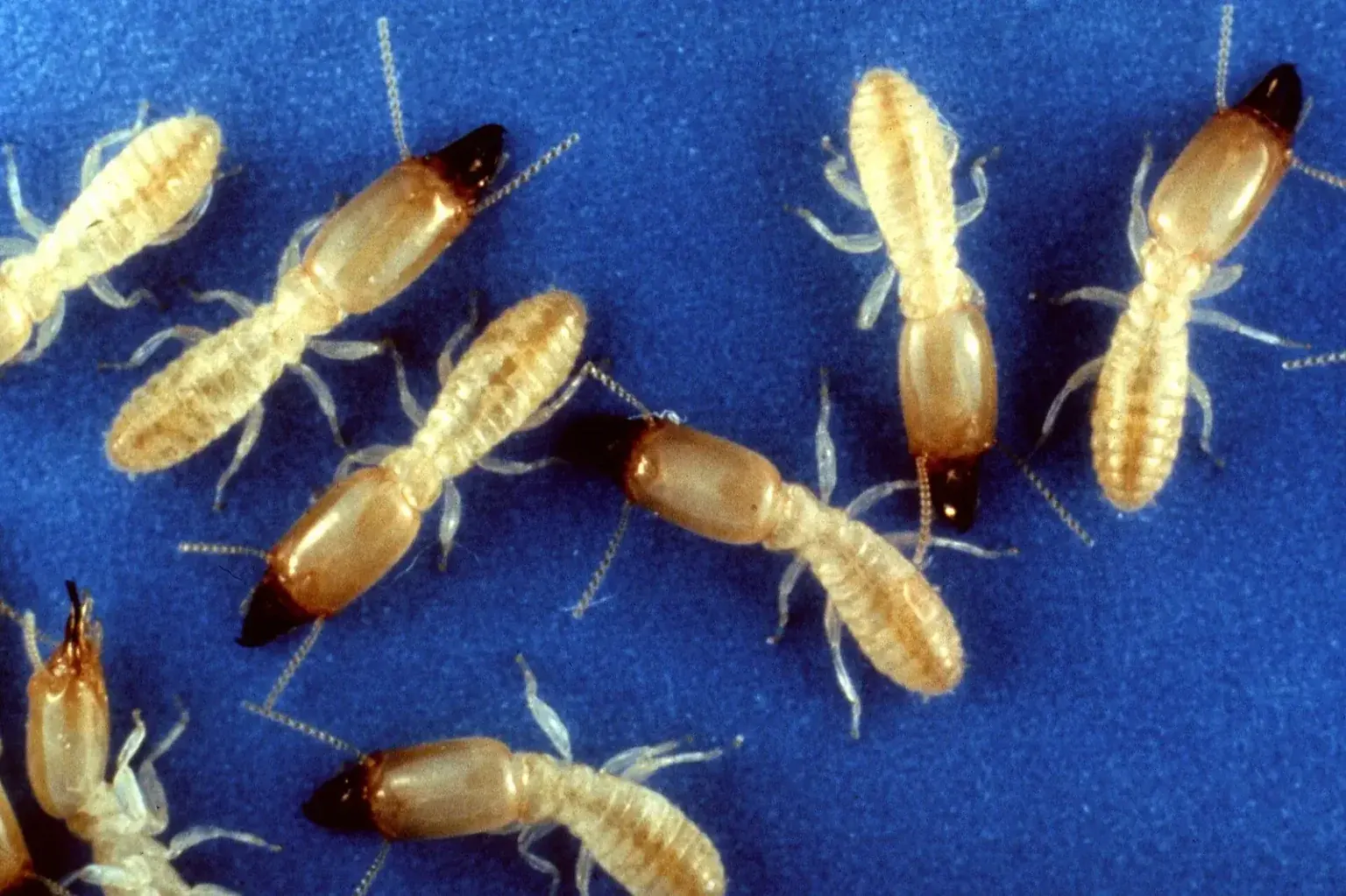
Where does termite treatment work concentrate in Tampa?
- Seminole Heights & Ybor (33603, 33604, 33605): pre-war pier bungalows — drywood pellet inspections at window framing plus subterranean checks at every crawl-space pier.
- Hyde Park, SoHo & Palma Ceia (33606, 33629): renovated historic wood near the bay — drywood discoveries mid-remodel, Formosan pressure off Bayshore.
- Davis Islands & Harbour Island (33602, 33606): waterfront Formosan territory — combined soil-and-structure evaluations are the norm, not the exception.
- Town ’n’ Country & Carrollwood (33615, 33618, 33634): 1960s–80s slab ranches with original, long-expired soil barriers — re-treatment and bait-system country.
- Westchase & Citrus Park (33625, 33626): 1990s–2000s builds hitting the age where builder pretreats have quietly lapsed.
- New Tampa (33647): newer construction — bond continuation decisions and first re-treats as pretreat warranties expire.
Liquid, bait, tent or spot — how do you choose?
You don’t — the evidence does. Non-repellent liquid termiticides go in as a treated zone around the foundation; termites can’t detect the active ingredient, tunnel through it, and transfer it colony-deep. It’s the workhorse for active subterranean infestations because it starts killing immediately. Bait systems trade speed for elimination — stations intercept foragers and a growth inhibitor collapses the colony itself over months, which is why they’re favored where slabs, wells or lake-adjacent soil make trenching impractical. Structural fumigation is a drywood tool: the tent takes the whole envelope to a lethal gas concentration, reaching colonies no spot treatment can find — but it does nothing for subterraneans in the ground. Spot and no-tent treatments handle drywood colonies an inspector can localize with confidence. A treatment plan that names one of these before showing you species evidence has it backwards — and that’s the single most useful thing a Tampa homeowner can know before signing anything.
Call the line
Tap (863) 445-9190 any hour. Describe what you’re seeing — tubes, pellets, swarmers — and your Tampa ZIP.
Get matched by evidence
Mud evidence routes to soil-treatment operators; pellet evidence to drywood-fluent inspectors; suspected Formosan signs to operators equipped for combined work.
A licensed operator takes over
An independent, FDACS-licensed and insured Tampa termite operator inspects, confirms the species, and quotes. No obligation — the dispatch call costs nothing.
Mud on the slab? Pellets on the sill? Swarmers at the porch light?
The line answers 24/7 and matches you with a licensed Tampa termite operator.
One tap. One call. Matched.
(863) 445-9190Tap to call — 24/7 dispatch
Free to call. The licensed operator gives the quote.
Tampa termite treatment questions, answered straight
When is termite swarm season in Tampa?
Do I have to tent my Tampa house?
How long does a termite treatment protect a Tampa home?
What does termite treatment cost in Tampa?
Disclosure
Lakeland Exterminators is a pest control dispatch and referral service, not a licensed pest control operator. All termite inspections, quotes and treatments in Tampa are performed by independent pest control operators licensed by the Florida Department of Agriculture and Consumer Services (FDACS) and insured in their own name. Calling the dispatch line is free and creates no obligation; the licensed local operator you’re matched with sets their own pricing and terms.
More Tampa help: Pest control in Tampa, Termite inspections & WDO reports in Tampa, Roach control in Tampa · Termite dispatch guide · All pest control services