Tampa’s rat problem runs on rooftops. Poison alone never fixes it — sealing the building does.
The scratching over your ceiling at 2 a.m. is almost certainly a roof rat — the black rat that dominates Tampa the way it dominates every warm port city. They travel the oak canopy of Seminole Heights, the ficus hedges of South Tampa and the utility lines of every neighborhood in between, and they step off onto rooflines through gaps the width of a quarter. A bait-only program kills this month’s rats and leaves the highway open for next month’s. The dispatch line matches you with FDACS-licensed operators who work Tampa rodent jobs the durable way: trap out what’s inside, seal every entry, and cut off the routes that brought them.
Talk to a live dispatch coordinator now
Scratching in the attic, droppings in the garage, chewed wires, something running the fence line at dusk — describe it and get routed to a licensed Tampa rodent operator.
(863) 445-9190Tap to call — 24/7 dispatch
Free to call. Free to get matched. The licensed operator you’re matched with gives the quote.
24/7 line · A real person answers · Availability of same-day and emergency service depends on the provider.
Need rodent control in Tampa, FL? Call (863) 445-9190 and a dispatch coordinator matches you with an FDACS-licensed operator serving your Tampa ZIP — attic inspections, trap-out programs, entry-point sealing and follow-up monitoring for roof rats and mice. Lakeland Exterminators is a dispatch service: the licensed local operator inspects, finds the entries, and quotes the work.
Why are roof rats so relentless in Tampa?
Geography and vegetation. Roof rats are climbers — in Tampa they rarely touch the ground between the neighbor’s mango tree and your attic. The canopy streets that make Seminole Heights and Palma Ceia beautiful are rat interstates; fruit trees — mango, avocado, citrus, loquat — are provisioning stops; and the utility lines sagging between poles are the on-ramps. Add Tampa’s housing quirks and the problem compounds: pre-war bungalows have fascia returns and ridge gaps that were never rodent-proofed, 1970s ranches have unscreened gable vents and roof-to-wall junctions that opened as the framing settled, and barrel-tile roofs across South Tampa leave entry arches at every eave course unless they were properly mudded or screened.
Once inside, the damage bill starts running. Rats gnaw constantly — attic wiring is the classic casualty, and chewed wire is a genuine fire hazard, not a scare line. They shred duct insulation for nesting, foul attic decking, and breed fast enough that a “one rat” October becomes a colony by January. That’s why licensed Tampa operators sequence the job: inspection with a light and a mirror along every eave, a trapping program inside (snap traps on runways beat bait boxes in an attic — a poisoned rat dying in a wall void becomes a two-week odor problem), exclusion with rodent-rated materials — hardware cloth, sheet metal, mortar — and a follow-up visit to confirm zero new activity before the job is called done.
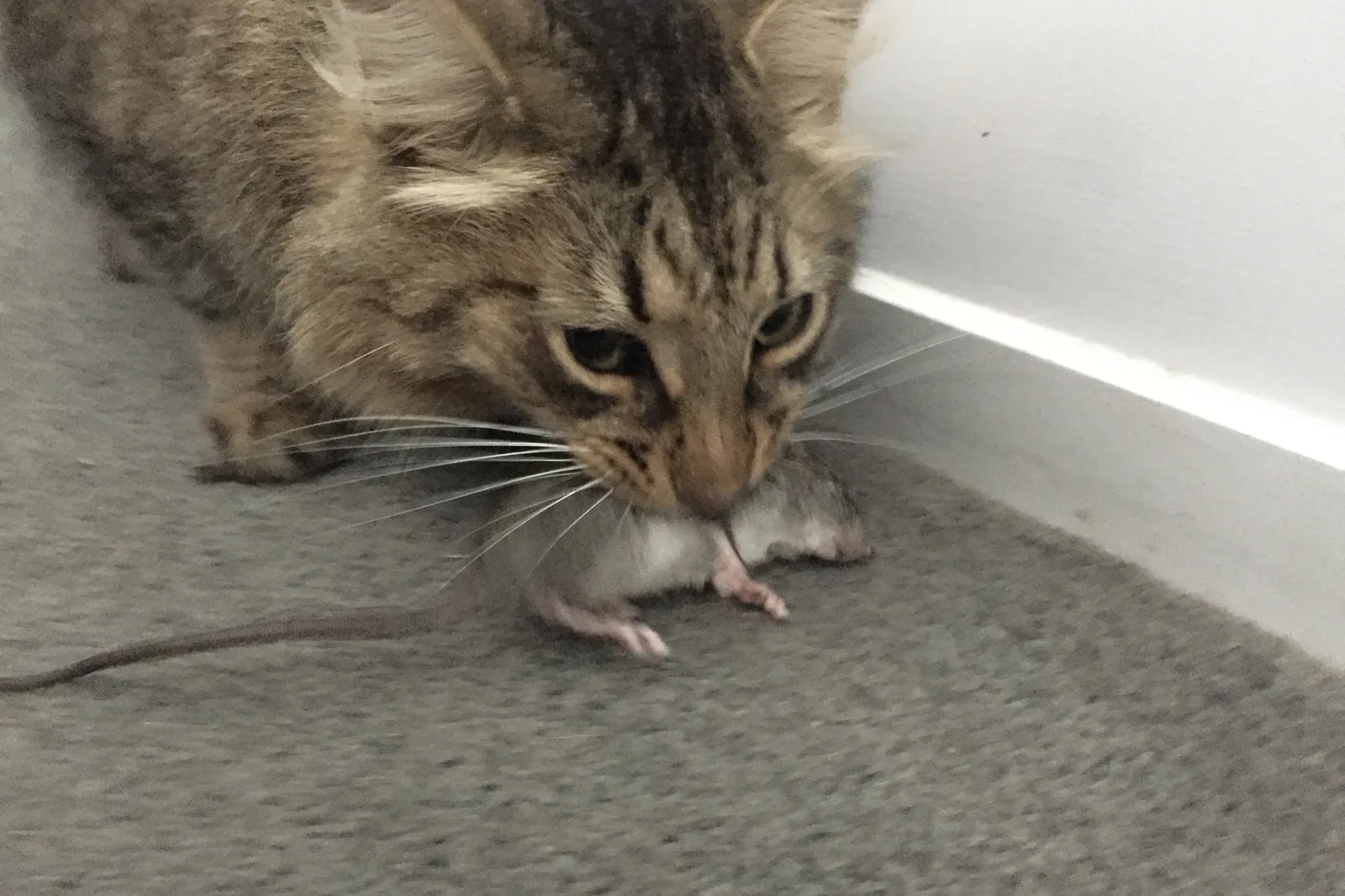
Where does rodent pressure concentrate in Tampa?
- Seminole Heights (33603, 33604): oak canopy plus bungalow attics — the densest roof-rat conditions in the city.
- South Tampa & Palma Ceia (33609, 33611, 33629): ficus hedges, fruit trees and barrel-tile eaves — classic canopy-to-roofline routes.
- Ybor & East Tampa (33605): older commercial buildings, alley dumpsters and storm sewers — mixed roof rat and Norway rat pressure at ground level.
- Town ’n’ Country & Carrollwood (33615, 33618, 33634): settled 1970s-80s ranches with opened roof-to-wall gaps and unscreened vents.
- Westchase & Citrus Park (33625, 33626): pond-edge and preserve-edge homes — wild pressure meets landscaped cover.
- New Tampa (33647): conservation-backed lots — attic checks each fall as outdoor food thins.
What separates real exclusion from a bait-box subscription?
Ask what gets sealed, with what, and what happens if activity returns. A real exclusion job produces a written entry-point map — gable vents, ridge caps, fascia returns, AC chase penetrations, garage door corners — and closes each one with materials rats can’t chew through: quarter-inch hardware cloth, sheet metal flashing, mortar or specialized sealants, never foam alone (rats eat foam like bread). Trapping comes first so nothing gets sealed inside. Bait stations have a place at the property perimeter for ongoing pressure, but a program that is only bait boxes on a monthly invoice manages the symptom, not the building. In a canopy city like Tampa, the seal is the product; everything else is maintenance.
Call the line
Tap (863) 445-9190 any hour. Describe what you’re hearing and finding, and your Tampa ZIP.
Get matched by job type
Attic trap-out and exclusion calls route to operators who do sealing work; commercial and multifamily calls route to providers with monitoring programs.
A licensed operator takes over
An independent, FDACS-licensed and insured Tampa operator inspects, maps entries, and quotes. No obligation — the dispatch call costs nothing.
Scratching overhead at 2 a.m.? Droppings behind the water heater?
The line answers 24/7 and matches you with a licensed Tampa rodent operator.
One tap. One call. Matched.
(863) 445-9190Tap to call — 24/7 dispatch
Free to call. The licensed operator gives the quote.
Tampa rodent control questions, answered straight
Rats or squirrels — how do I tell what’s in my Tampa attic?
Why not just put out poison?
Do I have to cut down my fruit trees or hedges?
What does rodent control cost in Tampa?
Disclosure
Lakeland Exterminators is a pest control dispatch and referral service, not a licensed pest control operator. All rodent inspections, quotes, trapping and exclusion work in Tampa are performed by independent pest control operators licensed by the Florida Department of Agriculture and Consumer Services (FDACS) and insured in their own name. Calling the dispatch line is free and creates no obligation; the licensed local operator you’re matched with sets their own pricing and terms.
More Tampa help: Pest control in Tampa, Roach control in Tampa, Termite treatment in Tampa · Rodent dispatch guide · All pest control services