Most of Florida fights one rat. Jacksonville — a port city with a river through it — fights both.
South Florida rodent work is mostly roof rats. Jacksonville is different: the roof rat owns the oak canopy and attics of Riverside, Avondale and San Marco, while the burly Norway rat — a burrower that thrives around ports, rail corridors and riverfront infrastructure — holds the ground game near the docks, downtown alleys and older commercial strips. They enter differently, nest differently and get controlled differently, and a program built for the wrong one quietly fails. The dispatch line matches you with FDACS-licensed operators who diagnose which rat you have before a single trap goes down — and who finish the job the only way rodent jobs finish: with the building sealed.
Talk to a live dispatch coordinator now
Night scratching over a Murray Hill ceiling, burrows against a warehouse slab, droppings in the garage, chewed wiring — describe it and get routed to a licensed Jacksonville rodent operator.
(863) 445-9190Tap to call — 24/7 dispatch
Free to call. Free to get matched. The licensed operator you’re matched with gives the quote.
24/7 line · A real person answers · Availability of same-day and emergency service depends on the provider.
Need rodent control in Jacksonville, FL? Call (863) 445-9190 and a dispatch coordinator matches you with an FDACS-licensed operator serving your Duval County ZIP — attic trap-outs and roofline exclusion for roof rats, burrow-and-perimeter programs for Norway rats, and monitoring for homes and commercial sites. Lakeland Exterminators is a dispatch service: the licensed local operator inspects, identifies the species, and quotes the work.
Roof rat or Norway rat — and why does it change the program?
Read the evidence like an operator. Roof rats: slender build, tail longer than the body, attic noise at night, droppings spindle-shaped with pointed ends, grease rub-marks along rafters and wire runs, entries at the top of the building — gable vents, fascia returns, limb bridges from the oaks. Their program is vertical: trap-out on the attic runways, exclusion at the roofline with hardware cloth and metal flashing, canopy trimmed six feet off the structure. Norway rats: heavy build, blunt muzzle, tail shorter than body, droppings capsule-shaped with blunt ends, and the giveaway — burrows: two-to-four-inch holes with fresh soil kicked out, against foundations, under slabs, along fence lines and dumpster pads. Their program is horizontal: burrow treatment and collapse verification, ground-level exclusion (door thresholds, pipe penetrations, broken vent screens at grade), sanitation on the food sources that anchor them, and perimeter bait stations where sustained pressure warrants.
Jacksonville’s geography feeds both. The port, the rail yards and the working riverfront sustain Norway populations that radiate into adjacent neighborhoods — Springfield’s alleys, downtown’s older commercial blocks, the industrial Westside. Meanwhile the canopy neighborhoods run the classic Florida roof-rat economy: oaks touching rooflines, fruit trees, unscreened attic vents on pre-war housing. Hurricane season stirs the pot twice — storm surge and heavy rain flood burrows and push ground rats to higher harborage, while wind damage opens new roofline entries for climbers. The weeks after a big storm are Jacksonville’s rodent rush hour, and the inspection that maps your building’s entries is what turns that season from a threat into a checklist.
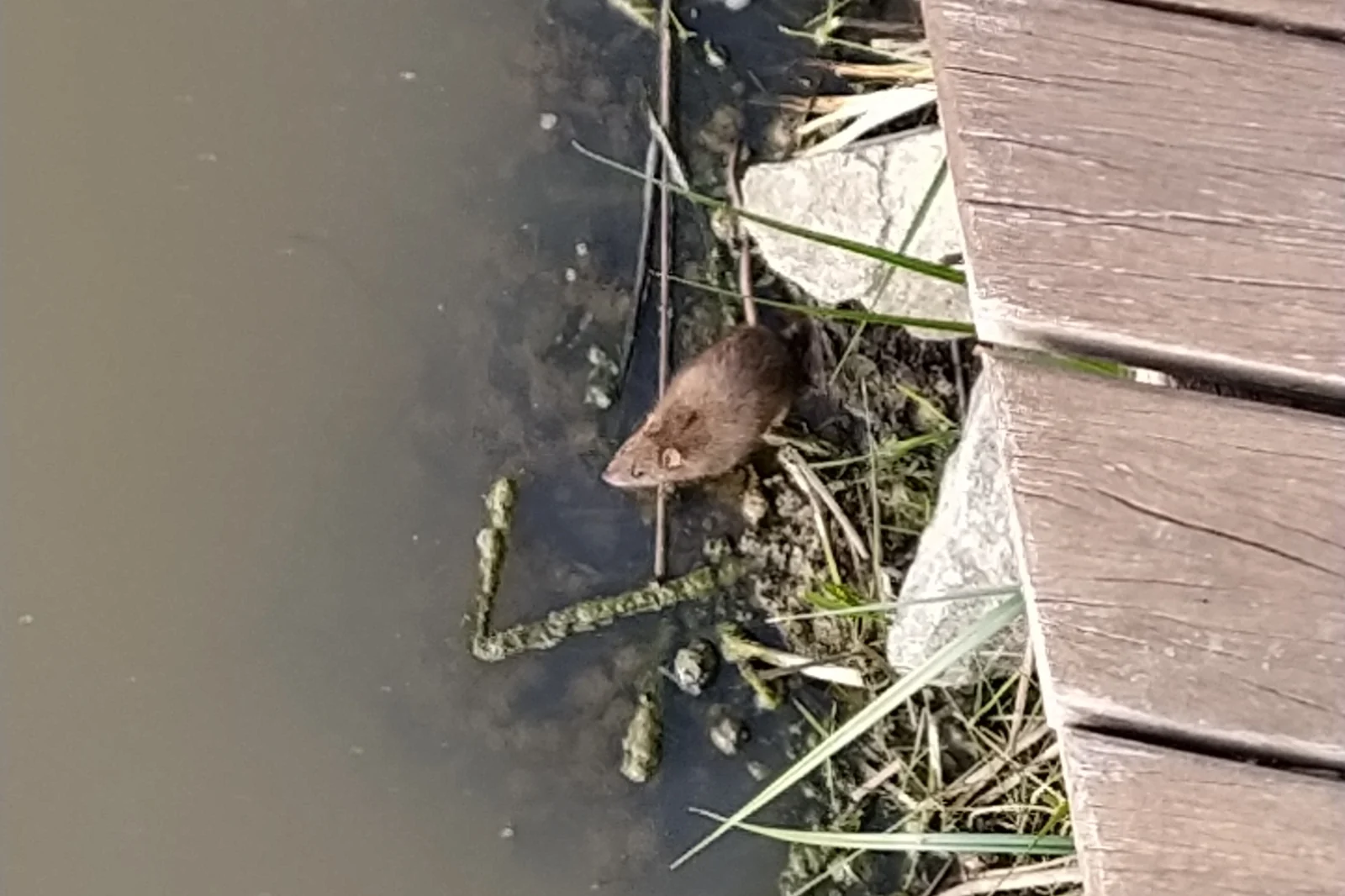
Where does rodent pressure concentrate in Jacksonville?
- Riverside, Avondale & Ortega (32204, 32205, 32210): oak canopy over pre-war attics — roof rat core territory.
- Springfield & Downtown (32202, 32206): older commercial blocks, alleys and mixed pressure — both species in play.
- San Marco & St. Nicholas (32207): riverfront canopy streets — roof rats on the lines, ground pressure near restaurants.
- Port, Talleyrand & industrial corridors (32206, 32226): Norway rat strongholds radiating into adjacent blocks.
- Arlington & Southside (32211, 32216, 32246): multifamily dumpster ecology plus 1960s-80s attic vents due for screening.
- The Beaches (32233, 32250, 32266): rental turnover, elevated older cottages and dune-adjacent cover.
What does a finished rodent job look like — and what’s never finished?
Finished: a written entry map with every opening closed in rodent-proof materials (quarter-inch hardware cloth, sheet metal, mortar — never foam alone), a trap-out with a documented catch curve that hit zero, burrows collapsed and staying collapsed, and a follow-up visit confirming no new droppings, no new rub marks, no new gnawing. Never finished: bait-box-only programs on a monthly invoice with no exclusion line item — around a port city’s permanent rat reservoir, unlimited bait plus unsealed buildings equals a subscription, not a solution. Bait stations have a legitimate role at perimeters under sustained pressure — commercial sites near the corridors often need them — but they follow the seal, they don’t replace it. One more Jacksonville-specific note: poison in an attic is a bad trade anywhere, but in canopy neighborhoods full of owls and hawks, secondary poisoning is a real wildlife cost. Trap inside; manage outside.
Call the line
Tap (863) 445-9190 any hour. Describe what you’re hearing, finding, and where — plus your Duval ZIP.
Get matched by species and site
Attic and canopy calls route to exclusion-strong operators; burrow, port-adjacent and commercial calls route to ground-game providers with monitoring programs.
A licensed operator takes over
An independent, FDACS-licensed and insured Jacksonville operator inspects, maps entries, and quotes. No obligation — the dispatch call costs nothing.
Scratching upstairs? Burrows against the slab?
The line answers 24/7 and matches you with a licensed Jacksonville rodent operator.
One tap. One call. Matched.
(863) 445-9190Tap to call — 24/7 dispatch
Free to call. The licensed operator gives the quote.
Jacksonville rodent control questions, answered straight
I found burrow holes by my foundation. Is that rats or something else?
Do ultrasonic repellers work for Jacksonville rats?
How fast does a rat problem escalate if I wait?
What does rodent control cost in Jacksonville?
Disclosure
Lakeland Exterminators is a pest control dispatch and referral service, not a licensed pest control operator. All rodent inspections, quotes, trapping and exclusion work in Jacksonville are performed by independent pest control operators licensed by the Florida Department of Agriculture and Consumer Services (FDACS) and insured in their own name. Calling the dispatch line is free and creates no obligation; the licensed local operator you’re matched with sets their own pricing and terms.
More Jacksonville help: Pest control in Jacksonville, Termite treatment in Jacksonville, Roach control in Jacksonville · Rodent dispatch guide · All pest control services