Four hundred miles of canals gave Cape Coral waterfront living — and gave its rats a transit map.
Cape Coral’s canal network is the most extensive of any city in the world, and roof rats treat it as infrastructure: seawall caps are elevated runways, dock pilings and boat lines are on-ramps, riprap and seawall weep gaps are shelter, and the landscaped lots backing every canal supply fruit, palm skirts and irrigation water. From the seawall, the route to your attic is a bougainvillea trellis, a queen palm, or the boat canopy standing off the davits. Add the empty-lot checkerboard of the northwest Cape — overgrown parcels between built homes — and pressure has both a highway and a hinterland. The dispatch line matches you with FDACS-licensed operators who work Cape Coral rodent jobs the way the city is actually wired: from the water in.
Talk to a live dispatch coordinator now
Scratching over the lanai ceiling, droppings in the boat, chewed dock lines, something running the seawall at dusk — describe it and get routed to a licensed Cape Coral rodent operator.
(863) 445-9190Tap to call — 24/7 dispatch
Free to call. Free to get matched. The licensed operator you’re matched with gives the quote.
24/7 line · A real person answers · Availability of same-day and emergency service depends on the provider.
Need rodent control in Cape Coral, FL? Call (863) 445-9190 and a dispatch coordinator matches you with an FDACS-licensed operator serving your Cape Coral ZIP — attic inspections and trap-outs, roofline and soffit exclusion, dock-and-seawall route management, and follow-up monitoring. Lakeland Exterminators is a dispatch service: the licensed local operator inspects, maps the entries, and quotes the work.
How do canal lots change the rodent playbook?
They add a waterfront flank most cities don’t have. A standard rodent inspection walks the roofline and the landscaping; a Cape Coral inspection adds the marine layer: dock and davit lines (rats are excellent rope-walkers — it’s why ships use rat guards), boat canopies and covered boats (upholstered, sheltered, and full of stowage — a documented nesting favorite), seawall caps and weep holes, and the tiki hut or chickee over the deck. Boats deserve their own paragraph: a rat that moves aboard chews wiring looms and foam the same way it does in an attic, and boat-stored pet food or fish bait is a standing invitation. Simple marine hygiene — lines with guards or standoffs, canopies zipped tight, no food aboard, a deck light on a motion sensor — strips the waterfront flank of most of its appeal before a single trap is set.
The house side follows the standard Florida sequence, tuned to Cape construction. Inspection: the operator maps entries at the usual suspects — soffit returns, gable and ridge vents, pool-cage-to-fascia junctions (a Cape specialty: the cage frame is a ladder bolted to your roofline), AC chases and garage-door corners — and checks the attic for droppings, rub marks and chewed ducting. Trap-out: snap traps on runways, checked until the catch curve zeroes; poison in the attic stays the wrong answer — wall-void die-off odor, plus secondary-poisoning risk to the ospreys, owls and eagles that hunt the canals. Exclusion: hardware cloth, metal flashing and mortar at every mapped opening — foam alone is rat food. Route management: palms skirted, fruit harvested, trellises and limbs cut back from the roof, and the seawall-to-attic chain broken at its weakest link. Then a follow-up that certifies quiet.
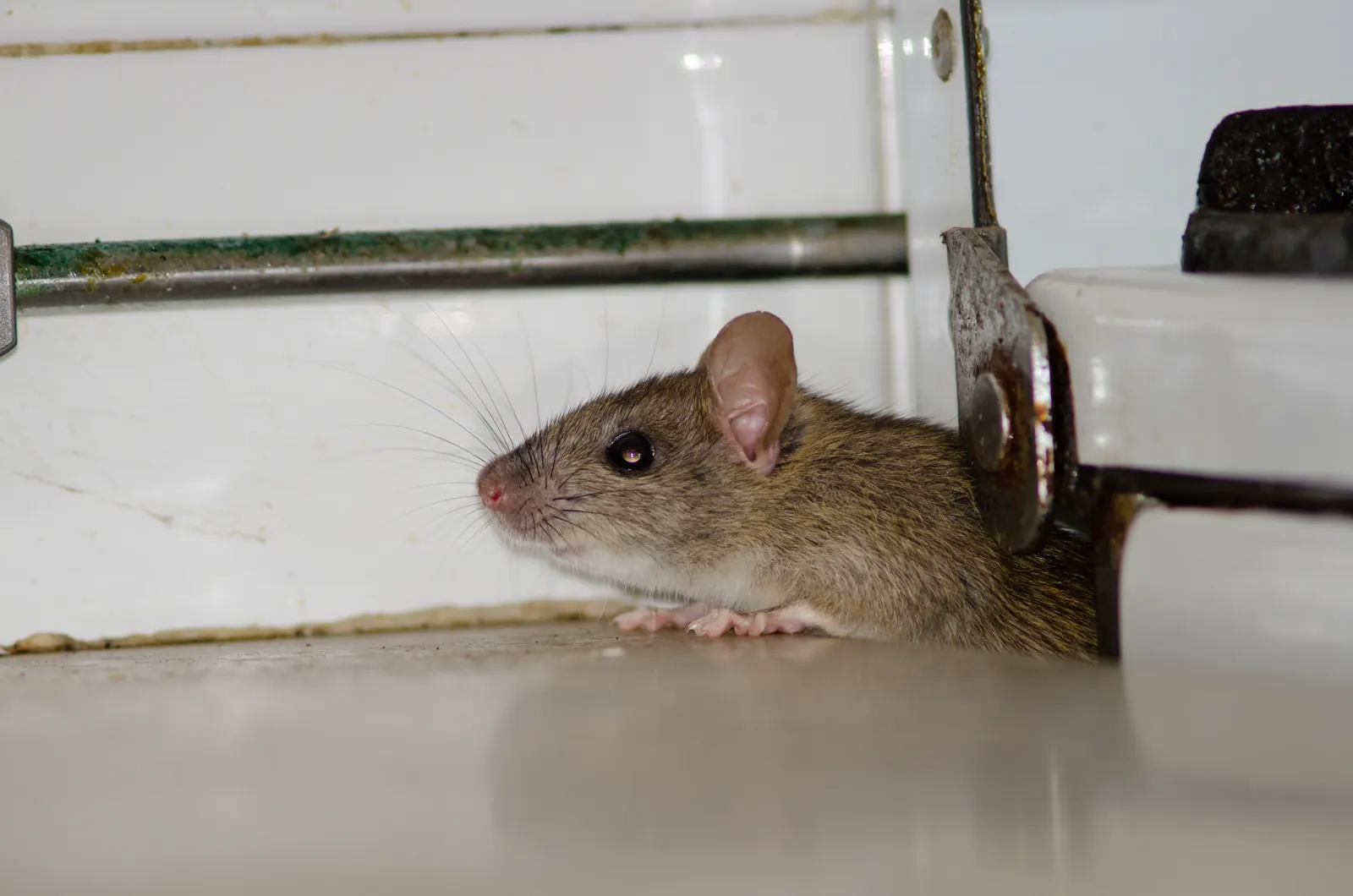
Where does rodent pressure concentrate in Cape Coral?
- Yacht Club & southeast originals (33904): mature landscaping, older soffits and six decades of settled gaps — the Cape’s densest attic-call zone.
- Southwest Cape (33914): premium canal lots — dock lines, boat canopies and lush plantings stacking the marine flank.
- Central grid (33904, 33990): 1970s-80s ranches with pool cages bolted to fascia — cage-junction entries and vent screens due for renewal.
- Northwest Cape (33993): built homes beside overgrown vacant parcels — hinterland pressure that re-tests exclusion after every lot clearing.
- Northeast Cape & Del Prado corridor (33909, 33990): commercial strips and dumpster ecology feeding adjacent residential blocks.
- Burnt Store corridor (33991, 33993): newer builds at the wild edge — fall attic checks as outdoor food thins.
What does a finished Cape Coral rodent job include?
A written entry map with each opening photographed and closed in rodent-rated materials; a trap-out log that reached zero and stayed there through a follow-up visit; the marine flank addressed — lines, canopy, seawall gaps — alongside the roofline; and the conducive-conditions list handed to you honestly: the queen palm’s skirt, the mango drop zone, the bird feeder that’s really a rat feeder, the garage door that daylight shows under. What a finished job is not: a ring of bait boxes and a monthly invoice with no exclusion line item. On a canal system with permanent wild pressure, unlimited bait plus an unsealed house is a subscription — the stations have a place at the perimeter after the building is sealed, particularly where vacant-lot pressure is real, but the seal is the product. One Cape-specific closing note: after lot-clearing or seawall work next door, displaced rodents probe every structure in range within days — that’s the week to re-check your garage corners, not the month to wait and see.
Call the line
Tap (863) 445-9190 any hour. Describe what you’re hearing and finding — house, boat or both — plus your Cape Coral ZIP.
Get matched by flank
Attic and roofline calls route to exclusion-strong operators; dock-and-boat pressure routes to providers who work the marine layer; commercial calls route to monitoring programs.
A licensed operator takes over
An independent, FDACS-licensed and insured Cape Coral operator inspects, maps entries, and quotes. No obligation — the dispatch call costs nothing.
Scratching over the lanai? Droppings in the boat?
The line answers 24/7 and matches you with a licensed Cape Coral rodent operator.
One tap. One call. Matched.
(863) 445-9190Tap to call — 24/7 dispatch
Free to call. The licensed operator gives the quote.
Cape Coral rodent control questions, answered straight
Rats got into my boat at the dock. How do I keep them off?
Does my pool cage really matter for rodents?
The vacant lot next door is overgrown. Can anything be done?
What does rodent control cost in Cape Coral?
Disclosure
Lakeland Exterminators is a pest control dispatch and referral service, not a licensed pest control operator. All rodent inspections, quotes, trapping and exclusion work in Cape Coral are performed by independent pest control operators licensed by the Florida Department of Agriculture and Consumer Services (FDACS) and insured in their own name. Calling the dispatch line is free and creates no obligation; the licensed local operator you’re matched with sets their own pricing and terms.
More Cape Coral help: Pest control in Cape Coral, Termite treatment in Cape Coral, Mosquito control in Fort Myers · Rodent dispatch guide · All pest control services