Daytona’s beachside cottages and motor-court motels have fed drywood termites since the boardwalk was new. The mainland feeds a different colony entirely.
Daytona Beach’s termite story follows the Halifax River. Beachside — the barrier island from Ormond’s edge through Main Street to Wilbur-by-the-Sea — carries generations of wood-framed beach cottages, mid-century motels and weathered fascia in salt-humid air: prime drywood termite country, where colonies live inside the wood itself and announce themselves with pellet piles and dusk swarms. Mainland Daytona — the postwar slab neighborhoods off Ridgewood and ISB, Derbyshire, Ortona — fights eastern subterranean colonies working up from sandy soil through mud tubes, against builder soil barriers that expired decades ago. The dispatch line matches you with FDACS-licensed operators who identify which war your address is in before anyone names a treatment.
Talk to a live dispatch coordinator now
Pellets under a window, tubes on the slab edge, swarmers at the porch light, findings on a pre-sale WDO — describe it and get routed to a licensed Daytona Beach termite operator.
(863) 445-9190Tap to call — 24/7 dispatch
Free to call. Free to get matched. The licensed operator you’re matched with gives the quote.
24/7 line · A real person answers · Availability of same-day and emergency service depends on the provider.
Need termite treatment in Daytona Beach, FL? Call (863) 445-9190 and a dispatch coordinator matches you with an FDACS-licensed operator serving your Daytona ZIP — species identification, liquid barriers and bait systems for subterranean colonies, drywood spot treatment or tent fumigation for beachside structures, and WDO inspections for closings. Lakeland Exterminators is a dispatch service: the licensed local operator inspects, identifies, and quotes the treatment.
Why is beachside housing stock a drywood buffet?
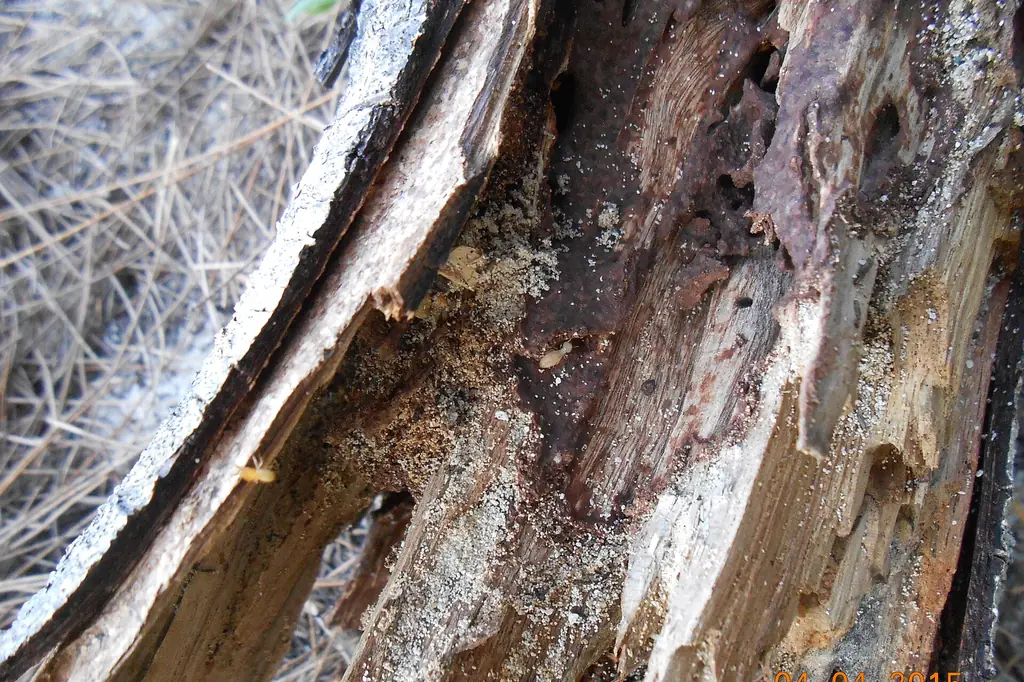
Age, material and moisture. The barrier island built out early — beach cottages from the 1920s-50s, motor courts from the boom years, wood-framed second stories over garages — and much of it used untreated dimensional lumber that has now offered drywood colonies seventy-plus years of undisturbed feeding. Salt-humid air keeps that wood in the moisture band drywoods prefer; they need no soil contact and no leak, just wood and time. The tell is unglamorous: neat piles of six-sided fecal pellets — hard, dry, like coarse coffee grounds — beneath pin-sized kick-out holes in window frames, fascia and furniture, reappearing after you vacuum them. Warm evenings in late spring bring the confirmation flight: swarmers at porch lights and windows.
Treatment scales with what the inspection maps. A confirmed colony in an accessible member — a fascia run, a garage header — can be locally treated with injected products. Widespread activity, attic framing involvement or multiple colonies push to whole-structure tent fumigation — and on a barrier island of small motels and rental duplexes, fumigation is also a scheduling exercise: two to three days of full vacancy, best booked against the events calendar, because emptying rooms during race weeks or Bike Week costs more than the treatment. Mainland subterranean jobs run the familiar slab playbook instead: trench-and-treat liquid barriers where access allows, bait systems where hardscape blocks trenching, and attention to the irrigation-against-slab moisture that shortens any barrier’s life in sandy Volusia soil.
Where does termite pressure concentrate in Daytona Beach?
- Beachside core — Main Street to Seabreeze (32118): the oldest wood stock on the island — drywood colonies in cottages, motels and rooming houses.
- Wilbur-by-the-Sea & Ponce Inlet edge (32127): weathered coastal wood and elevated older homes — drywood plus moisture-driven decay confusion; inspections separate the two.
- Ortona & Ridgewood corridor (32114, 32117): mainland postwar slabs with expired original treatments — core subterranean retreat territory.
- Derbyshire & Holly Hill edge (32117): older mainland frame homes — both species possible; evidence decides.
- Daytona Beach Shores condos (32118): association-governed drywood decisions in older towers — know the building’s fumigation history.
- LPGA & newer west side (32124): newer slabs on former pine flatwoods — pretreat expiry, not pretreat absence, is the question.
Rental cottages and small motels: what changes for income property?
Timeline and documentation. A beachside rental with confirmed drywood activity faces the same tent-vs-spot decision as any home, plus a booking calendar: fumigation needs the structure empty, so operators who work the island quote against your occupancy map, and shoulder-season windows (after Labor Day, before the winter events) are when smart owners schedule. Documentation carries real weight for income property — a dated treatment record and clearance letter answer guest questions, satisfy insurers, and matter at sale time, because WDO findings on a motel or duplex transaction become instant repair-credit negotiations. And for any owner watching the budget: unchecked drywood damage compounds silently — the difference between treating a colony this season and re-framing a fascia line in three years is the whole argument for acting on the first pellet pile, not the third.
Call the line
Tap (863) 445-9190 any hour. Describe the evidence, the structure, and your Daytona ZIP.
Get matched by job type
Beachside drywood and fumigation calls route to tent-capable operators; mainland slab calls route to liquid-and-bait providers; sales route to WDO inspectors.
A licensed operator takes over
An independent, FDACS-licensed and insured Daytona Beach operator inspects, identifies the species, and quotes. No obligation — the dispatch call costs nothing.
Pellet piles back on the sill? Swarmers at the porch light?
The line answers 24/7 and matches you with a licensed Daytona Beach termite operator.
One tap. One call. Matched.
(863) 445-9190Tap to call — 24/7 dispatch
Free to call. The licensed operator gives the quote.
Daytona Beach termite questions, answered straight
How do I tell termite pellets from regular sand or dirt?
Is the damage from termites or from salt-air rot?
Do subterranean termites even like Daytona’s sandy soil?
What does termite treatment cost in Daytona Beach?
Disclosure
Lakeland Exterminators is a pest control dispatch and referral service, not a licensed pest control operator. All termite inspections, quotes and treatments in Daytona Beach are performed by independent pest control operators licensed by the Florida Department of Agriculture and Consumer Services (FDACS) and insured in their own name. Calling the dispatch line is free and creates no obligation; the licensed local operator you’re matched with sets their own pricing and terms.
More Daytona help: Pest control in Daytona Beach, Pest control in DeLand, Pest control in Deltona · Termite dispatch guide · All pest control services