Formosan termites came ashore on the Gulf decades ago with post-war shipping — and Pensacola’s historic wood-frame districts have been on the front line ever since.
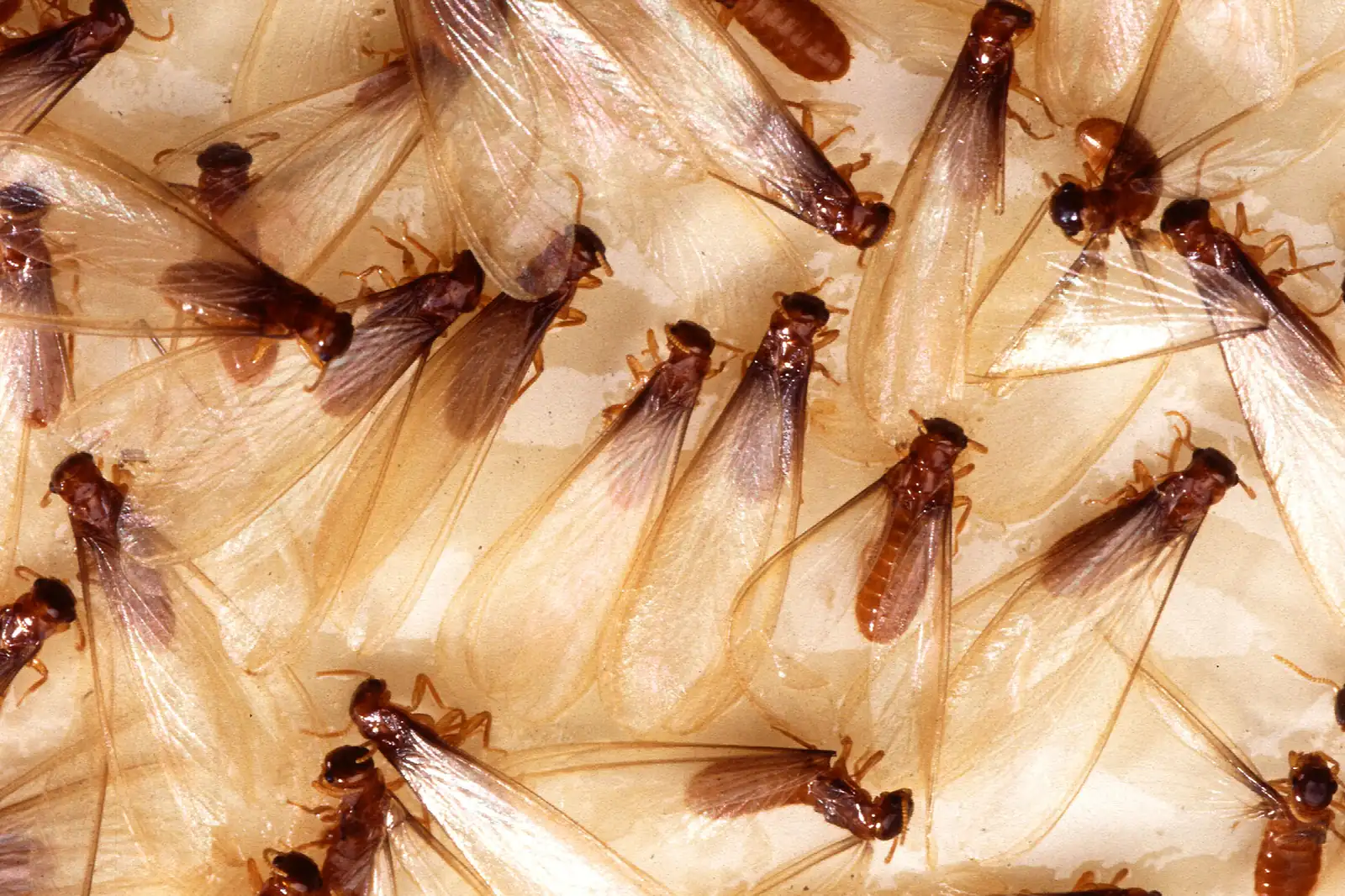
Pensacola’s termite story is the Gulf Coast’s in miniature. The Formosan subterranean termite — moved around the world in military and cargo shipments after World War II — established early along Gulf ports, and the Pensacola area has carried one of Florida’s longest-running populations since. It landed on ideal habitat: North Hill and East Hill’s wood-frame Victorians and craftsman cottages, humid subtropical moisture, and a century of storm-cycle repairs feeding new lumber into old buildings. Layered under it, the native eastern subterranean baseline works every neighborhood, and coastal drywood pressure reaches the beach communities. May and June evening swarms around streetlights are the Formosan calling card; February-to-May daylight swarms belong to the natives. Species, then scale, then method — in that order — is how treatment succeeds here, and it is how the dispatch line routes every call to FDACS-licensed operators.
Talk to a live dispatch coordinator now
An evening mob at the porch light, tubes on historic piers, carton material in a wall opened for repair — describe it and get matched with a licensed Pensacola termite operator.
(863) 445-9190Tap to call — 24/7 dispatch
Free to call. Free to get matched. The licensed operator you’re matched with gives the quote.
24/7 line · A real person answers · Availability of same-day and emergency service depends on the provider.
Need termite treatment in Pensacola, FL? Call (863) 445-9190 and a dispatch coordinator matches you with an FDACS-licensed operator serving your Escambia ZIP — colony-scale Formosan baiting and soil programs, crawl-space treatment for historic wood-frame stock, drywood work at the beaches, and WDO-documented close-out. Lakeland Exterminators is a dispatch service: the licensed operator inspects, prescribes and quotes.
What makes Formosan colonies a different class of problem?
Arithmetic and architecture. A mature Formosan colony fields millions of foragers against a native colony’s hundreds of thousands, forages across property lines, and consumes wood at a pace that turns multi-year problems into single-season ones. Architecturally, they cheat: carton nests — chewed wood and soil bound with saliva — hold moisture inside walls, flat roofs and voids, letting colonies operate above ground and occasionally establish aerial nests with no soil connection at all. That is why the treatments that reliably retire native colonies can merely inconvenience a Formosan one: spot applications get routed around, and even a sound liquid barrier addresses entry rather than the colony itself. Where Formosan activity is confirmed, colony-elimination baiting or comprehensive soil-plus-void treatment is the honest scope — and re-inspection on a schedule is part of the deal, not an upsell.
Pensacola’s repair history adds a local wrinkle: after every storm cycle, new lumber goes into old buildings, and untreated repair wood set against century-old framing is a standing invitation. Owners mid-repair hold a real advantage — open walls are the best treatment access a house ever offers, and borate application to exposed framing before drywall is cheap, durable protection that this market underuses.
Where does termite treatment pressure concentrate around Pensacola?
- North Hill & East Hill (32501, 32503): the historic wood-frame core — crawl spaces, heart-pine framing and the area’s deepest Formosan exposure.
- Downtown & the waterfront (32502): older commercial and mixed-use buildings — carton nests in voids and parapets; renovation projects should include a licensed look before close-up.
- West Pensacola & Brownsville (32505): mid-century frame and block stock with expired barriers — the liquid-renewal workhorse belt.
- Warrington & Navy Point (32507): post-war housing near the base — the historical Formosan entry corridor; colony-scale thinking applies.
- East side & Scenic Highway corridor (32503, 32514): 1970s–90s suburbs past pretreat expiry; canopy moisture keeps foraging pressure steady.
- Pensacola Beach & Perdido Key (32561, 32507): the drywood layer — salt-weathered casings and elevated construction; tent-versus-injection triage plus storm-repair wood checks.
How should storm-cycle repairs figure into termite planning?
As the moment of maximum leverage. Every roof replacement, wall rebuild and addition is a window when framing is exposed, moisture problems are visible, and protection can be applied for pennies on the later dollar: borate treatment of new and exposed lumber, sealed penetrations, corrected flashing and drainage details that decide whether a wall stays dry for the next decade. It is also the moment of maximum risk when skipped — new untreated lumber tied into old framing, wet assemblies closed behind fresh drywall, and grading changes that push water toward the slab all write the next infestation’s invitation. The sequencing rule is simple: licensed termite eyes on the structure between demolition and insulation, every time the walls are open. Contractors run on trade schedules and will not call for you; owners who make that one call convert a repair into a defense upgrade. For a city that rebuilds on a storm cycle, that habit — compounded across decades — is the difference between housing stock that ages and housing stock that hollows.
Call the line
Tap (863) 445-9190 any hour. Describe the evidence — evening swarms, tubes, carton material, pellets at the beach — and your Pensacola-area ZIP.
Get matched by species and scale
Formosan-scale jobs route to colony-treatment operators; historic crawl-space work routes to old-stock specialists; beach drywood evidence routes to tent-and-injection providers.
A licensed operator takes over
An independent, FDACS-licensed and insured Pensacola operator inspects, identifies and quotes. No obligation — the dispatch call costs nothing.
Streetlights mobbed two evenings running in June?
That is a mature colony announcing itself. The line answers 24/7 and matches you with a licensed Pensacola termite operator who works at Formosan scale.
One tap. One call. Matched.
(863) 445-9190Tap to call — 24/7 dispatch
Free to call. The licensed operator gives the quote.
Pensacola termite questions, answered straight
How do I tell Formosan swarmers from native ones?
We found what looks like dried mud packed inside a wall cavity — what is it?
Does a liquid barrier protect against Formosan colonies?
What does termite treatment cost in Pensacola?
Disclosure
Lakeland Exterminators is a pest control dispatch and referral service, not a licensed pest control operator. All termite inspections, treatments and quotes in Pensacola are performed by independent pest control operators licensed by the Florida Department of Agriculture and Consumer Services (FDACS) and insured in their own name. Calling the dispatch line is free and creates no obligation; the licensed local operator you’re matched with sets their own pricing and terms.
More Pensacola help: Pest control in Pensacola, Tallahassee termite treatment, Jacksonville termite treatment · Formosan termite guide · All pest control services