Tampa ants come back after every spray because spraying is the mistake. The right bait, matched to the right species, is the fix.
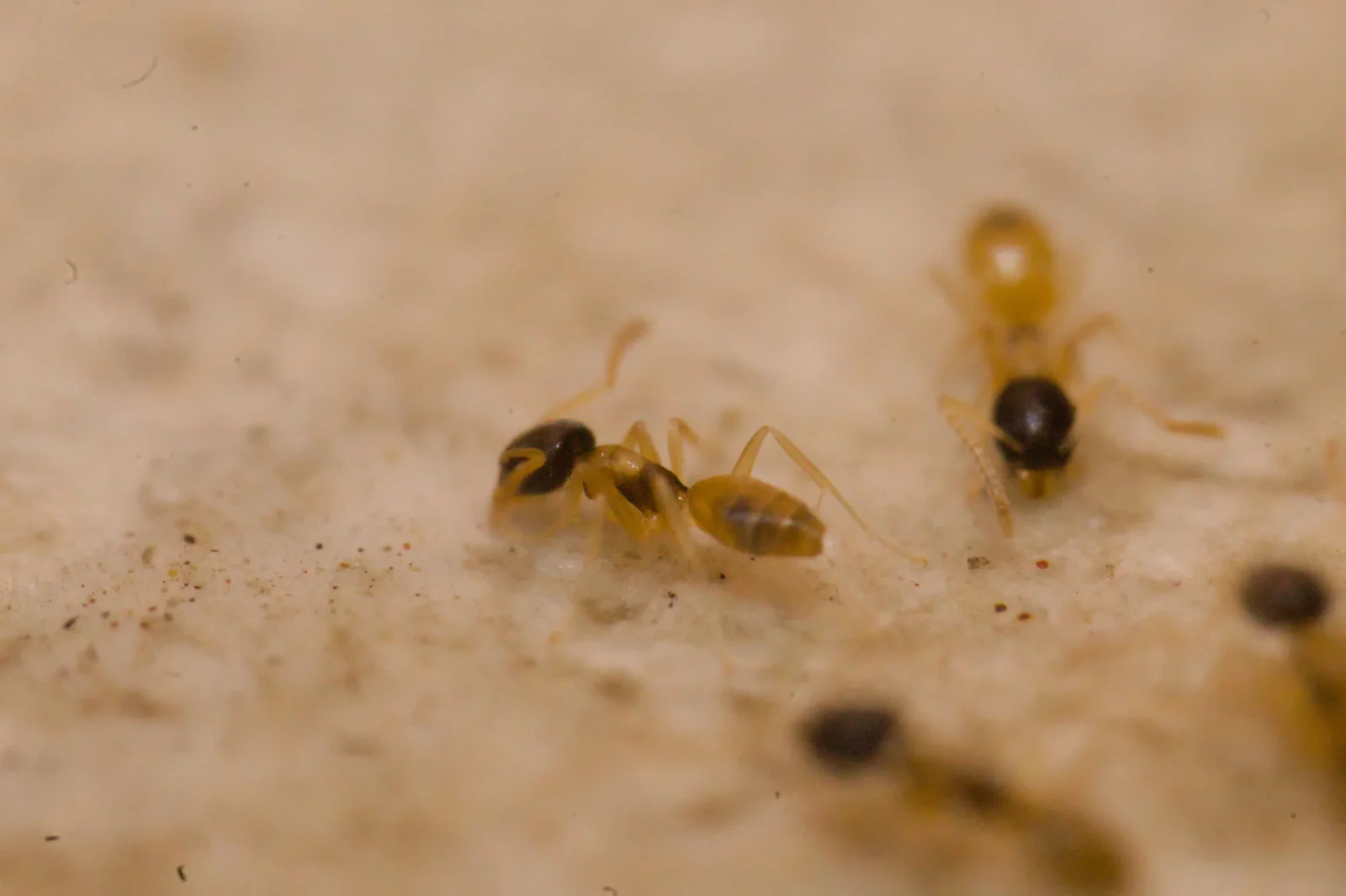
The trail on your kitchen counter is probably ghost ants — pale, nearly invisible, and wired to split their colony into five new ones the moment a repellent spray hits them. The sand piles pushing up between your pavers are big-headed ants. The mounds in the new sod are fire ants, and the sawdust under the bungalow window is carpenter ants working wet wood. Four species, four different playbooks — and the aisle-shelf spray can makes three of them worse. The dispatch line matches you with FDACS-licensed operators who identify the species first and treat it the way that species actually dies: colony-level, through the workers, at the budget the queen keeps.
Talk to a live dispatch coordinator now
Trails in the kitchen, sand between the pavers, mounds in the yard, winged ants at the window — describe it and get routed to a licensed Tampa ant operator.
(863) 445-9190Tap to call — 24/7 dispatch
Free to call. Free to get matched. The licensed operator you’re matched with gives the quote.
24/7 line · A real person answers · Availability of same-day and emergency service depends on the provider.
Need ant control in Tampa, FL? Call (863) 445-9190 and a dispatch coordinator matches you with an FDACS-licensed operator serving your Tampa ZIP — species identification, targeted baiting for ghost and big-headed ants, mound treatments for fire ants and moisture-source work for carpenter ants. Lakeland Exterminators is a dispatch service: the licensed local operator inspects, identifies the species, and quotes the treatment.
Why does spraying make Tampa’s worst ants multiply?
Because Tampa’s two most common indoor ants — ghost ants and white-footed ants — respond to chemical stress by budding: the colony fractures, queens scatter with bands of workers, and one nest becomes several, each rebuilding behind a different wall void or hedge line. A repellent spray on the counter kills the fifty workers you can see and declares war on the fifty thousand you can’t. Ghost ant colonies in particular run dozens of queens across multiple satellite nests — in the potted plants, under the sink, inside the wall behind the dishwasher — connected by scent trails that reroute around any treated surface within days.
Licensed operators run the opposite play: non-repellent baits the workers carry home. The bait has to match the colony’s current appetite — sugar-based when they’re trailing to moisture and honeydew, protein-based in brood-rearing pushes — and it has to stay down long enough for trophallaxis, the food-sharing chain that walks the active ingredient from forager to nest-mate to queen. That’s also why the white-footed ant, common in South Tampa’s flowering hedges, is the hardest call: it shares food less than almost any Florida ant, so operators lean on placement volume and non-repellent transfer products instead of classic baits. Species ID isn’t academic — it decides whether the job takes one visit or becomes a season-long fight.
Where does ant pressure concentrate in Tampa?
- South Tampa & Palma Ceia (33609, 33611, 33629): big-headed ant sand piles between brick pavers and pool decks; white-footed ants cycling through ixora and hibiscus hedges.
- Seminole Heights & Old Northeast Tampa (33603, 33604): carpenter ants in bungalow window frames, porch columns and any wood that stayed damp after a roof leak.
- New Tampa & Wesley Chapel edge (33647): fire ants colonizing new sod and disturbed fill — fresh lawns are open real estate for mated queens after every rain.
- Westchase, Citrus Park & Town ’n’ Country (33615, 33618, 33625, 33626): ghost ants nesting in irrigated planter beds and moving indoors through slab penetrations each dry spell.
- Davis Islands & Bayshore (33606): moisture-driven pressure — seawall lots, irrigated landscaping and older slab joints give trails constant entry.
- Ybor & East Tampa (33605): commercial kitchens and older masonry — ghost ants inside, big-headed ants undermining sidewalk joints outside.
What does a real Tampa ant job look like?
It starts with an inspection that names the species — magnification if needed, because ghost ants, white-footed ants and Argentine ants all read as “tiny black-ish ants” at arm’s length — and traces trails back to nests: potted plants, wall voids, palm boots, paver bases, irrigation boxes. Then treatment matches biology: non-repellent baits and transfer dusts for the budding species, broadcast bait plus individual mound treatment for fire ants (kicking mounds just relocates them), and for carpenter ants, finding and fixing the moisture that softened the wood in the first place — a leaking window flashing or clogged gutter matters more than any chemical. Expect a follow-up window where trails increase for a few days as bait draws foragers; that’s the treatment working, not failing.
Call the line
Tap (863) 445-9190 any hour. Describe the trail, the location, and your Tampa ZIP.
Get matched by job type
Kitchen-trail and wall-void calls route to operators strong on baiting programs; lawn and fire ant calls route to providers with broadcast equipment.
A licensed operator takes over
An independent, FDACS-licensed and insured Tampa operator inspects, identifies the species, and quotes. No obligation — the dispatch call costs nothing.
Trail back on the counter this morning? Mounds back after the rain?
The line answers 24/7 and matches you with a licensed Tampa ant operator.
One tap. One call. Matched.
(863) 445-9190Tap to call — 24/7 dispatch
Free to call. The licensed operator gives the quote.
Tampa ant control questions, answered straight
Why do the ants come back a week after I spray?
What are the sand piles between my pavers?
Are the big black ants in my walls carpenter ants or termites?
What does ant control cost in Tampa?
Disclosure
Lakeland Exterminators is a pest control dispatch and referral service, not a licensed pest control operator. All ant inspections, quotes and treatments in Tampa are performed by independent pest control operators licensed by the Florida Department of Agriculture and Consumer Services (FDACS) and insured in their own name. Calling the dispatch line is free and creates no obligation; the licensed local operator you’re matched with sets their own pricing and terms.
More Tampa help: Pest control in Tampa, Roach control in Tampa, Rodent control in Tampa · Ant dispatch guide · All pest control services