Between the ocean and the Intracoastal, the Beaches live on a three-mile-wide island of salt air — and the pest pressure comes from both waterlines at once.
Atlantic Beach, Neptune Beach, Jacksonville Beach and the Ponte Vedra edge share a barrier-island ecology that mainland Jacksonville never sees. From the east: salt air that pushes construction toward the older cottages’ exposed wood — and a drywood termite belt that works window casings, rafter tails and beach-cottage framing the way inland colonies work crawl spaces. From the west: the Intracoastal’s spartina marshes, which breed salt-marsh mosquitoes in numbers that define summer evenings, on a flight range measured in miles rather than yards. In between: rental turnover seeding German roaches and bed bugs through beach rentals, rats working dune crossovers and elevated cottages, and after-storm weeks that reshuffle everything. The dispatch line matches Beaches properties with FDACS-licensed operators who work the island, not the mainland average.
Talk to a live dispatch coordinator now
Pellets on a windowsill, marsh mosquitoes eating the cookout, a turnover find in a rental — describe it and get matched with a licensed operator working the Beaches.
(888) 295-0220Tap to call — 24/7 dispatch
Free to call. Free to get matched. The licensed operator you’re matched with gives the quote.
24/7 line · A real person answers · Availability of same-day and emergency service depends on the provider.
Need pest control at the Jacksonville Beaches? Call (888) 295-0220 and a dispatch coordinator matches you with an FDACS-licensed operator serving 32233, 32250, 32266 and 32082 — drywood termite inspection and treatment for coastal stock, salt-marsh-aware mosquito programs, rental turnover protocols and coastal rodent exclusion. Lakeland Exterminators is a dispatch service: the licensed local operator inspects, treats and quotes.
Why is the drywood termite the beach communities’ signature pest?
Because barrier-island conditions stack in its favor. Drywood colonies need no soil contact — they live entirely inside sound wood, entering through unpainted end grain, weathered casings and vent openings. The Beaches supply all three: cottages from the 1940s–70s with decades of salt-weathered trim, elevated construction whose exposed piers and beams offer end grain at every cut, and a mild marine climate that runs the April-to-July dusk swarm season reliably. Salt air accelerates the paint-failure cycle that opens wood to colonization, which is why the maintenance calendar — caulk, prime, paint, screen the vents — is genuinely a termite program here, not just curb appeal. The discovery pattern is classic drywood: six-sided pellets on a windowsill or under a kick-out pinhole, wings after an evening swarm, blistered paint over a working gallery.
Treatment at the Beaches carries the drywood decision tree with a coastal wrinkle: whole-structure fumigation remains the definitive answer for multi-colony evidence, and tent scheduling around rental calendars is a solved problem for operators who work the island — but localized evidence in accessible framing often qualifies for targeted injection, and elevated cottages with open crawl areas make more of the frame accessible than mainland slab homes ever offer. The inspection, not the brochure, decides.
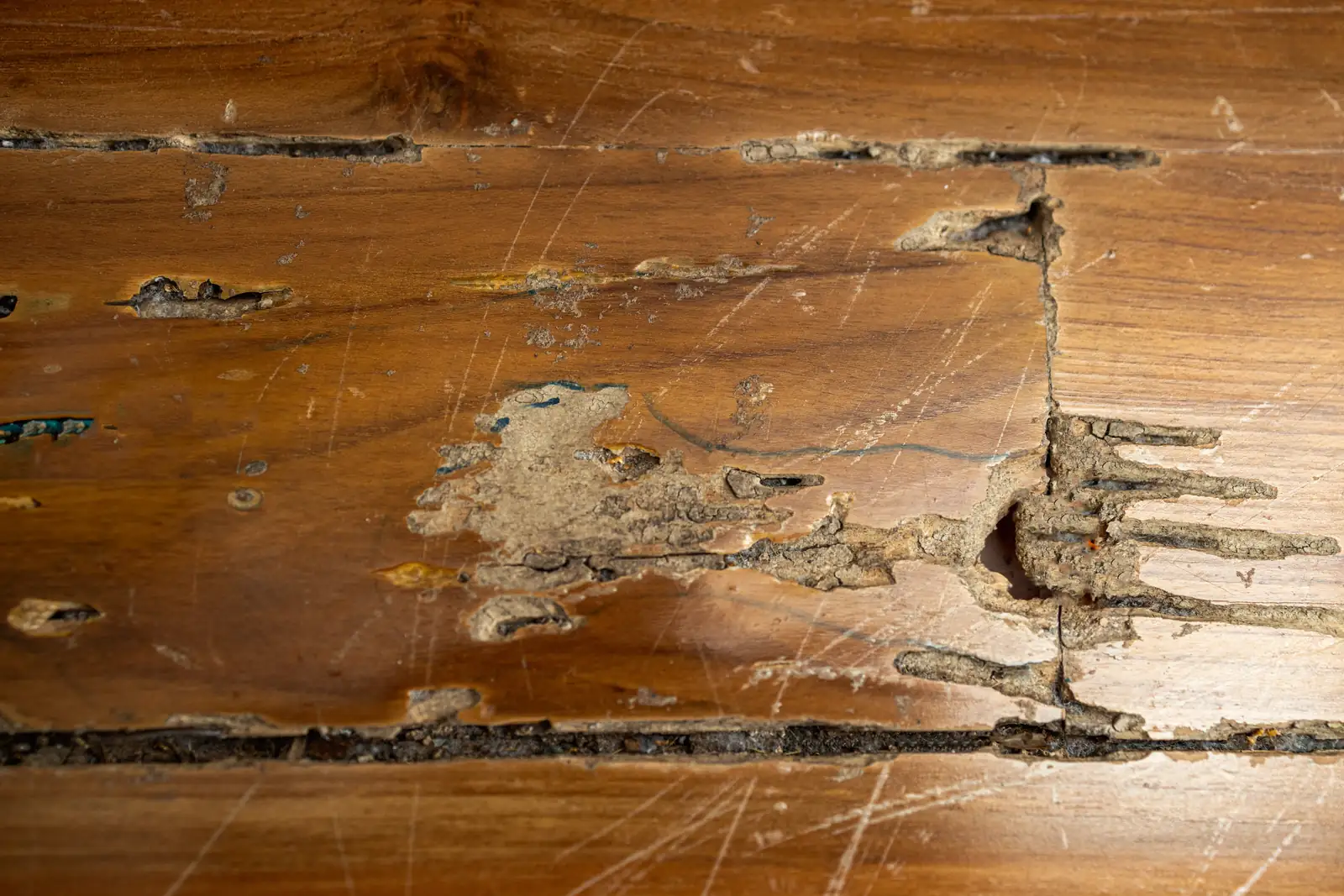
What is each beach community dealing with?
- Atlantic Beach & the older grid (32233): the deepest cottage stock — drywood layering in original framing, plus rats working elevated crawl areas and dune-line vegetation.
- Neptune Beach (32266): compact mid-century blocks — drywood in casings and garages, German roach churn through the rental share.
- Jacksonville Beach core (32250): the rental-turnover engine — bed bug and roach introductions ride weekly bookings; documented turnover protocols pay for themselves.
- South Jax Beach & Ponte Vedra edge (32250, 32082): newer elevated stock — pretreat-era questions plus marsh-side mosquito pressure off the Guana and Intracoastal wetlands.
- The Intracoastal margin communities: salt-marsh mosquito broods after high tides and rain — miles-range fliers no backyard program can fully stop; timing and screening matter most.
- Mayport & the north end (32233): working waterfront — Norway rat pressure at bulkheads and gear storage alongside the residential roof rat baseline.
What can a mosquito program honestly promise on a barrier island?
Less than inland — and a good operator says so up front. Salt-marsh mosquitoes breed in the spartina flats by the million after spring tides and heavy rain, then fly miles with the evening breeze; no yard treatment eliminates a brood that hatched across the Intracoastal. What a Beaches program can do is meaningful anyway: eliminate the container-breeding species (the day-biting yard residents that are locally produced and locally fixable), treat the shaded resting vegetation where migrating salt-marsh adults wait out the day, time barrier applications to brood cycles rather than the calendar, and coordinate with what the mosquito control district’s trucks and aerial work already cover. The honest pitch is layered percentages, not silence — and homeowners who pair a program with intact screens, dawn-dusk awareness during brood weeks and a weekly container walk get evenings back without buying promises nobody can keep. Ask any operator quoting the island how they handle brood-week timing; the answer tells you whether they work here.
Call the line
Tap (888) 295-0220 any hour. Describe what you are seeing — pellets, swarms, turnover finds, marsh-week biting — and your beach community and ZIP.
Get matched to island work
Drywood inspections and tent logistics route to coastal termite operators; mosquito programs, rental protocols and rodent exclusion route to their own specialists.
A licensed operator takes over
An independent, FDACS-licensed and insured operator working the Beaches inspects, quotes and treats. No obligation — the dispatch call costs nothing.
Pellets on the windowsill of a cottage that has never been tented?
The line answers 24/7 and matches you with a licensed operator who works barrier-island housing stock weekly.
One tap. One call. Matched.
(888) 295-0220Tap to call — 24/7 dispatch
Free to call. The licensed operator gives the quote.
Jacksonville Beaches pest questions, answered straight
Does salt air keep termites away?
Why are mosquitoes suddenly unbearable some weeks and fine others?
We run a beach rental — what protocol actually protects us?
What does pest control cost at the Beaches?
Disclosure
Lakeland Exterminators is a pest control dispatch and referral service, not a licensed pest control operator. All pest inspections, treatments and quotes in the Jacksonville Beaches are performed by independent pest control operators licensed by the Florida Department of Agriculture and Consumer Services (FDACS) and insured in their own name. Calling the dispatch line is free and creates no obligation; the licensed local operator you’re matched with sets their own pricing and terms.
More Jacksonville help: Pest control in Jacksonville, Jacksonville mosquito control, Jacksonville bed bug treatment, Pest control in San Marco · Drywood tenting guide · All pest control services