Pinellas Park’s housing runs on skirting, slabs and drainage ditches — three things pests understand better than most owners do.
Mid-county’s workhorse city holds two housing stocks with completely different pest mechanics. The manufactured-home communities that line 49th Street and Park Boulevard — dozens of parks, many of them 55+ — sit on pier fields behind vinyl skirting, with insulated belly wraps underneath: a protected, under-inspected zone that rodents, roaches and ants treat as designed habitat. Around them, the postwar grid of small concrete-block ranches runs the standard Florida math — 1950s-70s slabs whose termite barriers expired decades ago — while the city’s famous flood-control network of ditches and canals threads every neighborhood with a Culex mosquito line that surges when maintenance slips or storms load the system. The dispatch line matches Pinellas Park homes — site-built or manufactured, owned or in a park — with FDACS-licensed operators who work underneath structures as comfortably as around them.
Talk to a live dispatch coordinator now
Noise under the floor, ants trailing from the skirting, mosquitoes off the ditch, wings in spring — describe it and get matched with a licensed operator working Pinellas Park.
(888) 295-0220Tap to call — 24/7 dispatch
Free to call. Free to get matched. The licensed operator you’re matched with gives the quote.
24/7 line · A real person answers · Availability of same-day and emergency service depends on the provider.
Need pest control in Pinellas Park, FL? Call (888) 295-0220 and a dispatch coordinator matches you with an FDACS-licensed operator serving 33781 and 33782 — under-home inspection and skirting-line exclusion for manufactured homes, termite verification on postwar block ranches, ditch-aware mosquito work, and roach and ant programs citywide. Lakeland Exterminators is a dispatch service: the licensed local operator inspects, treats and quotes.
Why is the space under a manufactured home its own ecosystem?
Because it combines everything pests select for — shelter, warmth, moisture and zero traffic — behind a wall nobody opens. Skirting keeps weather and eyes out, the pier field creates protected runways, plumbing penetrations drip just enough to water everyone, and the belly wrap overhead offers insulation that rodents mine for nesting the way ants mine it for shelter. The failure points are predictable: a skirting panel popped by a mower or a storm becomes the front door; a torn section of belly wrap becomes an apartment; a dryer vent terminating under the home instead of through the skirting adds warm humid air that roaches read as an invitation. The maintenance rhythm that keeps a unit clean is equally predictable, and cheap: walk the skirting line monthly and reseat loose panels, have the belly wrap inspected and closed after every plumbing repair (repair crews are the leading cause of openings), keep the dryer vented fully outside, and get a licensed under-home inspection annually — on the same visit that checks the tie-downs and piers for the insurance photo anyway. In a 55+ park, that annual look matters double: residents hear under-floor noise sooner than site-built owners hear attic noise, but far fewer can crawl under to check.
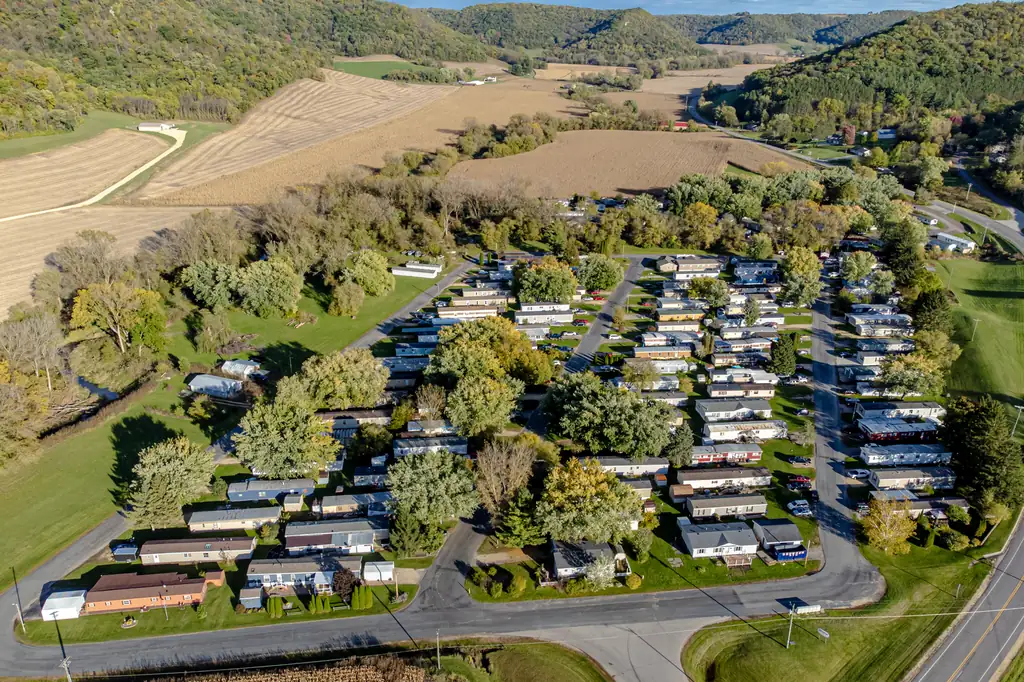
What is each part of Pinellas Park actually dealing with?
- The park communities (49th St & Park Blvd corridors, 33781): under-home rodent and roach harborage; skirting integrity and belly-wrap condition decide everything; park management and resident split responsibility — get the split in writing.
- The postwar block grid (33781, 33782): 1950s-70s slabs decades past barrier life — spring swarms and slab-joint tubes are the tells; verification inspections overdue on original-condition homes.
- The ditch and canal network citywide: flowing, maintained ditches are innocent; stagnant reaches behind clogged culverts breed Culex by the ladle — larvicide the water, report the blockage to the city.
- Park Boulevard & US-19 commercial strips: restaurant and retail density loads the sewer laterals with American roaches; adjacent blocks see post-rain surges — sealed penetrations and drain baskets are the fix.
- Flood-prone lows after storm years: displacement surges — rats and roaches relocating after high water; a post-flood exterior audit within 72 hours catches them before they settle in.
Who is responsible for what in a mobile home park?
The recurring Pinellas Park dispute, and it has a workable answer: read the prospectus, then paper the gaps. In most parks, the resident owns the home and everything attached to it — skirting, belly wrap, steps, shed — while the park owns the lot, the common grounds and usually the common-area pest program. That means under-your-home pests are typically your call to a licensed operator, while a park-wide problem — rats working a shared dumpster corral, ants from a common-ground mound line, mosquitoes off a retention ditch the park maintains — belongs on management’s desk in writing. Two practical rules keep residents out of the gap. First, report shared-source problems to the office in writing and keep a copy; a pattern of complaints obligates a park response in a way phone calls never do. Second, when your own operator finds evidence that points to a shared source (a travel line from the dumpster corral, a neighbor’s open skirting), have it noted in the written findings — that page turns a neighbor dispute into a maintenance item. Operators who work these parks navigate this weekly; say the park’s name on the dispatch call and you will be matched with one who does.
Call the line
Tap (888) 295-0220 any hour. Say whether it is a site-built house or a manufactured home — and which park, if it is one.
Get matched to the problem
Under-home exclusion, termite verification, ditch-line mosquito work and roach programs route to different specialists — the coordinator matches the right one.
A licensed operator takes over
An independent, FDACS-licensed and insured operator working Pinellas Park inspects, quotes and treats. No obligation — the dispatch call costs nothing.
Hearing it under the floor instead of over the ceiling?
The line answers 24/7 and matches you with a licensed operator who carries coveralls — because in this city, the job is often underneath.
One tap. One call. Matched.
(888) 295-0220Tap to call — 24/7 dispatch
Free to call. The licensed operator gives the quote.
Pinellas Park pest questions, answered straight
Do manufactured homes get termites too?
The ditch behind us was fine for years and now it is a mosquito factory. What changed?
Ants keep appearing inside no matter what we spray along the skirting. Why?
What does pest control cost in Pinellas Park?
Disclosure
Lakeland Exterminators is a pest control dispatch and referral service, not a licensed pest control operator. All pest inspections, treatments and quotes in Pinellas Park are performed by independent pest control operators licensed by the Florida Department of Agriculture and Consumer Services (FDACS) and insured in their own name. Calling the dispatch line is free and creates no obligation; the licensed local operator you’re matched with sets their own pricing and terms.
More Pinellas help: Pest control in St. Petersburg, St. Petersburg roach control, Pest control in Largo · Mobile home pest guide · All pest control services