A 1925 bungalow under a century oak is the most charming pest habitat ever built. Seminole Heights owns thousands of them.
Seminole Heights’ whole appeal — craftsman bungalows, deep porches, grandfather oaks over brick streets — is also its pest profile. The oak canopy is a roof rat interstate feeding attics through fascia returns that were framed before rodent-proofing existed. The pier-and-beam crawl spaces underneath hold the humid, shaded harborage that palmetto bugs and moisture pests love, with a century of plumbing penetrations to surface through. Original heart-pine framing draws both subterranean termites up from the soil and drywood colonies into window frames and rafter tails. And every renovation — this neighborhood’s favorite sport — opens walls that reveal (or scatter) all of the above. The dispatch line matches Heights homeowners with FDACS-licensed operators who know bungalow construction, because slab-era instincts miss half of what matters here.
Talk to a live dispatch coordinator now
Scratching over the ceiling, roaches surfacing in the clawfoot tub, mud tubes on a pier, mystery frass during a reno — describe it and get routed to a licensed operator serving Seminole Heights.
(863) 445-9190Tap to call — 24/7 dispatch
Free to call. Free to get matched. The licensed operator you’re matched with gives the quote.
24/7 line · A real person answers · Availability of same-day and emergency service depends on the provider.
Need pest control in Seminole Heights, FL? Call (863) 445-9190 and a dispatch coordinator matches you with an FDACS-licensed operator serving 33603 and 33604 — roof rat exclusion for bungalow rooflines, crawl-space and drain roach work, termite inspection for pier-and-beam and heart-pine construction, and renovation-support inspections. Lakeland Exterminators is a dispatch service: the licensed local operator inspects and quotes; the dispatch call is free.
Why is the oak canopy the neighborhood’s rodent infrastructure?
Because roof rats are arboreal commuters, and Seminole Heights built them a complete transit system: continuous crowns over Central and Nebraska’s side streets, limbs touching rooflines the city can’t trim fast enough, and utility drops sagging from pole to fascia on every lot. The bungalow ends the journey generously — fascia returns with era-standard gaps, ridge vents and gable louvers never screened to quarter-inch standard, and porch roofs meeting the main roof in concealed junctions. Acorn season stocks the pantry; attic knob-and-tube-era wiring (where it survives) raises the stakes of every gnaw. The durable fix is the same everywhere but harder-won here: trap out the attic first, then seal a 1920s roofline’s dozen entries with hardware cloth, metal and mortar — work that takes a crew comfortable on old framing — then break the routes: limbs six feet off the roof, and a conversation with the neighbors, because on 50-foot lots a block-level canopy problem beats any single-house fix.
What should a bungalow owner check season by season?
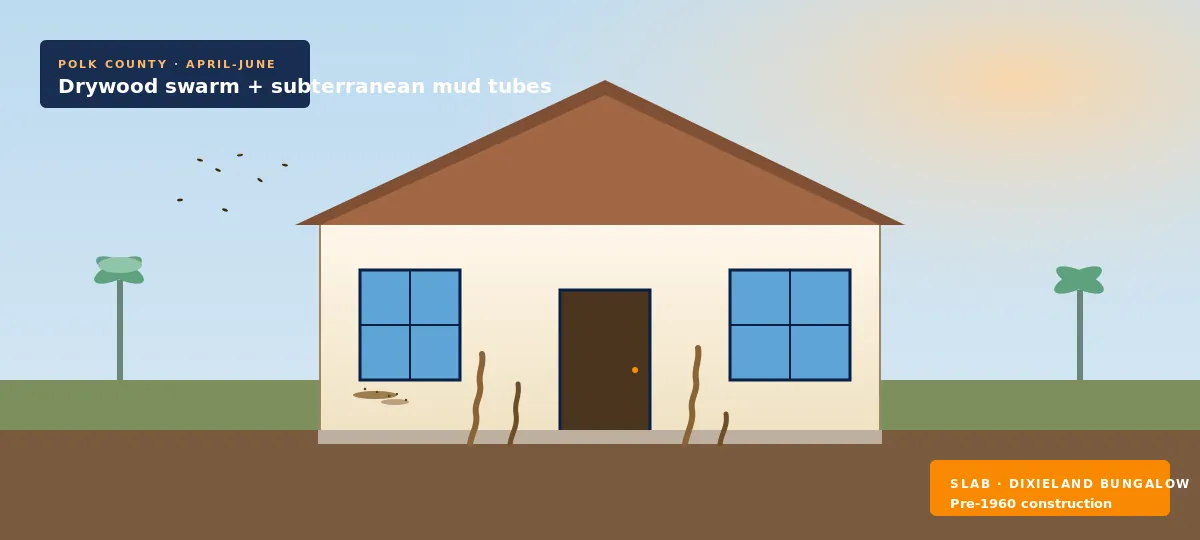
- February–May: subterranean swarm season — watch baseboards, pier lines and the crawl-space access for mud tubes and morning swarmers; knocked-down tubes that rebuild within days mean an active colony.
- April–July: drywood swarm season at dusk — pellets like coarse coffee grounds under window frames and rafter tails; original heart pine is resistant, not immune.
- June–September: rainy-season roach surges — palmetto bugs displaced from sewers and mulch surface through drains; run water in unused traps weekly, screen the crawl-space vents, sweep the door thresholds.
- October–January: rodent season — outdoor food thins, acorns drop, attics fill; one flashlight attic check in fall catches what six months of bait boxes won’t.
- Any renovation, any month: opened walls are inspection gold — photograph frass, galleries or tubes before the contractor covers them, and get a licensed read before drywall closes the evidence away for another decade.
Why do renovations keep “creating” pest problems here?
They don’t create them — they disclose and disturb them. Every Heights flip and addition opens wall cavities that have hosted quiet populations for years: drywood galleries in a window header, a roach harborage in a chase, rats nesting in blown-in insulation. Demolition scatters what it finds into the neighbors’ walls (the “renovation scatter” every contractor on Hillsborough Avenue has seen), and new work often seals fresh lumber against old, untreated wood — a subterranean colony’s favorite bridge. The smart sequence costs little: a licensed WDO-style inspection after demo and before close-in, borate treatment of exposed framing while the walls are open (the cheapest permanent protection an old house ever gets), and exclusion details — screened vents, sealed penetrations — specced into the contractor’s punch list instead of retrofitted after the first winter scratching starts.
Call the line
Tap (863) 445-9190 any hour. Describe what you’re seeing and your Heights ZIP (33603, 33604).
Get matched by job type
Attic and roofline calls route to exclusion crews comfortable on old framing; crawl-space, termite and renovation calls route to inspection-first operators.
A licensed operator takes over
An independent, FDACS-licensed and insured operator serving Seminole Heights inspects, identifies, and quotes. No obligation — the dispatch call costs nothing.
Scratching in the attic? Tubes on a pier? Frass in the reno debris?
The line answers 24/7 and matches you with a licensed operator serving Seminole Heights.
One tap. One call. Matched.
(863) 445-9190Tap to call — 24/7 dispatch
Free to call. The licensed operator gives the quote.
Seminole Heights pest questions, answered straight
Is the crawl space an asset or a liability?
Can I keep the oaks and still stop the rats?
The house survived 100 years — how urgent can termites be?
What does pest control cost in Seminole Heights?
Disclosure
Lakeland Exterminators is a pest control dispatch and referral service, not a licensed pest control operator. All inspections, quotes and treatments in Seminole Heights are performed by independent pest control operators licensed by the Florida Department of Agriculture and Consumer Services (FDACS) and insured in their own name. Calling the dispatch line is free and creates no obligation; the licensed local operator you’re matched with sets their own pricing and terms.
More Tampa help: Pest control in Tampa, Rodent control in Tampa, Termite treatment in Tampa, Pest control in South Tampa · All pest control services