Historic brick downtown, working farmhouse, or new subdivision — Plant City termite risk isn’t one-size-fits-all.
Plant City’s identity as farm country shows up in its housing stock too: brick-and-frame buildings downtown, older farmhouses at the field edges, and newer construction filling in between. One call gets you matched with a licensed inspector who reads the right risk for your specific structure.
Talk to a licensed exterminator now
Call and we’ll connect you with a licensed, local exterminator who covers your address. It takes about two minutes, and a real person answers.
Free to call. Free to get matched. The licensed operator gives the quote.
Before you call: have your address ready, plus what pest you’re seeing and where. Staying on the line about two minutes helps your local operator confirm details and get you scheduled.
A real person answers · Availability of same-day and emergency service depends on the provider.
What a termite inspection in Plant City actually checks
A licensed wood-destroying organism (WDO) inspector covers the full accessible structure: slab edges or crawlspace framing, the attic, exposed wood, window and door trim, and any wood-to-soil contact. Around Plant City’s farm properties, that list extends to packing sheds, barns, and any other wood structure inside the inspected boundary, since outbuildings often show activity before the main house does.
This is the document title companies and lenders request, not a verbal opinion at the door.
Why Plant City’s farmland edge changes the risk picture
Irrigated fields and tilled ground keep soil moisture consistently high at the edges of Plant City’s developed areas, which is exactly the condition Eastern subterranean termites need to move mud tubes from soil into a structure. Farmhouses and outbuildings built directly at field edges, sometimes decades ago, face this exposure daily.
Downtown, the historic brick-and-frame commercial district and older residential blocks add drywood termite exposure — colonies that establish directly in attic framing or trim with no soil contact required. A WDO inspection distinguishes between the two, since treatment for a subterranean colony (soil treatment or bait stations) looks nothing like treatment for a drywood colony (structural or spot fumigation).
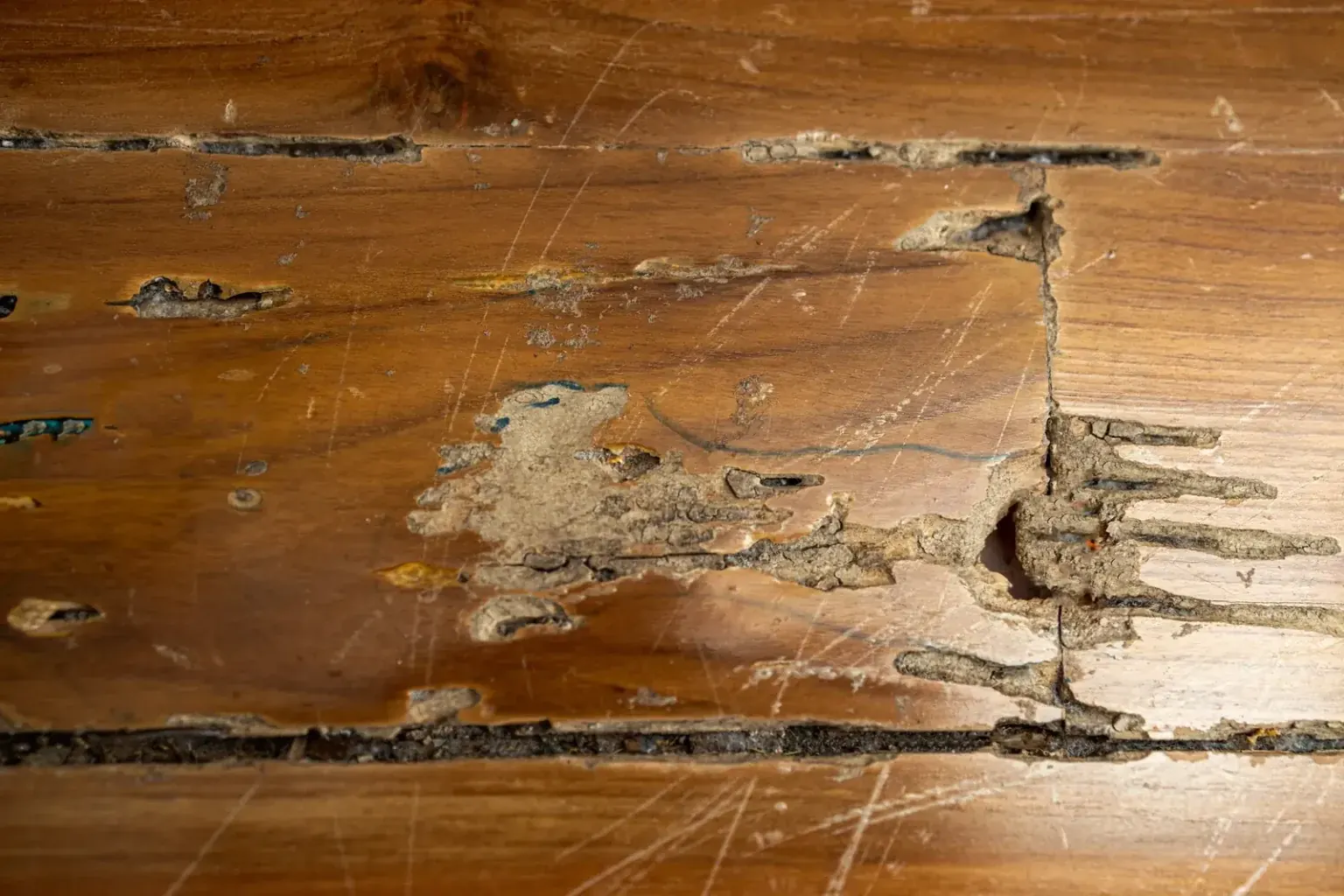
Field-edge irrigation keeps soil moisture — and subterranean termite pressure — high year-round.
When Plant City property owners actually need one
You saw a swarm
Winged termites at a window or in a barn on a warm evening after rain is the most common unscheduled-inspection trigger.
Annual bond renewal
If your property carries a termite bond, the renewal inspection catches new activity before it spreads.
Farmhouse or outbuilding purchase
Barns and packing sheds at field edges deserve their own inspection pass, not just the main residence.
New construction check
Subdivisions built on former farmland still require pre-construction soil treatment and post-construction verification.
Just moved in
A baseline inspection in the first year documents exactly what condition the structure started in.
Visible live activity
Swarmers, live mud tubes, or frass, noted by exact structure and location — including outbuildings.
Damage evidence
Hollowed or damaged wood documented regardless of whether live insects remain.
Prior treatment evidence
Drill-and-fill patterns or bait stations from earlier work, which change how a new finding reads.
Inaccessible areas noted
Anywhere the inspector can’t reach — stacked farm equipment, sealed crawlspaces — is flagged, not skipped.
What happens if the inspector finds something
A finding doesn’t automatically mean an active, ongoing infestation; it may be old damage with no current activity. Either way, the report is the basis for the treatment conversation that follows, and in a sale it typically opens a negotiation between buyer and seller. The matched operator sets and quotes any treatment — we don’t.
Ready when you are.
One call gets you matched with a licensed local operator.
Talk to a licensed exterminator now
Call and we’ll connect you with a licensed, local exterminator who covers your address. It takes about two minutes, and a real person answers.
Free to call. Free to get matched. The licensed operator gives the quote.
Before you call: have your address ready, plus what pest you’re seeing and where. Staying on the line about two minutes helps your local operator confirm details and get you scheduled.
Availability of same-day and emergency service depends on the provider.
Questions, answered straight
How long does a WDO inspection take in Plant City?
Most homes take 30 to 60 minutes. Farm properties with barns or packing sheds inside the inspected boundary take longer.
Do outbuildings get inspected too?
Yes, if they’re within the property boundary being inspected and accessible. Barns and sheds often show activity before the main house does.
Is a WDO report the same as a home inspection?
No, they’re separate services, usually performed by two different licensed professionals, though often scheduled together.
What if the report shows old damage but no live termites?
Common, especially in older farmhouses. The report distinguishes past infestation evidence from a currently active colony.
Does this network perform the inspection itself?
No. Lakeland Exterminators is a dispatch and matching service connecting you with an FDACS-licensed inspector who performs the inspection under Chapter 482, Florida Statutes.
What does it cost to get matched?
Nothing. Free to call and free to get matched. The licensed inspector sets their own fee.
One call. A real person. Straight answers.
Get matched with an FDACS-licensed operator who covers your address.
Talk to a licensed exterminator now
Call and we’ll connect you with a licensed, local exterminator who covers your address. It takes about two minutes, and a real person answers.
Free to call. Free to get matched. The licensed operator gives the quote.
Before you call: have your address ready, plus what pest you’re seeing and where. Staying on the line about two minutes helps your local operator confirm details and get you scheduled.
Availability of same-day and emergency service depends on the provider.
Disclosure
Lakeland Exterminators is a dispatch and matching service. We connect Polk County callers with FDACS-licensed pest control operators. We are not a licensed pest control operator. We do not perform treatment, set prices, issue warranties, hold bonds, or carry pest control trade insurance. All pricing, scheduling, treatment plans, warranties and service terms are determined by the FDACS-licensed operator dispatched to your address under Chapter 482, Florida Statutes.
Same-day and 24/7 emergency services are subject to provider participation, location, technician availability, and demand. Availability is not guaranteed and may vary by market and appointment capacity.
License status of any operator you connect with is publicly verifiable at the FDACS license search.