West Palm Beach runs a three-termite gauntlet — and the worst of the three can build a nest that never touches the ground.
South Florida stacks termite species the way other regions stack seasons, and West Palm Beach sits in the stack’s northern heart. Eastern subterranean colonies work the soil under the city’s slab neighborhoods. Drywood colonies ride the coastal humidity into the pecky-cypress and Dade-pine craftsmanship of El Cid, Flamingo Park and Northwood — historic wood that survived a century precisely because it’s worth protecting now. And Formosan subterranean termites — the aggressive invasive whose colonies run to the millions — add the South Florida twist: above-ground carton nests holding their own moisture, which means a Formosan colony can live in a wall void or rooftop planter with no soil contact at all. The dispatch line matches you with FDACS-licensed operators who identify the species first, because in Palm Beach County the wrong treatment isn’t just wasted — it’s time the colony spends growing.
Talk to a live dispatch coordinator now
Evening swarms at the streetlights in May, pellets in a Flamingo Park window frame, tubes on the slab, carton material in a wall — describe it and get routed to a licensed West Palm Beach termite operator.
(863) 445-9190Tap to call — 24/7 dispatch
Free to call. Free to get matched. The licensed operator you’re matched with gives the quote.
24/7 line · A real person answers · Availability of same-day and emergency service depends on the provider.
Need termite treatment in West Palm Beach, FL? Call (863) 445-9190 and a dispatch coordinator matches you with an FDACS-licensed operator serving your West Palm ZIP — three-species identification, liquid barriers and bait systems, drywood spot treatment or tenting, Formosan colony-scale programs and WDO inspections. Lakeland Exterminators is a dispatch service: the licensed local operator inspects, identifies, and quotes the treatment.
What makes Formosan termites a different class of problem?
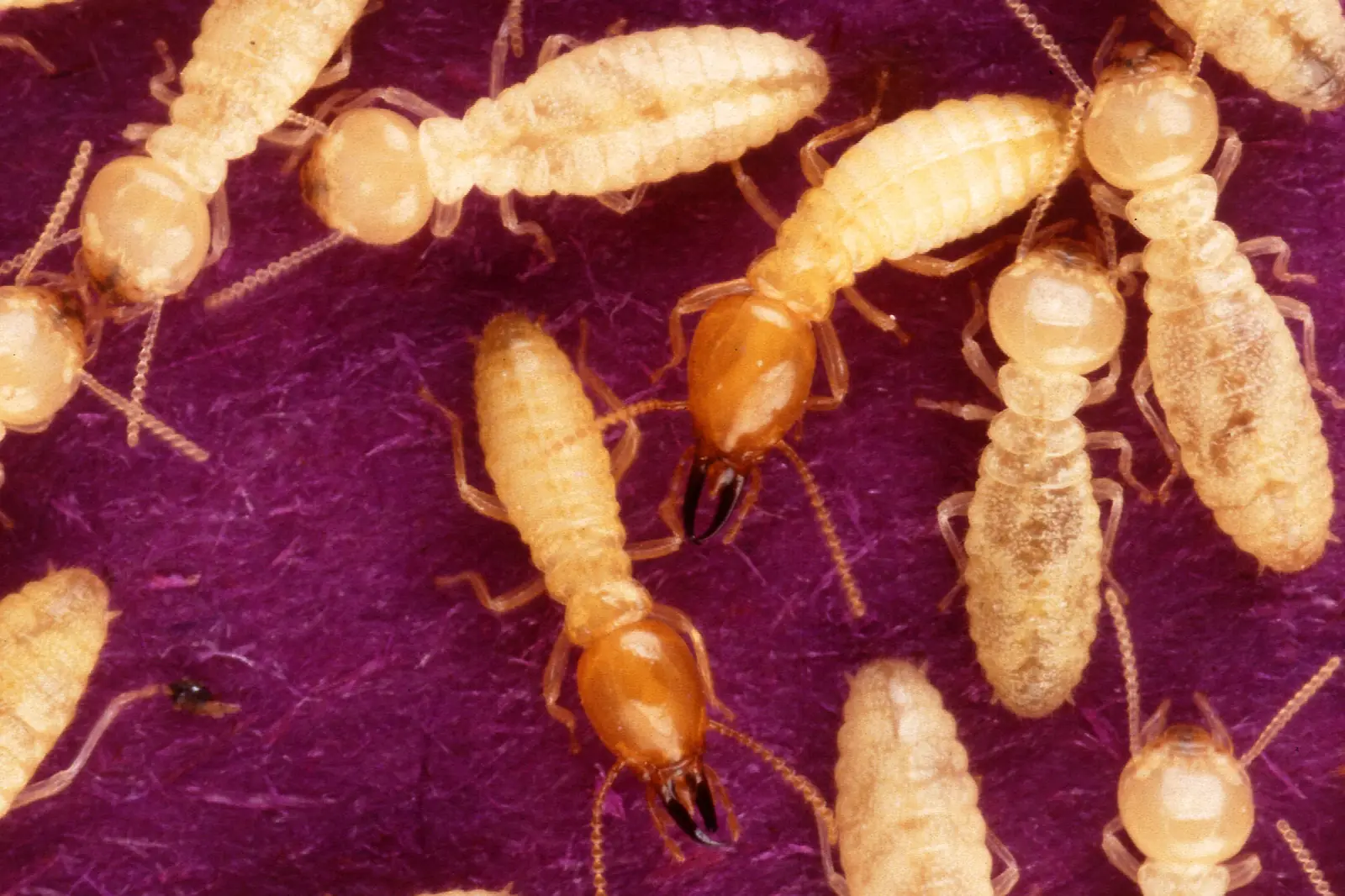
Scale and independence. A native eastern subterranean colony numbers in the hundreds of thousands; a mature Formosan colony can run into the millions, eating proportionally faster — damage that native colonies take years to inflict, Formosans manage in months. Their signature move is the carton nest: a honeycomb of chewed wood, soil and saliva that stores moisture, letting satellite populations live above ground indefinitely — in wall voids, flat roofs, planter boxes, even boat hulls along the Intracoastal. That independence breaks the standard playbook twice. Soil-only treatment can miss an aerial nest entirely. And tent fumigation, which kills everything in the structure, doesn’t touch the soil portion of a Formosan colony — the survivors rebuild through the same routes. Serious Formosan work is therefore colony-scale: baiting systems the workers carry home, extensive liquid work, physical removal of carton nests where found, and the humility to combine methods when the map demands it.
The identification moment is the May-June evening swarm: Formosan alates are larger, yellowish-brown, and mob lights in numbers native species never match — a swarm around a West Palm streetlight can look like snow flurries. Save a few in a zip bag; the ID changes the whole quote.
Where does termite pressure concentrate in West Palm Beach?
- El Cid & Flamingo Park (33401, 33405): 1920s Mediterranean and mission revivals — pecky cypress and Dade pine worth protecting; drywood pressure plus Formosan proximity.
- Northwood & Old Northwood (33407): historic frame stock with decades of untreated wood — inspection discipline pays here most.
- Downtown & the condo canyon (33401): association-governed drywood decisions; Formosan aerial-nest checks on flat roofs and planters.
- Intracoastal & marina edges (33401, 33407): moisture, docks and boats — Formosan colonies documented in vessels and waterfront structures across South Florida.
- Postwar slab neighborhoods — Westgate, Palm Beach Lakes corridor (33405, 33409): expired original soil treatments — the retreat-window question.
- Newer western communities (33411, 33413): builder pretreats aging out — date the last treatment, not the house.
How should owners of historic wood approach treatment?
Like conservators, not just customers. The pecky cypress ceilings and heart-pine floors of El Cid survived a century because that old-growth wood is denser and more resinous than anything milled today — but “resistant” is not “immune,” and replacement stock doesn’t exist at any reasonable price. That argues for early, minimally invasive action: annual inspections that probe rather than glance; localized injection treatments for confirmed drywood colonies before they spread; borate treatment of accessible framing during any renovation (the cheapest permanent protection a historic house ever gets); and moisture management — roof edges, planter boxes against walls, irrigation overspray — because every species on the county list follows water. When whole-structure fumigation is genuinely warranted, it’s compatible with historic fabric — the gas leaves no residue — but scheduling and prep for a house full of irreplaceable finishes deserves an operator who has done it before. Say “historic district” on the dispatch call; it routes you to the right kind of experience.
Call the line
Tap (863) 445-9190 any hour. Describe the evidence, the structure, and your West Palm ZIP.
Get matched by job type
Formosan and colony-scale calls route to operators running bait and combination programs; historic and drywood calls route to injection and fumigation experience; closings route to WDO inspectors.
A licensed operator takes over
An independent, FDACS-licensed and insured West Palm Beach operator inspects, identifies the species, and quotes. No obligation — the dispatch call costs nothing.
Evening swarm like snow at the streetlight? Pellets in the cypress?
The line answers 24/7 and matches you with a licensed West Palm Beach termite operator.
One tap. One call. Matched.
(863) 445-9190Tap to call — 24/7 dispatch
Free to call. The licensed operator gives the quote.
West Palm Beach termite questions, answered straight
How do I know if my swarm was Formosan?
We tented two years ago — why is there activity again?
Can termites really infest a boat or a rooftop planter?
What does termite treatment cost in West Palm Beach?
Disclosure
Lakeland Exterminators is a pest control dispatch and referral service, not a licensed pest control operator. All termite inspections, quotes and treatments in West Palm Beach are performed by independent pest control operators licensed by the Florida Department of Agriculture and Consumer Services (FDACS) and insured in their own name. Calling the dispatch line is free and creates no obligation; the licensed local operator you’re matched with sets their own pricing and terms.
More West Palm help: Pest control in West Palm Beach, Pest control in Boynton Beach, Termite treatment in Fort Lauderdale · Termite dispatch guide · All pest control services