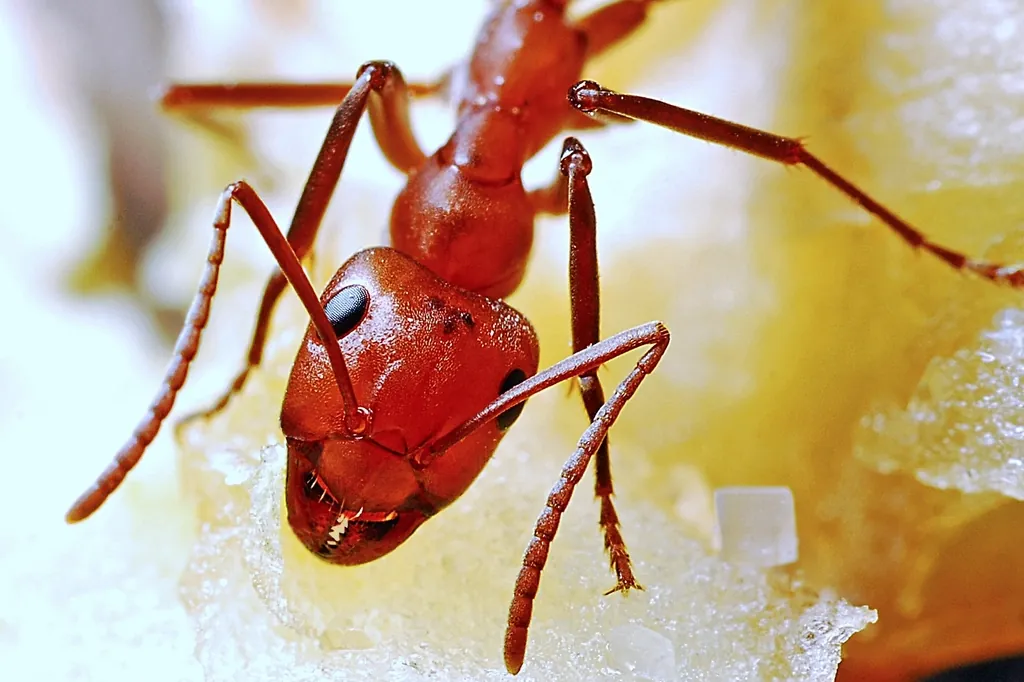
March in Polk County: wings on the windowsill mean swarm season has arrived.
One call reaches a licensed, local exterminator who covers your address — and a real person answers, 24/7.
Talk to a licensed exterminator now
Call and we’ll connect you with a licensed, local exterminator who covers your address. It takes about two minutes, and a real person answers.
Free to call. Free to get matched. The licensed operator gives the quote.
24/7 line · A real person answers · Availability of same-day and emergency service depends on the provider.
Why March is the month Polk County termites go public
Eastern subterranean termite colonies feed underground all winter, invisible. Then comes a March pattern every Polk County operator knows: a warm front, an afternoon of rain, and the next sunny morning the colony releases hundreds of winged reproductives — swarmers — into the air between roughly 10 a.m. and noon. If that eruption happens inside your house, or you find piles of identical translucent wings on a windowsill, the colony is in or against the structure. That single observation is worth more than any gadget: it dates, locates and confirms an active infestation in one glance.
March swarms are how most Polk County homeowners discover a colony that has been feeding since last year. The swarm itself is harmless — swarmers don’t bite and most die within a day. The message they carry is not harmless: a mature colony, typically several years old, is close enough to seed your walls.
The March priority list
Subterranean termite swarms — the headline event
Eastern subterranean swarmers are dark brown to black, about 3/8″ long, with two pairs of equal-length wings. They erupt on warm, still mornings after rain, February through May, with March the reliable heart of the season in Polk County.
Fire ants — mounds after every rain
March rain plus warming soil equals fresh fire ant mounds in Polk County yards, playgrounds and pastures — often a dozen at a time where there was flat grass last week. Mound-stomping splits colonies; broadcast baiting by a licensed operator removes them.
The household ant surge begins
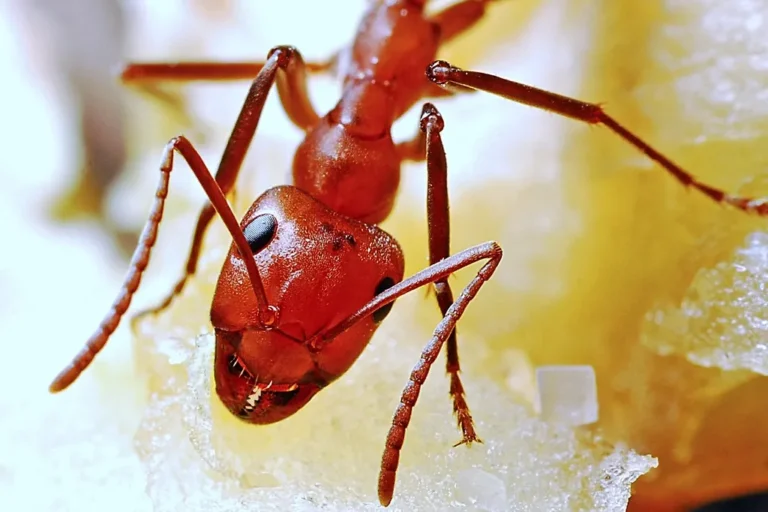
Ghost ants in the kitchen, white-footed ants trailing the soffit, Argentine ant supercolonies waking along irrigation lines — March is when Polk County’s year-round ant pressure shifts into its spring gear.
Brown widows — egg sac season
Brown widows spend March gluing spiky, sputnik-shaped egg sacs under patio furniture, grill covers, meter boxes and lanai corners. Each sac holds well over a hundred spiderlings — knocking sacs down now is the simplest spider control of the year.
Two March notes outside the structural lane: carpenter bees start drilling fascia boards and pergolas in March — but bees are pollinators, and honeybee-related removal in Florida is beekeeper work, not structural pest control; the University of Florida IFAS extension keeps a registry of local beekeepers who take colonies. And if your citrus trees show curling new leaves, that’s Asian citrus psyllid pressure — an agricultural issue for UF/IFAS Polk County extension guidance, not a house call.
Found wings this morning? That’s a today call, not a someday call.
One call reaches a licensed, local exterminator who covers your address — and a real person answers, 24/7.
Free to call. Free to get matched. The licensed operator gives the quote.
March at a glance: the Polk County pest board
| Pest | March status | What you’ll see | The move |
|---|---|---|---|
| Eastern subterranean termite | PEAK swarm season | Morning swarms after rain; wing piles on sills, patios, spider webs | Collect a few wings in a bag; book a licensed inspection now |
| Drywood termite | Pre-season feeding | Six-sided frass pellets under attic framing — swarms start in May | Frass now means activity now; don’t wait for the swarm |
| Fire ant | Mound-building surge | Fresh dome mounds after rain in turf, beds, pasture edges | Licensed broadcast baiting beats mound-by-mound spot kills |
| Ghost / white-footed / Argentine ants | Spring surge begins | Kitchen trails, soffit highways, trails along irrigation lines | Baiting keyed to species — spray-and-pray splits colonies |
| Brown widow | Egg sac season | Spiky sacs under furniture, grills, meter boxes | Glove up, knock down sacs, treat harborage points |
| Roof rat | Easing outdoors | Attic pressure drops as yards warm — entry points stay open | Seal winter entry points before fall returns |
| German cockroach | Steady — indoor | Unchanged by season; kitchen-void breeding continues | Gel bait + IGR program, not fogging |
The full-year picture lives on the Florida termite swarm calendar and the neighboring monthly pages: January and June.
The March homeowner checklist
Learn the wing test
Termite swarmers: straight antennae, thick waist, four equal-length wings. Flying ants: elbowed antennae, pinched waist, unequal wings. Two of the four insects swarming in March are harmless ants — thirty seconds with a magnifying glass saves a panic.
Watch the mornings after rain
Swarms last twenty minutes. If you see one leaving your slab line, porch column or a tree stump, note exactly where it came from — that origin point is gold to the inspector.
Patrol the yard for mounds
Flag fresh fire ant mounds instead of kicking them. A licensed operator baits the colony including the queens; a boot creates three satellite colonies.
Pull mulch off the slab
Mulch piled against the foundation is a moisture bridge for subterranean termites and a nursery for ants. Keep a visible inspection strip of bare slab edge all the way around the house.
What moves a March quote
We never set prices — the licensed operator quotes after a real inspection. In swarm season, these are the levers:
- What actually swarmed — a subterranean colony calls for a soil barrier or bait system; a drywood colony points toward tenting or localized treatment. The species ID changes the job completely.
- Where the activity is — a colony against one exterior wall and one that has reached interior framing are different scopes.
- Structure and footage — linear feet of foundation, slab vs. pier-and-beam, attached lanais and additions that complicate trenching.
- Bond and warranty terms — renewable retreatment bonds carry real value; ask exactly what the number includes. The termite cost guide and bond guide break down every factor — without pretending we set the number.
How the dispatch works in swarm season
Straight up: Lakeland Exterminators is a dispatch and matching service, not a licensed pest control operator. Here is the exact path your request takes.
Describe what you found
Swarm, wings, mounds, trails — tell the line what you’re seeing and where. A real person answers around the clock.
Your address picks the operator
The request routes to an FDACS-licensed operator covering your part of Polk County — Lakeland, Winter Haven, Bartow, Lake Wales, the I-4 corridor, all of it. Termite findings route to WDO-licensed operators specifically.
Licensed inspection on site
The operator confirms the species, maps the activity and writes the quote. Pricing comes from them, never from us.
Treatment stays with the pro
Barrier, bait, tenting, ant program — plus any bond or warranty — all owned by the licensed operator under Chapter 482, Florida Statutes.
Verify before you hire — any Florida pest control company’s license status, categories and discipline history is public at the FDACS license search at aessearch.fdacs.gov. Check the operator you are matched with; the good ones expect it.
March pest questions, answered straight
How do I tell termite swarmers from flying ants?
Three checks: antennae (termites straight, ants elbowed), waist (termites thick and uniform, ants pinched), wings (termites carry four equal-length wings, ants have longer front wings). Bag a few and let the licensed inspector confirm — the ID determines everything that follows.
I saw a swarm inside my house. Is it already too late?
No — but it is already real. An indoor swarm means a mature colony is in or against the structure, and it has likely been feeding for years. What matters now is speed and a proper inspection: the sooner a WDO-licensed operator maps the activity, the smaller the treatment scope tends to be.
Why did fire ant mounds appear overnight after the rain?
The colonies were always there — rain collapses their deep tunnels and pushes the colony up, so workers rebuild the dome above the waterline in hours. March rain plus 70-degree soil is the trigger. Broadcast baiting by a licensed operator eliminates colonies including queens; disturbing mounds just relocates them.
Should I treat for termites preventively in March, before any signs?
March is when many Polk County homeowners start bait-system protection or a renewable bond, because swarm season makes the risk visible. Whether prevention makes sense for your home — and which path fits — is the licensed operator’s call after an inspection. Pre-1980 homes and anything with past activity are the strongest candidates.
What about carpenter bees drilling my fascia?
Carpenter bees are active in March, but bees are pollinators and most bee situations in Florida belong with beekeepers, not structural pest operators — UF/IFAS maintains local beekeeper registries for colony removal. For the perfectly round 1/2-inch holes in painted fascia, the durable fix is filling and repainting after activity ends, since bare softwood invites the next generation.
Swarm season rewards the fast phone call.
One call reaches a licensed, local exterminator who covers your address — and a real person answers, 24/7.
Free to call. Free to get matched. The licensed operator gives the quote.
Disclosure
Lakeland Exterminators is a dispatch and matching service. We connect Polk County callers with FDACS-licensed structural pest control operators. We are not a licensed pest control operator. We do not perform pest control treatment, set prices, issue warranties, hold retreatment bonds, or carry pest control trade insurance. All pricing, scheduling, treatment plans, warranties, bonds and service terms are determined by the FDACS-licensed operator dispatched to your address under Chapter 482, Florida Statutes.
Same-day and 24/7 emergency services are subject to provider participation, location, technician availability, and demand. Availability is not guaranteed and may vary by market and appointment capacity.
License status of any operator you connect with is publicly verifiable at the FDACS license search: aessearch.fdacs.gov.