Sarasota’s termite map has two colors: drywood on the barrier islands, subterranean on the mainland. Treat for the wrong one and you’ve paid twice.
The termites eating a Siesta Key stilt house and the ones under a Gulf Gate ranch are different animals with opposite treatments. The barrier islands — Siesta, Lido, Longboat, Bird Key — sit squarely in Florida’s drywood belt: colonies that live entirely inside sound wood, leave six-sided pellets under kick-out holes, and are treated in the wood itself, up to and including tent fumigation. The mainland — from Laurel Park’s 1920s bungalows through the postwar ranches of Gulf Gate and Sarasota Springs — belongs mostly to eastern subterranean colonies commuting up from the soil through mud tubes, treated at the slab line with liquids or baits that a tent never touches. The dispatch line matches you with FDACS-licensed operators who identify the species first — because in Sarasota, geography is half the diagnosis.
Talk to a live dispatch coordinator now
Pellets on a windowsill, mud tubes on the stem wall, swarmers at the lanai light, a WDO report with findings — describe it and get routed to a licensed Sarasota termite operator.
(863) 445-9190Tap to call — 24/7 dispatch
Free to call. Free to get matched. The licensed operator you’re matched with gives the quote.
24/7 line · A real person answers · Availability of same-day and emergency service depends on the provider.
Need termite treatment in Sarasota, FL? Call (863) 445-9190 and a dispatch coordinator matches you with an FDACS-licensed operator serving your Sarasota ZIP — species identification, liquid barriers and bait systems for subterranean colonies, spot treatment or tent fumigation for drywood, and WDO inspections for real estate deals. Lakeland Exterminators is a dispatch service: the licensed local operator inspects, identifies, and quotes the treatment.
How do you tell which termite a Sarasota house has?
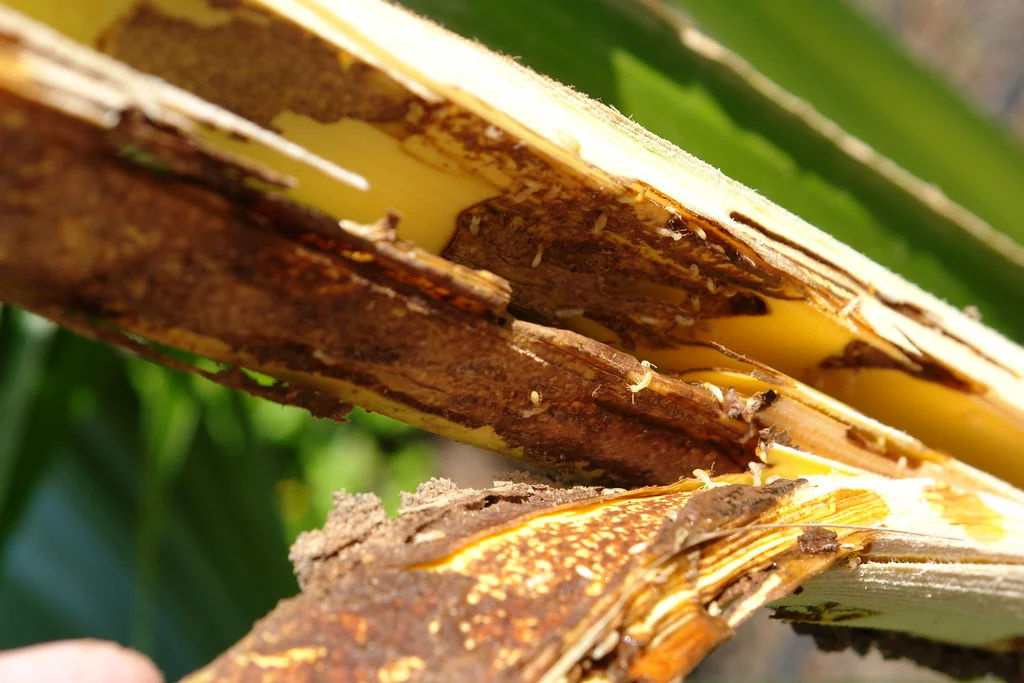
Read the evidence, not the fear. Drywood signs: small piles of hard, six-sided pellets — like coarse coffee grounds — beneath pinholes in window frames, fascia, furniture or exposed beams; dusk swarms in late spring; no mud anywhere. Classic on the islands, where ocean humidity keeps wood moisture in the colony’s comfort zone, and common in older mainland attics. Subterranean signs: pencil-width mud tubes climbing stem walls, slab edges and garage expansion joints; morning swarms February through May; damage that follows the grain and carries soil in it. Classic wherever wood meets ground moisture — and Laurel Park and Bayou Oaks bungalows with pier-and-beam crawl spaces give the inspector the clearest view in town.
The distinction drives everything. Tenting a house for subterranean termites is the region’s classic mismatch — fumigant gas doesn’t persist in soil, so the colony re-enters the week the tent comes off. Soil-treating for drywoods is equally useless in the other direction. And condo buildings on the islands add a governance layer: tenting a building is an association decision with declaration-document cost splits, so single-unit owners with confirmed drywood activity usually start with a localized wood treatment scoped to their unit while the association process runs.
Where does termite pressure concentrate in Sarasota?
- Siesta Key, Lido & Bird Key (34242, 34236): the drywood belt — humidity-fed colonies in fascia, window frames and older cottages; tent-vs-spot decisions rule here.
- Laurel Park & downtown historic blocks (34236, 34237): 1920s pier-and-beam construction — subterranean access from the crawl space plus drywood in original heart-pine trim.
- Gulf Gate & Sarasota Springs (34231, 34232): 1960s-70s slab ranches whose original soil barriers expired decades ago — the retreat-window question every owner should ask.
- Indian Beach & Sapphire Shores (34234): bayfront moisture, mature canopy and older wood construction — both species active.
- Palmer Ranch & newer east county (34238, 34240): newer slabs with builder pretreats — the question is whether the pretreat clock has run out, not whether one existed.
- Longboat Key condos (34228): association-governed drywood decisions — document who pays for tenting before the swarm season forces the question.
Liquid, bait or tent — how does the choice actually get made?
By matching the tool to the colony and the lot. Liquid termiticide barriers excel on accessible slab perimeters — a continuous treated zone the colony can’t cross without contacting it; they struggle where hardscape, pool decks or dense plantings block trenching. Bait systems shine exactly there — stations ring the house through paver cuts and planting beds, workers ferry the toxicant to the colony, and monitoring continues for the life of the contract; the trade-off is patience, with colony elimination taking months rather than days. Tent fumigation is the whole-structure answer for widespread or inaccessible drywood colonies — a gas that penetrates every board once, with no residual protection after airing out, which is why it pairs with prevention: sealed and painted exposed wood, screened attic vents, and periodic inspections. A licensed Sarasota operator will scope which combination your findings actually require — and a two-species house sometimes genuinely needs two treatments.
Call the line
Tap (863) 445-9190 any hour. Describe the evidence, the structure, and your Sarasota ZIP.
Get matched by job type
Island drywood and tenting calls route to fumigation-capable operators; mainland slab and crawl-space calls route to liquid-and-bait providers; real estate deadlines route to WDO inspectors.
A licensed operator takes over
An independent, FDACS-licensed and insured Sarasota operator inspects, identifies the species, and quotes. No obligation — the dispatch call costs nothing.
Pellets under the window? Tubes on the stem wall?
The line answers 24/7 and matches you with a licensed Sarasota termite operator.
One tap. One call. Matched.
(863) 445-9190Tap to call — 24/7 dispatch
Free to call. The licensed operator gives the quote.
Sarasota termite questions, answered straight
Does salt air protect island homes from termites?
My 1970s ranch was treated when it was built — am I covered?
I’m buying a home — is the WDO inspection the same as treatment?
What does termite treatment cost in Sarasota?
Disclosure
Lakeland Exterminators is a pest control dispatch and referral service, not a licensed pest control operator. All termite inspections, quotes and treatments in Sarasota are performed by independent pest control operators licensed by the Florida Department of Agriculture and Consumer Services (FDACS) and insured in their own name. Calling the dispatch line is free and creates no obligation; the licensed local operator you’re matched with sets their own pricing and terms.
More Sarasota help: Pest control in Sarasota, Pest control in Bradenton, Pest control in Venice · Termite dispatch guide · All pest control services