Pest problem in Venice? The island’s 1920s wood and the mainland’s retirement rings each keep their own pests.
Venice is really an island city with mainland suburbs. On the island, John Nolen’s 1920s planned downtown — Mediterranean revival blocks, old cottage streets, salt-seasoned trim — sits deep in Florida’s drywood termite belt, with palm-lined avenues that double as roof rat routes. Across the Intracoastal, ring after ring of 1960s-to-2000s retirement neighborhoods run the slab-era playbook: expired builder pretreats, palmetto bugs in the landscaping, fire ants in irrigated turf, and mosquitoes off a thousand ponds and the Myakka wetlands beyond. The 24/7 dispatch line matches you by ZIP with an FDACS-licensed exterminator who works your side of the bridge.
Talk to a live dispatch coordinator now
Pellet piles on a Venice Avenue windowsill, palmetto bugs in a South Venice lanai, mounds across a Pelican Pointe lawn — describe it and get routed to an independent, licensed and insured operator covering your Venice ZIP.
(863) 445-9190Tap to call — 24/7 dispatch
Free to call. Free to get matched. The licensed operator you’re matched with gives the quote.
24/7 line · A real person answers · Availability of same-day and emergency service depends on the provider.
Need pest control in Venice, FL? Call (863) 445-9190 and a dispatch coordinator matches you with an FDACS-licensed exterminator serving Venice and south Sarasota County — termite, ant, roach, rodent, fire ant and mosquito work from the island’s historic district to South Venice, Venice Gardens and the East Venice Avenue corridor. Lakeland Exterminators is a dispatch service: the licensed local operator you’re matched with inspects, quotes and treats.
Why is the island’s historic wood Venice’s drywood heartland?
Venice’s island core is one of Florida’s great planned downtowns — laid out in the 1920s, built in Mediterranean revival and Old Florida frame, and continuously salt-seasoned by Gulf air for a century. That inheritance is exactly what drywood termites prosper in: original window framing, trim carpentry, roof structures and porch wood, colonized by swarm flights that hop roofline to roofline on warm evenings. The evidence is quiet — pepper-grain pellet piles accumulating under a kick-out hole on a sill, along a baseboard, under attic framing — and the honest treatment conversation is always scope: one genuinely localized colony can sometimes be spot-treated, while pellet evidence in multiple separated rooms makes it a structure-level decision that should be justified with a documented findings map. On an island where neighboring structures share swarm flights, one house’s discovery is the block’s early warning — treat inspection invitations from neighbors accordingly.
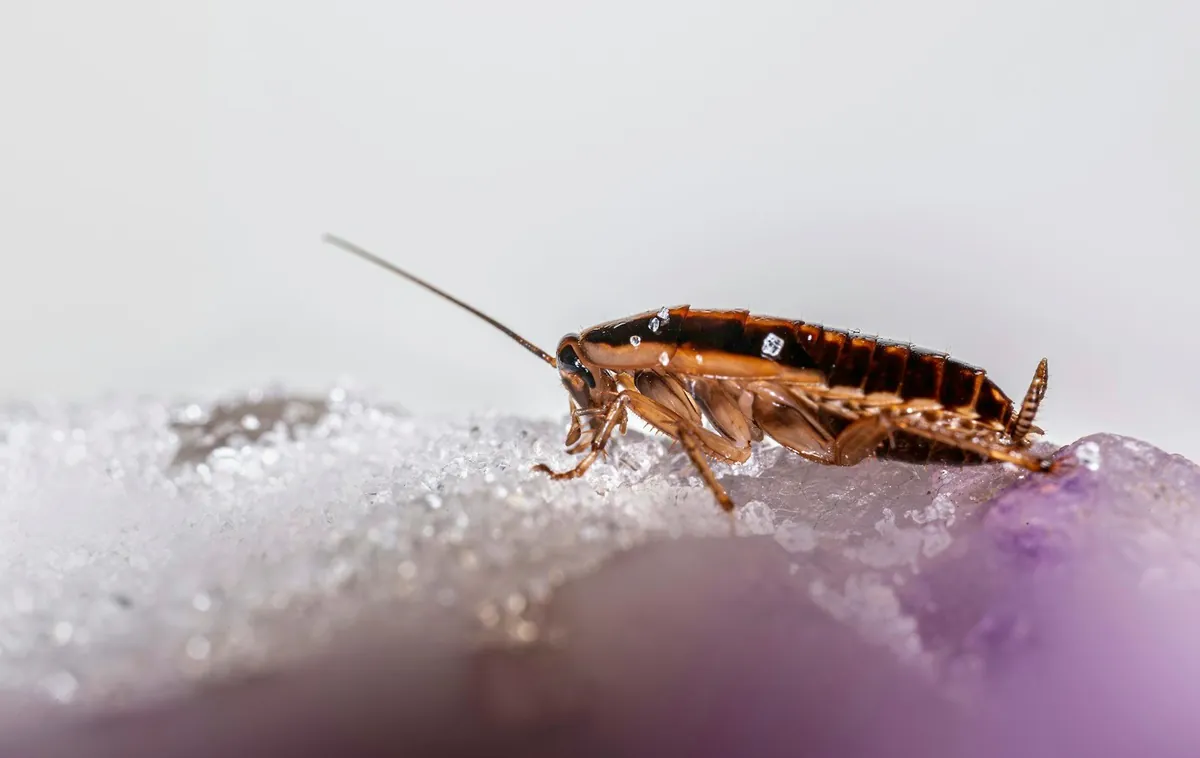
The mainland rings run a different decade-by-decade logic. South Venice and Venice Gardens’ 1960s–70s slabs are long past their soil pretreatments — eastern subterranean termite territory where spring swarmers at a slider or mud at a garage slab edge are the tell. The gated communities off Jacaranda and East Venice Avenue — Pelican Pointe, Waterford, the Venetian Golf & River Club up the line — add lake-margin mosquitoes (with the Myakka river wetlands setting the regional baseline), fire ants in irrigated fairway-edge turf, and ghost ants threading stucco joints into kitchens. Everywhere, the signature Venice call is the palmetto bug — the big outdoor roach that mulched landscape beds and irrigation keep supplied, wandering into lanais and kitchens at night; harborage reduction plus perimeter work beats panic-spraying every time. Add roof rats in the island’s palms and the mainland’s oaks, and German roach programs for the downtown dining blocks, and Venice’s pest map is as neatly zoned as its street plan.
Where does pest pressure concentrate around Venice?
- The island historic district & Venice Avenue (34285): 1920s wood — drywood pellet inspections at sills, trim and attic framing; downtown kitchen roach programs.
- The Esplanade & gulf-front streets (34285): salt-air fascia checks, palm-line roof rat routes, association-level drywood decisions.
- South Venice (34293): 1960s–70s slabs past pretreat — subterranean swarm-season calls, palmetto bug harborage work.
- Venice Gardens & Jacaranda (34293): mid-era slabs, irrigated-turf fire ants, stucco ghost ants.
- Pelican Pointe & the gated corridors (34292): lake-margin mosquitoes, fairway fire ants, builder-pretreat countdowns.
- The East Venice Avenue & Myakka edge (34292): wetland-baseline mosquitoes, wild-edge rodent probing on acreage lots.
What kind of help can the line dispatch in Venice?
Termite control
Island drywood mapping with spot-vs-structure honesty; mainland subterranean work on aging slabs.
Ant control
Ghost ant baiting for stucco and kitchen trails; species ID before treatment.
Rodent control
Palm-line and oak-canopy roof rat exclusion — roofline sealing and attic trap-outs.
Roach extermination
Palmetto bug harborage reduction and perimeter programs; German roach work for dining-district kitchens.
Fire ant treatment
Broadcast baiting for HOA turf, fairway edges and irrigated lawns.
Commercial & emergency
Downtown restaurants, associations and community managers routed to commercial-capable operators, after-hours included.
How does the Venice dispatch actually work?
You call the line
Tap (863) 445-9190 any hour. A coordinator answers — describe the pest, the property and your ZIP.
The problem gets matched
An island pellet pile routes to a drywood-fluent inspector; a South Venice swarm routes to a subterranean crew; a lanai palmetto bug parade routes to a harborage-first operator. Matching runs on species and side of the bridge.
A licensed operator takes over
An independent, FDACS-licensed and insured Sarasota County exterminator contacts you, inspects, and quotes directly.
You decide
No obligation. If their plan works for you, they treat. The dispatch call costs nothing either way.
Pellets on the island sill? Palmetto bugs owning the lanai?
The line answers 24/7 and matches you with a licensed south Sarasota County operator.
One tap. One call. Matched.
(863) 445-9190Tap to call — 24/7 dispatch
Free to call. The licensed operator gives the quote.
Venice pest questions, answered straight
Every night one or two huge roaches show up in the lanai. Is the house infested?
We’re restoring a 1926 island cottage. What’s the termite-smart sequence?
Our 1972 South Venice slab has never been re-treated. How urgent is that?
What does pest control cost in Venice?
Disclosure
Lakeland Exterminators is a pest control dispatch and referral service, not a licensed pest control operator. All inspections, quotes and treatments in Venice are performed by independent pest control operators licensed by the Florida Department of Agriculture and Consumer Services (FDACS) and insured in their own name. Calling the dispatch line is free and creates no obligation; the licensed local exterminator you’re matched with sets their own pricing and terms.
Nearby: Sarasota, North Port, Port Charlotte · All Florida service areas