Clearwater’s termites split the county in two: beach condos fight drywood colonies, mainland ranches fight the soil. Know which fight is yours.
Between Clearwater Beach and Countryside runs an invisible termite boundary. On the barrier island and Island Estates, ocean humidity and decades-old wood construction feed drywood termites — colonies living entirely inside fascia boards, window frames and roof framing, discovered by pellet piles and dusk swarms, treated in the wood or under a tent. Across the causeway, the mainland’s postwar housing stock — the 1950s-70s slab ranches of Cleveland Street’s neighborhoods, Skycrest and Countryside — faces eastern subterranean termites commuting from the soil through mud tubes, treated at the slab line with liquid barriers or baits. Original builder soil treatments on those homes expired decades ago. The dispatch line matches you with FDACS-licensed operators who identify the species first and scope the treatment the evidence actually requires.
Talk to a live dispatch coordinator now
Pellets on the windowsill, tubes on the garage slab edge, swarmers at the balcony light, findings on a WDO report — describe it and get routed to a licensed Clearwater termite operator.
(863) 445-9190Tap to call — 24/7 dispatch
Free to call. Free to get matched. The licensed operator you’re matched with gives the quote.
24/7 line · A real person answers · Availability of same-day and emergency service depends on the provider.
Need termite treatment in Clearwater, FL? Call (863) 445-9190 and a dispatch coordinator matches you with an FDACS-licensed operator serving your Clearwater ZIP — species identification, liquid barriers and bait systems for subterranean colonies, drywood spot treatment or tent fumigation, and WDO inspections for closings. Lakeland Exterminators is a dispatch service: the licensed local operator inspects, identifies, and quotes the treatment.
Why do beach tenting jobs run on a different calendar?
Because fumigation and tourism share the same buildings. Tenting a Clearwater Beach condo or an Island Estates home means two to three days of complete vacancy — every unit, every guest, every pet — plus gas clearance testing before re-entry. In a tower with vacation rentals, that’s an association-level scheduling problem: managers block treatment windows in the shoulder seasons (September–November, after summer families and before snowbirds) because emptying a building in March costs multiples of the fumigation itself. Single-unit owners with confirmed drywood activity usually can’t unilaterally tent a shared building at all — the interim answer is localized wood treatment scoped to their unit while the association process and its declaration-document cost split runs its course. If you’re buying on the beach, ask for the building’s last fumigation date the way you’d ask about the roof: many towers run on a known cycle, and “never” is an answer worth pricing in.
Mainland jobs skip the drama but not the diligence. Slab-ranch subterranean work turns on access — trenching the perimeter where possible, drilling through patios and garage slabs where not — or on bait systems where hardscape makes liquids impractical. Either way the operator’s first question is the era of the house and the date of the last known treatment, because a 1965 Skycrest ranch that hasn’t been re-treated this century has no working barrier, whatever the seller remembers.
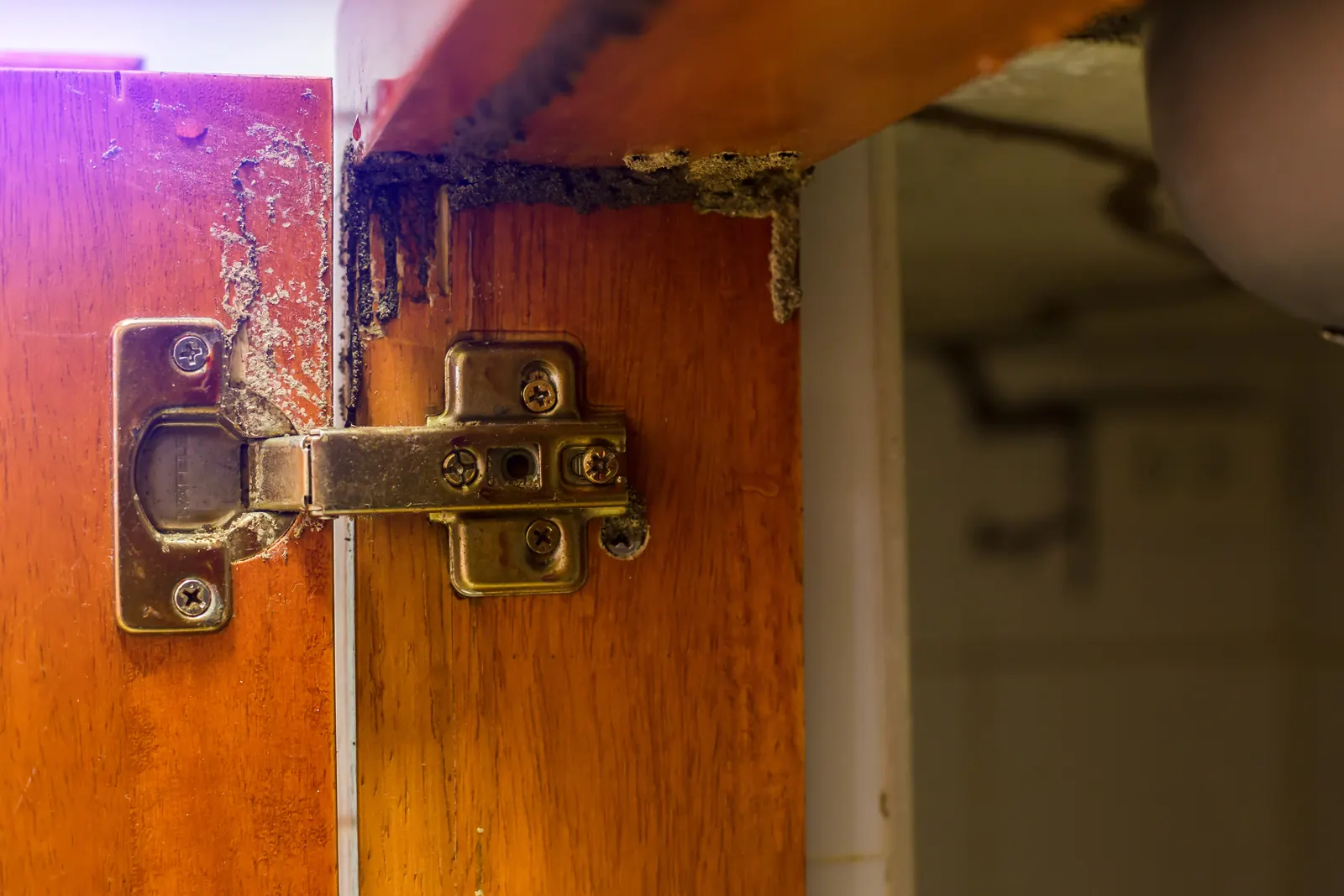
Where does termite pressure concentrate in Clearwater?
- Clearwater Beach & Island Estates (33767): drywood belt — older cottages, condo towers on fumigation cycles, tent-vs-spot governance decisions.
- Harbor Oaks & the bluff (33756): the city’s grandest old wood construction — both species possible, and craftsmanship worth protecting with inspection discipline.
- Skycrest & Cleveland Street corridor (33755, 33756): 1950s-60s slab ranches with expired original treatments — the core subterranean retreat market.
- Countryside (33761, 33763): 1970s-80s builds — barrier-expiry territory; hardscaped lots often push the choice toward bait systems.
- Morningside & Eastwood (33759): mature landscaping and irrigation against slab edges — moisture that shortens any barrier’s life.
- Sand Key condos (33767): association-governed drywood decisions — know the building’s fumigation history before the swarm season forces it.
What evidence should trigger a call today rather than someday?
Live swarmers indoors — winged insects at windows in daylight (subterranean, spring) or at lamps after dusk (drywood, late spring/summer) — mean a mature colony in or immediately under the structure. Fresh mud tubes on stem walls, slab edges or garage expansion joints, especially tubes that rebuild within days of being knocked down. Pellet piles that reappear after vacuuming — active drywood kick-outs, not old debris. Hollow-sounding trim or blistered paint along baseboards and door frames. And in a transaction: any WDO finding, because deal timelines compress fast and lender rules (VA especially) put age limits on reports. None of these are wait-and-see items — colonies only grow, and the difference between early and late treatment on the repair side is measured in framing, not trim.
Call the line
Tap (863) 445-9190 any hour. Describe the evidence, the structure, and your Clearwater ZIP.
Get matched by job type
Beach drywood and tenting calls route to fumigation-capable operators; mainland slab calls route to liquid-and-bait providers; closings route to WDO inspectors.
A licensed operator takes over
An independent, FDACS-licensed and insured Clearwater operator inspects, identifies the species, and quotes. No obligation — the dispatch call costs nothing.
Swarmers at the slider last night? Tubes on the garage slab?
The line answers 24/7 and matches you with a licensed Clearwater termite operator.
One tap. One call. Matched.
(863) 445-9190Tap to call — 24/7 dispatch
Free to call. The licensed operator gives the quote.
Clearwater termite questions, answered straight
Do I have to tent, or can drywood be spot-treated?
Will my house need to be treated again after a tent?
Mud tubes on the slab but no visible damage — is it urgent?
What does termite treatment cost in Clearwater?
Disclosure
Lakeland Exterminators is a pest control dispatch and referral service, not a licensed pest control operator. All termite inspections, quotes and treatments in Clearwater are performed by independent pest control operators licensed by the Florida Department of Agriculture and Consumer Services (FDACS) and insured in their own name. Calling the dispatch line is free and creates no obligation; the licensed local operator you’re matched with sets their own pricing and terms.
More Clearwater help: Pest control in Clearwater, Pest control in Largo, Termite treatment in St. Petersburg · Termite dispatch guide · All pest control services