St. Pete’s bungalows are old enough to host both termite species at once. The treatment plan has to know which is which.
The neighborhoods that make St. Petersburg beloved — Old Northeast’s brick streets, Kenwood’s craftsman grid, Historic Uptown, Crescent Lake — are a century old, wood-framed, and sitting on a peninsula where drywood termites ride the sea air and Eastern subterranean termites work the sandy soil. It’s genuinely common for one bungalow inspection to surface both: pellets under an original window, mud tubes on a crawl-space pier. And since 2024’s storm flooding pushed saltwater and moisture through Shore Acres and the coastal grid, wet-wood conditions have accelerated the subterranean side of the ledger. The dispatch line matches you with FDACS-licensed operators who read mixed evidence correctly — and scope treatment for the infestation you have, not the one that’s easiest to quote.
Talk to a live dispatch coordinator now
Pellets on a Kenwood sill, tubes on an Old Northeast pier, post-flood framing that’s never quite dried — describe it and get routed to a licensed St. Petersburg termite operator.
(863) 445-9190Tap to call — 24/7 dispatch
Free to call. Free to get matched. The licensed operator you’re matched with gives the quote.
24/7 line · A real person answers · Availability of same-day and emergency service depends on the provider.
Need termite treatment in St. Petersburg, FL? Call (863) 445-9190 and a dispatch coordinator matches you with an FDACS-licensed termite operator serving your Pinellas ZIP — crawl-space and soil programs for subterranean evidence, spot treatment and fumigation options for drywood, and both scoped separately when a bungalow shows both. Lakeland Exterminators is a dispatch service: the licensed operator confirms species and quotes the treatment.
Why do St. Pete bungalows so often need two termite answers?
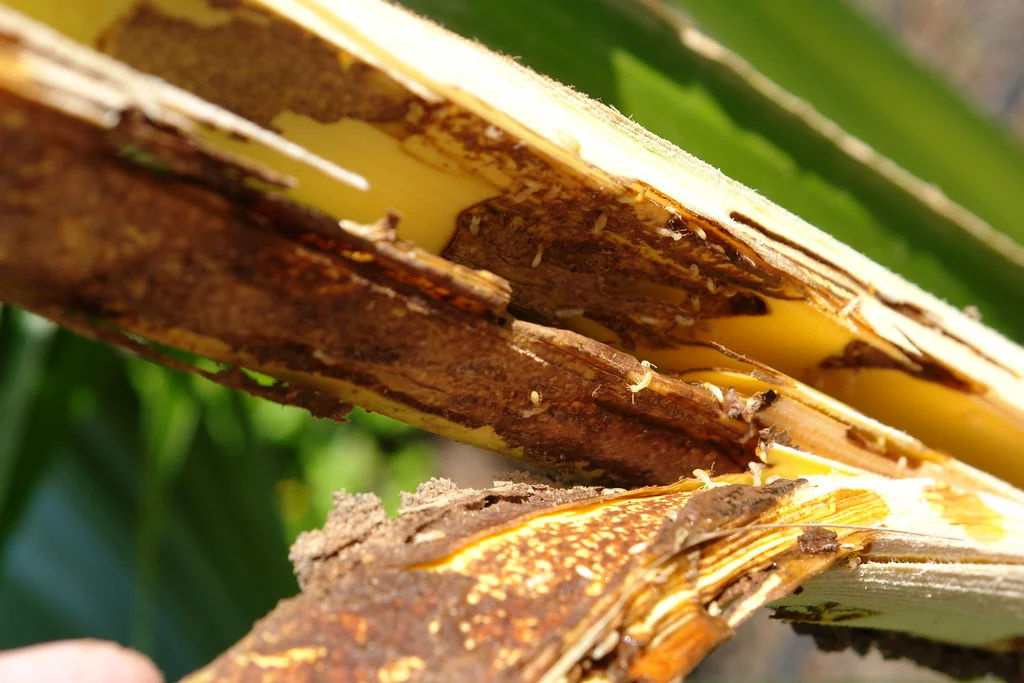
Because the housing invites both species through different doors. A 1925 Kenwood craftsman offers drywoods what they want — decades of sun-checked window framing, original fascia and rafter tails, attic sheathing reachable by a swarmer through any gable gap — and offers subterraneans what they want: a shaded crawl space with soil contact at every pier, plumbing moisture from a century of retrofits, and a water table that Pinellas’ peninsula geography keeps close. The evidence never lies about which is which: drywood leaves dry pellets — six-sided, wood-colored, in neat piles below kick-out holes — while subterraneans leave mud — shelter tubes climbing piers, soil-packed galleries, moisture staining. What a mixed finding changes is the scope conversation: fumigation addresses the roof-structure drywoods and does nothing for the colony in the soil; a soil program protects the foundation line and never touches the attic. Two findings, two scopes, one honest document — that’s the deliverable to insist on.
The post-flood factor deserves plain words. Storm surge through Shore Acres, Snell Isle’s edges and the coastal grid left thousands of structures with elevated wood moisture — and moist wood is subterranean termite fuel: it softens fiber, sustains above-ground survival, and lets colonies work higher and longer. Homes that flooded and were rebuilt fast — new drywall over framing that never fully dried — carry quiet risk worth a dedicated inspection with a moisture meter, not a walk-through. And any St. Pete house entering a remodel or a sale in the historic districts should treat the WDO inspection as due diligence: the discovery moment you want is before the contractor opens the wall, at inspection prices, not after.
Where does termite treatment work concentrate in St. Petersburg?
- Old Northeast & Historic Uptown (33701, 33704): century wood, crawl-space piers, both-species inspections as the default.
- Kenwood & Central Oak Park (33710, 33713): craftsman bungalow grid — drywood in original framing, subterranean at every pier line.
- Shore Acres & Snell Isle (33703, 33704): post-flood moisture legacy — accelerated subterranean conditions, moisture-meter inspections.
- Crescent Lake & Euclid-St. Paul (33704, 33713): renovation wave — mid-remodel discoveries and pre-purchase WDO demand.
- Pinellas Point & Lakewood (33705, 33712): 1950s-60s slab ranches with original, expired soil barriers.
- West St. Pete & Tyrone (33709, 33710, 33714): post-war volume — re-treatment and bait-system territory.
What does honest scoping look like on a mixed-evidence house?
It looks like a findings map with two colors. For the subterranean side: where tubes and moisture were found, then the ground game — non-repellent liquid trenched at the soil line and treated at piers, or bait stations where trenching fights the lot, with crawl-space moisture fixes (vapor barrier, ventilation, plumbing repairs) listed as part of the solution because chemistry against a wet crawl space is a treadmill. For the drywood side: which members show pellets or galleries, then the containment question — localized spot or heat treatment if the evidence is provably confined, fumigation if it’s spread through the roof structure, with the reasoning stated. What it never looks like: a single line item that treats “termites” generically, a tent quoted off one pellet pile without a spread assessment, or a soil job sold as protection against the drywoods upstairs. St. Pete’s housing deserves — and its good operators deliver — the two-color map.
Call the line
Tap (863) 445-9190 any hour. Describe the evidence — pellets, tubes, both — and your Pinellas ZIP.
Get matched by evidence
Bungalow and crawl-space calls route to operators fluent in older housing; post-flood and slab calls route to soil-program providers.
A licensed operator takes over
An independent, FDACS-licensed and insured St. Petersburg operator inspects, maps findings by species, and quotes. No obligation — the dispatch call costs nothing.
Pellets upstairs and mud below? One quote can’t cover both — but one call can.
The line answers 24/7 and matches you with a licensed St. Petersburg termite operator.
One tap. One call. Matched.
(863) 445-9190Tap to call — 24/7 dispatch
Free to call. The licensed operator gives the quote.
St. Petersburg termite treatment questions, answered straight
My house flooded in the 2024 storms. Does that really change my termite risk?
Can I spot-treat drywoods in a historic bungalow instead of tenting?
Do St. Pete’s brick streets and old oaks matter to termites?
What does termite treatment cost in St. Petersburg?
Disclosure
Lakeland Exterminators is a pest control dispatch and referral service, not a licensed pest control operator. All termite inspections, quotes, treatments and fumigations in St. Petersburg are performed by independent pest control operators licensed by the Florida Department of Agriculture and Consumer Services (FDACS) and insured in their own name. Calling the dispatch line is free and creates no obligation; the licensed operator you’re matched with sets their own pricing and terms.
More St. Petersburg help: Pest control in St. Petersburg, Rodent control in St. Petersburg · Termite dispatch guide · All pest control services