St. Pete’s rats have a street grid built for them: alleys behind every block, palms over every roof.
St. Petersburg’s classic layout — the alley-serviced grid that runs through Kenwood, Old Northeast, Historic Uptown and half the city — concentrates everything a roof rat wants into a tidy corridor: garbage service, garage clutter, fence-line highways, and untrimmed palms whose skirts of dead fronds are practically ready-built rat housing. From the alley, the route to a bungalow attic is one fence, one palm and one gap under a barrel-tile eave. After the 2024 flooding scrambled ground harborage across Shore Acres and the coastal streets, displaced rodents pushed inland and upward — and attic calls followed. The dispatch line matches you with FDACS-licensed operators who work St. Pete’s rodent problem where it lives: at the roofline, the palm crown and the alley fence.
Talk to a live dispatch coordinator now
Scratching over the bedroom at midnight, droppings in the alley-side garage, something running the fence at dusk, chewed citrus on the tree — describe it and get routed to a licensed St. Petersburg rodent operator.
(863) 445-9190Tap to call — 24/7 dispatch
Free to call. Free to get matched. The licensed operator you’re matched with gives the quote.
24/7 line · A real person answers · Availability of same-day and emergency service depends on the provider.
Need rodent control in St. Petersburg, FL? Call (863) 445-9190 and a dispatch coordinator matches you with an FDACS-licensed operator serving your Pinellas ZIP — attic inspections and trap-outs, roofline and crawl-space exclusion, palm and citrus route management, and follow-up monitoring. Lakeland Exterminators is a dispatch service: the licensed local operator inspects, maps the entries, and quotes the work.
Why do St. Pete bungalows collect roof rats?
Age plus architecture. A 1920s bungalow was built with ventilated eaves, gable vents and fascia returns sized for a era before rodent-proofing was a trade term — and a rat needs only a quarter-sized opening (a mouse, a dime). Add the crawl space: pier-and-beam construction gives rodents a sheltered ground floor with plumbing penetrations leading straight up into wall voids. Add the landscaping: St. Pete’s signature palms — especially unpruned ones with full frond skirts — are documented roof rat nesting sites, and backyard citrus, mango and avocado trees are provisioning stops on the nightly route. The hollowed-out orange still hanging on the tree is the classic St. Pete calling card. Rats reach breeding age at five weeks with litters of six to a dozen; the October scratching sound becomes the January colony precisely because the math never sleeps.
The durable fix runs in sequence. Inspection: the operator walks the roofline with the same eyes a rat uses — eave courses, ridge caps, vent screens, the AC chase, the garage door’s corner gaps — and maps every opening in writing. Trap-out: snap traps on the attic runways (identified by droppings and grease rub-marks), checked and re-set until the catch curve hits zero; poison in an attic is the amateur move, because a bait-killed rat dies in a wall void and becomes a two-week odor problem, and secondary poisoning risk travels up to the owls and hawks that patrol Crescent Lake and the waterfront parks. Exclusion: every mapped opening closed with hardware cloth, sheet metal or mortar — never foam alone. Route management: palm skirts pruned, limbs cut six feet off the roof, fruit harvested, alley-side garbage in hard bins with lids that latch. Then a follow-up visit that certifies silence.
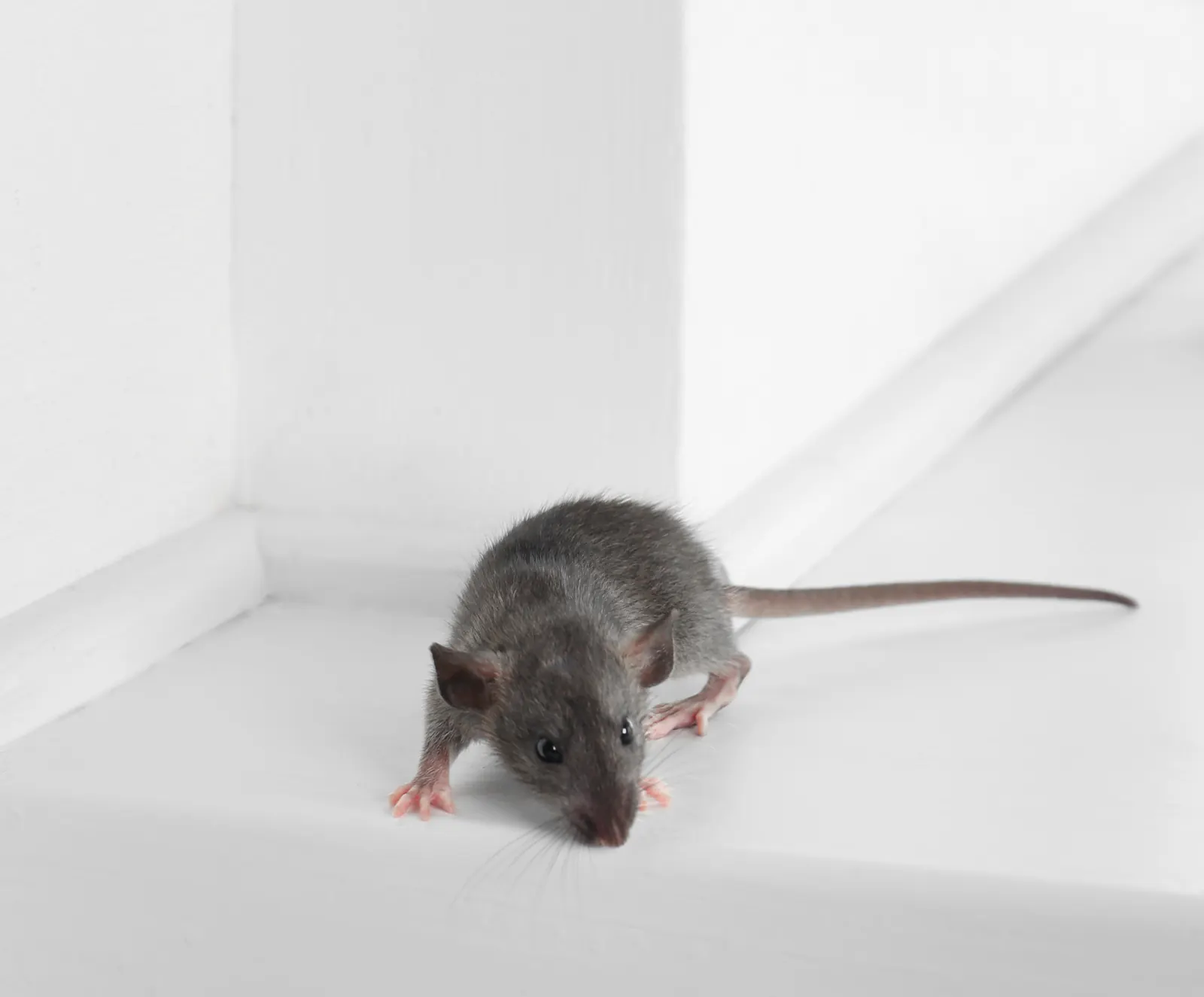
Where does rodent pressure concentrate in St. Petersburg?
- Kenwood & Historic Uptown (33701, 33713): alley grid plus bungalow eaves — the city’s densest roof-rat conditions.
- Old Northeast & Crescent Lake (33701, 33704): canopy streets, backyard citrus and century-old venting.
- Shore Acres & Snell Isle (33703, 33704): post-flood displacement — ground harborage scrambled, attic pressure up.
- Central Avenue corridor & Grand Central (33707, 33712, 33713): restaurant rows and dumpster ecology behind the storefronts.
- Pinellas Point & Lakewood (33705, 33712): 1950s-60s ranches — settled roof-to-wall gaps and unscreened gable vents.
- West St. Pete & Tyrone (33709, 33710, 33714): mixed housing with mature landscaping — classic canopy-to-roofline routes.
What should the alley side of the equation get?
Attention, because it’s the supply line. The alley behind a St. Pete block aggregates every property’s garbage, compost, garage spillover and fence-line cover into one rodent commissary — and one house’s exclusion job doesn’t change the block’s carrying capacity. What moves the needle on your side of the fence: hard-sided cans with latching lids (rats defeat flip lids), garbage out the morning of pickup rather than the night before, pet food and chicken feed in metal bins, fallen fruit picked up on schedule, and the fence-line stripped of stacked lumber and overgrown vines that turn it into a covered highway. Where the block’s pressure is genuinely communal — restaurant rows, multi-unit alleys — commercial-grade perimeter bait stations, placed and maintained by a licensed operator, have a legitimate role after your building is sealed. The order matters: seal first, then manage the pressure. Reversed, it’s a subscription to feeding the alley.
Call the line
Tap (863) 445-9190 any hour. Describe what you’re hearing and where, plus your Pinellas ZIP.
Get matched by job
Attic and bungalow calls route to exclusion-strong operators; alley-commercial and multifamily calls route to providers with monitoring programs.
A licensed operator takes over
An independent, FDACS-licensed and insured St. Petersburg operator inspects, maps entries, and quotes. No obligation — the dispatch call costs nothing.
Midnight scratching? Hollowed oranges on the tree?
The line answers 24/7 and matches you with a licensed St. Petersburg rodent operator.
One tap. One call. Matched.
(863) 445-9190Tap to call — 24/7 dispatch
Free to call. The licensed operator gives the quote.
St. Petersburg rodent control questions, answered straight
Something hollowed out the oranges on my tree but left the peel. What was it?
Do palm trees really cause rat problems?
The flooding pushed rats into our neighborhood. Is this permanent?
What does rodent control cost in St. Petersburg?
Disclosure
Lakeland Exterminators is a pest control dispatch and referral service, not a licensed pest control operator. All rodent inspections, quotes, trapping and exclusion work in St. Petersburg are performed by independent pest control operators licensed by the Florida Department of Agriculture and Consumer Services (FDACS) and insured in their own name. Calling the dispatch line is free and creates no obligation; the licensed local operator you’re matched with sets their own pricing and terms.
More St. Petersburg help: Pest control in St. Petersburg, Termite treatment in St. Petersburg · Rodent dispatch guide · All pest control services