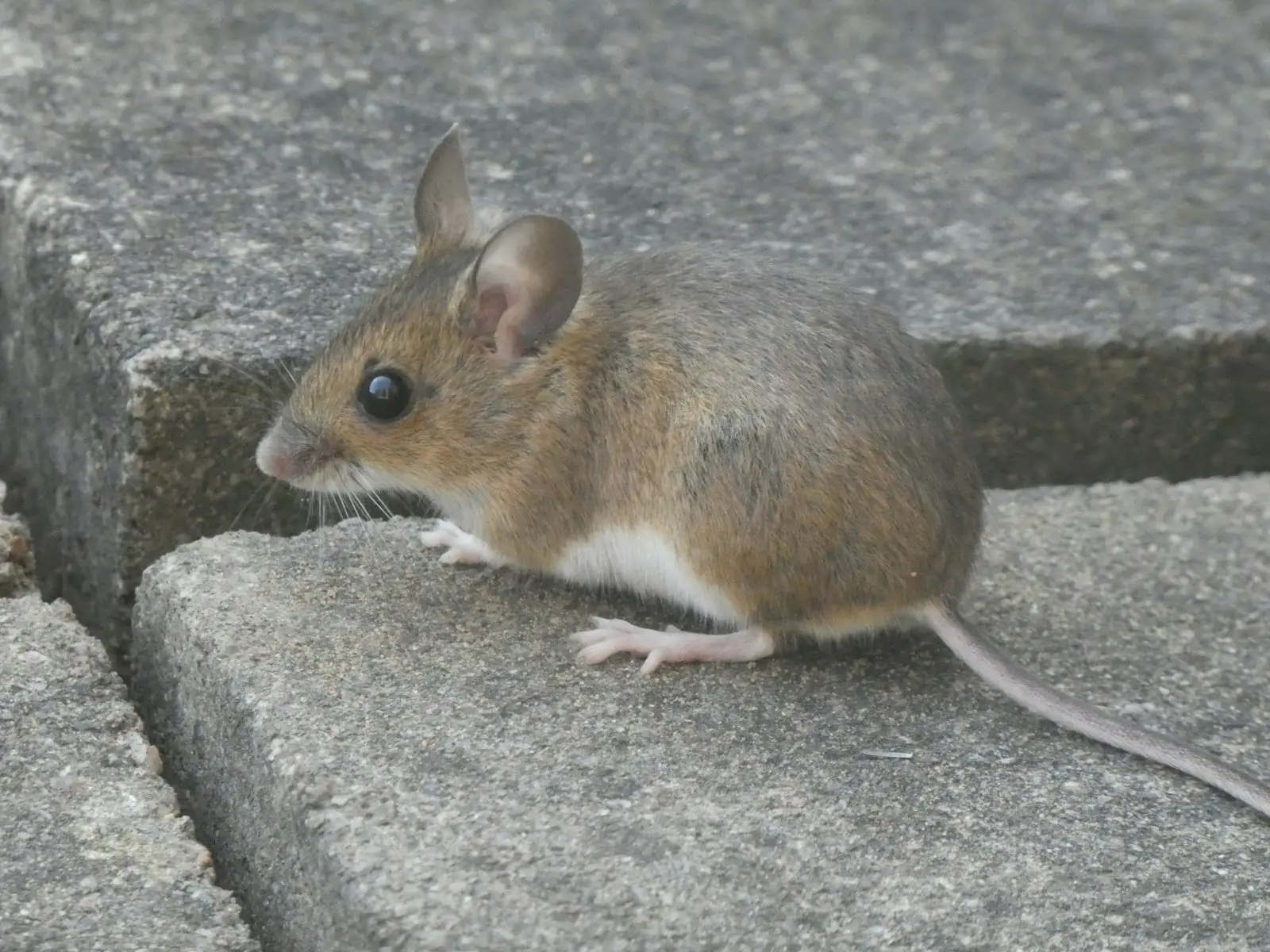
Scratching overhead at 2 a.m.? Trapping gets them out. Exclusion keeps them out.
One call reaches a licensed, local exterminator who covers your address — and a real person answers, 24/7.
Talk to a licensed exterminator now
Call and we’ll connect you with a licensed, local exterminator who covers your address. It takes about two minutes, and a real person answers.
Free to call. Free to get matched. The licensed operator gives the quote.
24/7 line · A real person answers · Availability of same-day and emergency service depends on the provider.
Trap-out first, seal-out second — the order is the whole job
Rodent exclusion is the physical sealing of every gap a rat or mouse can use to enter your home. It is the only part of rodent work that is permanent — trapping and baiting manage the population that is already inside, but exclusion is what decides whether you make this call again next fall. The catch is sequencing, and it is where cut-rate programs go wrong.
Seal a house while rodents are still inside and you have not solved the problem — you have locked it in the walls. Trapped rats chew new exits through drywall and soffit returns, or die in wall voids and ductwork where the odor and flies take weeks to clear. A properly sequenced Polk County program runs the other way around:
- Inspection maps every entry point — attic, roofline, crawl space, garage — plus the rub marks, droppings and gnaw evidence that show which openings are active.
- Trap-out clears the interior population over roughly two to four weeks, with snap traps on the runways and one-way doors on the main active entries so rodents exit to forage and cannot get back in.
- Permanent sealing closes the envelope only after interior activity stops — metal barriers first, weatherproof sealant over them.
- Monitoring confirms it held, typically 30 to 60 days of follow-up checks before the operator signs off.
Ask any company how they sequence seal-out against trap-out. The answer tells you quickly whether you are talking to an exclusion operator or a bait-station route tech.
Know which rodent you’re hosting
Polk County runs three commensal rodents, and the entry points barely overlap — which is why the ID drives the exclusion plan.
Roof rat
Rattus rattus. Lakeland’s dominant attic rodent — an agile climber that reaches the roofline by tree limb and cable line, nests overhead, and works at night. Loves citrus; a hollowed-out orange under a backyard tree is a classic Polk County calling card.
Norway rat
Rattus norvegicus. The heavier ground-level burrower — crawl spaces, slab edges, garage corners rather than attics. Less common here than the roof rat, but the exclusion checklist shifts down to grade level when it shows up.
House mouse
Mus musculus. Slips through a gap the width of a dime — about a quarter inch. Kitchens, garages and storage rooms rather than attics, and steady pressure in newer slab subdivisions. Mouse-grade sealing is the finest-tolerance work on the list.
One more ID check before anything gets sealed: rats and mice work at night. If the scratching overhead runs at dawn and dusk, you are more likely hosting squirrels — a different animal, different rules, different timing. The squirrel removal guide covers that path.
Droppings in the attic? Gnaw marks on the soffit? That is enough to make the call.
One call reaches a licensed, local exterminator who covers your address — and a real person answers, 24/7.
Free to call. Free to get matched. The licensed operator gives the quote.
How rodents actually get into Lakeland homes
Roof rats almost never walk in the front door. They arrive at roof height — and Lakeland hands them the route.
The canopy highway
Backyard citrus, mature oaks in Dixieland and around Lake Hollingsworth, palm fronds brushing the eaves, and the utility and cable lines that tie every house to the pole — each one is an aerial runway to the roofline. A roof rat travels a power line as comfortably as you use a sidewalk. That is why serious exclusion always includes trimming limbs back four feet or more from the roof, and why a plan that never looks up is not a plan.
Where the envelope fails, by housing stock
- 1970s–80s block ranches — North Lakeland off Kathleen Road, the Combee and Crystal Lake corridors, much of South Lakeland: the classic failures are gable-end vents with torn or flimsy insect screen, the soffit return where soffit panel meets gable wall, gaps behind shrunken fascia boards, and unscreened off-ridge vents. These are the entry points on most rodent exclusion work orders in this county.
- 1920s–40s Dixieland and Lake Morton bungalows — crawl space vents with rusted screen, gaps at pier tops and utility penetrations under the floor. This is where Norway rat and mouse entries concentrate.
- 2000s+ slab subdivisions — the garage door’s bottom corner seals, the AC line chase through the block, dryer vents with broken flappers, and open weep holes. Newer does not mean sealed; it means the gaps are smaller and better hidden.
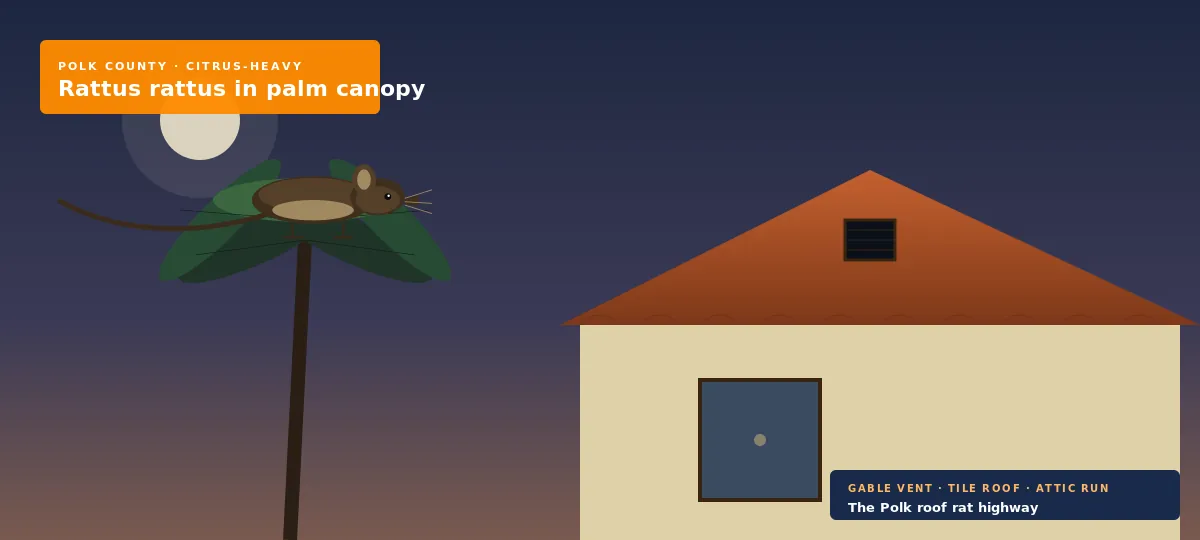
Hardware cloth, sealant and one-way doors — what real exclusion is made of
The materials list is short, and it is where honest work separates from cosmetic work.
- Quarter-inch galvanized hardware cloth, 19-gauge or heavier, over gable vents, off-ridge vents and soffit openings. Rats gnaw through expanding foam, caulk, plastic screen and even thin aluminum flashing given time; a rodent’s incisors grow continuously and it treats soft materials as a chew toy. Metal mesh is the barrier — everything else is trim.
- Copper mesh or stainless wool packed into pipe chases and weep holes before sealant goes over the top. The sealant is weatherproofing, not the defense; the packed metal is what stops the teeth.
- One-way doors over the active main entries during trap-out. Rodents leave to forage and meet a door that only swings out. It clears the structure without poison and without anything dying where you cannot reach it.
- Gap math that respects the animal: a mouse needs a dime-width gap, a rat needs a quarter — and both will happily enlarge a smaller one in soft material. If a pencil slides into it, it goes on the seal list.
Why poison-only programs keep failing
Bait stations kill individual rodents. They do nothing about the torn gable screen those rodents used — so the next rat off the power line inherits an empty attic with a marked trail to it. That is the first failure. The second is worse: a rodent dosed with anticoagulant bait does not politely die in the yard. It dies where it feels safe, which is inside your wall void or air handler chase, and the odor, flies and staining that follow can mean cutting drywall to remove a carcass that trapping would have delivered to hand. Pest professionals call it die-in-wall, and it is the single most common regret we hear from callers who tried the bait-only route first.
There is also the food chain to think about: Polk County’s owls and hawks eat rodents, and secondary rodenticide exposure in raptors is well documented in Florida. None of this makes bait useless — exterior perimeter stations have a legitimate place inside a monitored program run by a licensed operator. It makes bait-only a strategy that treats the symptom while the doorway stays open.
What the attic check should cover before sign-off
Rodents do their real damage out of sight, so a proper exclusion job ends with a documented attic assessment, not just a sealed vent. Have the operator walk you through:
- Wiring — gnawed insulation on attic runs is a genuine fire hazard and the finding that most often turns a rodent call into an electrician referral.
- Insulation — tunneling, compression and urine contamination cut its R-value; heavy infestations sometimes justify partial replacement.
- Ductwork — chewed flex duct leaks conditioned air into the attic and can pull contaminated air into the system.
- Nests and droppings — location tells the story of which entries were active and whether the trap-out is truly finished.
If the evidence up there points to something bigger than a rat — heavy thumps, torn soffit from the outside, a smell you cannot place — the same dispatch line routes raccoon, opossum and other animal calls to licensed trappers through the wildlife removal page.
And before you sign with anyone: every Florida pest control operator’s license status is public. Look the company up at the FDACS license search — it takes a minute, and the good operators expect you to check.
How the rodent exclusion dispatch works
Straight up: Lakeland Exterminators is a dispatch and matching service, not a licensed pest control operator. Here is the exact path your call takes.
Describe what you’re hearing and finding
Night scratching, droppings, gnaw marks, a hollowed orange under the tree — tell the line what you have and where. A real person answers around the clock.
Your address picks the operator
The call routes to an FDACS-licensed operator covering your part of Polk County — Lakeland, Winter Haven, Auburndale, Bartow, Mulberry, all of it.
Licensed inspection on site
The operator confirms the rodent, maps every entry point from roofline to slab, and writes the quote. Pricing comes from them, never from us.
Trap-out, seal-out and follow-up stay with the pro
Traps, one-way doors, hardware cloth, monitoring visits and any service warranty — all owned by the licensed operator under Chapter 482, Florida Statutes.
Verify before you hire — any Florida pest control company’s license status, categories and discipline history is public at the FDACS license search. Check the operator you are matched with; the good ones expect it.
Lakeland rodent exclusion questions, answered straight
Should I seal first or trap first?
Trap first, seal last. Sealing with rodents still inside traps them in the structure, where they either chew new exits or die in wall voids. The sound sequence is inspection, then trap-out with one-way doors on the active entries, then permanent sealing once interior activity stops, then a monitoring window to confirm nothing got back in.
How long does a full rodent exclusion program take?
The physical seal-out on a typical Polk County single-family home is one to two days of work. The trap-out phase usually runs two to four weeks depending on population, and follow-up monitoring adds another 30 to 60 days. The licensed operator’s inspection sets the real schedule for your structure.
Why not just put out poison?
Because poison removes rodents without closing the doorway they used — and dosed rodents routinely die inside wall voids, leaving weeks of odor and fly problems and sometimes a drywall repair. Bait has a place as exterior perimeter stations inside a monitored program, but as a stand-alone fix it fails on both counts: re-entry and die-in-wall.
Will exclusion keep out squirrels and other wildlife too?
Largely yes — squirrels use the same gable vents, soffit returns and roofline gaps, so quality hardware-cloth work excludes them as well. But active squirrel or bat situations carry their own rules and seasonal timing in Florida, so the animal has to be identified before anything is sealed. Daytime noise points to squirrels; night noise points to rats.
How small a gap can a rodent actually use?
A house mouse can pass through a gap about the width of a dime — roughly a quarter inch. A rat needs about a quarter-coin width. Both will gnaw a smaller opening larger in wood, foam or vinyl. Practical rule from the field: if a pencil fits into the gap, it belongs on the seal list.
Are the operators this line routes to actually licensed?
Rodent control performed commercially in Florida requires an FDACS license under Chapter 482, and the operators in the network hold the categories their work requires. You can verify any company’s license status, categories and discipline history yourself at the FDACS license search before you sign anything.
Every night they’re inside is another night of chewing.
One call reaches a licensed, local exterminator who covers your address — and a real person answers, 24/7.
Free to call. Free to get matched. The licensed operator gives the quote.
Disclosure
Lakeland Exterminators is a dispatch and matching service. We connect Polk County callers with FDACS-licensed structural pest control operators. We are not a licensed pest control operator. We do not perform rodent exclusion or pest control work, set prices, issue warranties, hold retreatment bonds, or carry pest control trade insurance. All pricing, scheduling, treatment plans, warranties, bonds and service terms are determined by the FDACS-licensed operator dispatched to your address under Chapter 482, Florida Statutes.
Same-day and 24/7 emergency services are subject to provider participation, location, technician availability, and demand. Availability is not guaranteed and may vary by market and appointment capacity.
License status of any operator you connect with is publicly verifiable at the FDACS license search.