Thumping in the attic — in broad daylight? That’s not rats. Lakeland attics are squirrel country.
One call reaches a licensed, local exterminator who covers your address — and a real person answers, 24/7.
Talk to a licensed exterminator now
Call and we’ll connect you with a licensed, local exterminator who covers your address. It takes about two minutes, and a real person answers.
Note: this line is for squirrel attic-exclusion issues specifically. If your issue is ants, roaches, termites, rodents indoors, or other general household pests, use our main pest match instead.
Free to get matched. The licensed operator gives the quote.
A real person answers · Availability of same-day service depends on the provider.
Why Lakeland attics are a magnet for squirrels
Lakeland’s tree canopy is one of the city’s biggest draws — mature live oaks around Lake Hollingsworth, citrus and hardwood cover through Beacon Hill and Dixieland, dense landscaping across newer South Lakeland subdivisions. That same canopy hands eastern gray squirrels an aerial route from the yard straight onto the roofline, and from there into a gable vent, a soffit gap, or a spot where fascia trim has pulled loose.
Once inside, a squirrel has found ideal denning space: dry, insulated, elevated and safe from ground predators. A female will often use an attic to raise a litter — which is exactly when the noise, the chewing and the urgency homeowners report all spike at once.
Squirrel or roof rat? The attic tells you
Polk County attics host both, the treatment paths are completely different, and the fastest way to tell them apart is a clock.
| Signal | Squirrel | Roof rat |
|---|---|---|
| When you hear it | Daytime — especially early morning and late afternoon | Night, almost exclusively |
| What it sounds like | Heavy thump-and-scurry, rolling sounds (cached nuts) | Light, fast scratching and gnawing |
| Entry point | Chewed-open gable vent corner, separated fascia, ridge vent | Tile gaps, utility penetrations, gaps a quarter-size and up |
| Seen outside? | Travels openly on branches, power lines, rooflines | Stays hidden; you see droppings, not the animal |
Hearing the noise at night instead? You are on the wrong page — start with the roof rat guide or go straight to rodent exclusion. The operator confirms species on inspection either way, so a wrong guess costs nothing but the reading time.
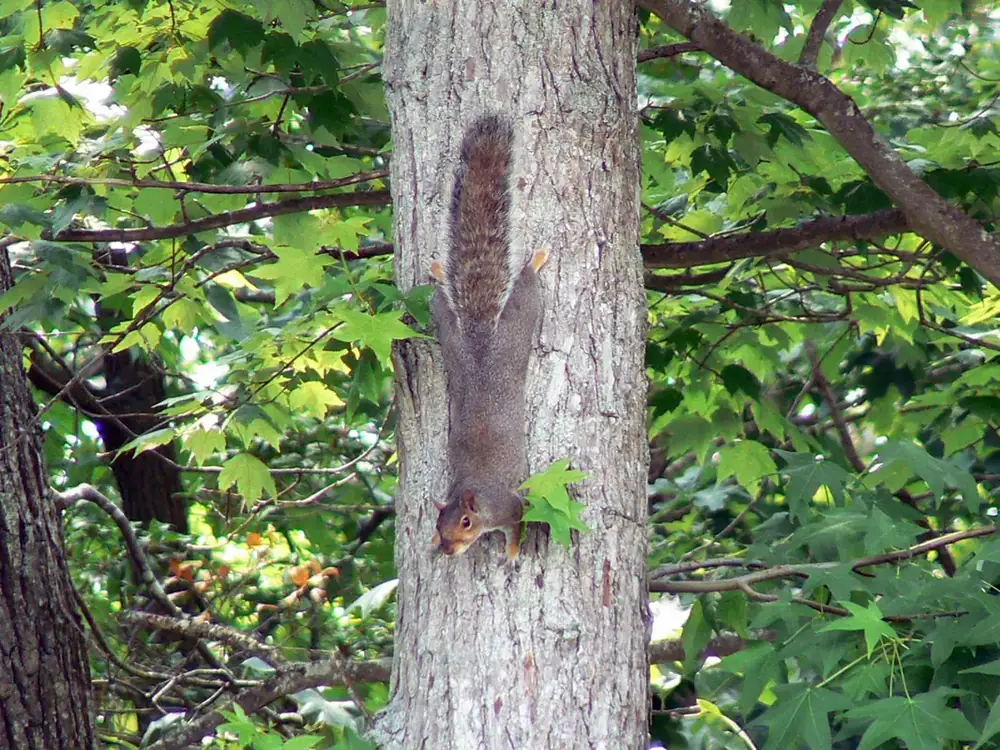
Daytime attic noise is not going to resolve itself.
One call reaches a licensed, local exterminator who covers your address — and a real person answers, 24/7.
Free to get matched. The licensed operator gives the quote.
Squirrel season in Polk County — and why it changes the plan
Florida squirrels typically raise two litters a year, roughly January through March and again August through September. Those windows drive the whole exclusion schedule: a responsible operator confirms whether dependent young are in the attic before sealing anything, because closing entry points with a litter inside separates the mother from her young — she will chew a new hole trying to get back, and the outcome is bad for the structure and the animals both. Outside the maternity windows, exclusion proceeds on a normal timeline.
Florida wildlife rules also restrict how nuisance animals may be trapped, transported and released, which is one more reason this is licensed-operator work rather than a weekend project — the operator carries the authorizations the law requires and sequences the job so it never has to be done twice.
The removal and exclusion sequence a licensed operator runs
Inspection and species confirmation
Squirrel vs. roof rat vs. bat changes everything downstream. The operator locates every active entry point — not just the obvious one — and checks for dependent young.
One-way doors and trapping
One-way exclusion devices at confirmed entry points let the animal leave to forage and block re-entry. Live trapping covers the cases exclusion alone cannot.
Permanent sealing — in metal
Once the attic is confirmed clear: metal flashing, hardware cloth and exclusion-rated materials at every entry point. Caulk and foam alone are chew-through material for a squirrel, not a barrier.
Roofline and cleanup
Branches trimmed back from the roof edge — typically 6 to 8 feet of clearance — to remove the aerial highway, plus attic cleanup and insulation replacement where nesting and droppings soiled it.
Why DIY squirrel exclusion usually backfires
The classic failure: sealing the visible hole without confirming the animal is out, or without finding the second entry point. A squirrel shut out of its den — or worse, shut in — chews a fresh opening within days, often doing more fascia damage than the original hole. Retail mesh not rated for gnawing and spray foam go the same way. The licensed operator’s sequence (confirm clear, then seal in metal) exists precisely because the shortcut version creates repeat customers for the long version.
What drives the operator’s quote (we never set prices)
- Entry point count and roof complexity — a single chewed gable corner and a tile roof with six compromised points are different jobs.
- Whether young are present — maternity-season work adds visits and timing constraints.
- Cleanup scope — soiled insulation replacement and sanitation are quoted based on what the inspection finds overhead.
How the dispatch works
Straight up: Lakeland Exterminators is a dispatch and matching service, not a licensed pest control or wildlife operator. Here is the exact path your request takes.
Describe what you hear and see
Daytime noise, chew damage at the roofline, animals on the roof — tell the line what is happening and when. A real person answers.
Your address picks the operator
The request routes to a licensed wildlife operator covering your part of Polk County — Lakeland, Winter Haven, Bartow, Lake Wales and the I-4 corridor.
On-site inspection
The operator confirms the species, maps entry points, checks for young and writes the quote. Pricing comes from them, never from us.
The work stays with the pro
Exclusion, trapping, sealing, cleanup and any service terms are owned by the licensed operator, working within Florida’s wildlife regulations.
Verify before you hire — structural pest control in Florida requires an FDACS license under Chapter 482, Florida Statutes, and any company’s license status and history is public at the FDACS license search. Check the operator you are matched with; the good ones expect it.
Lakeland squirrel questions, answered straight
How do I know if it’s squirrels or rats in my attic?
The clock is the biggest clue. Squirrels are diurnal — you hear them during daylight, especially early morning and late afternoon. Roof rats are nocturnal and are almost always heard at night. Squirrel movement is also heavier and more deliberate: thumping, rolling, scurrying, versus the light fast scratching of rats. If your noise is nocturnal, start with the roof rat guide instead.
Is there a season when squirrel exclusion isn’t done?
Not a prohibition, but a sequencing constraint. During Florida’s two maternity windows — roughly January to March and August to September — a responsible operator confirms whether dependent young are in the attic before sealing entry points, so the mother is not separated from the litter. If young are present, the plan waits or works around them; outside those windows, standard timelines apply.
Will trimming trees back from the house actually stop squirrels?
It removes the main highway, which matters a lot. Squirrels reach most Lakeland rooflines via overhanging branches; cutting back to 6 to 8 feet of clearance from the roof edge takes away the easy route and meaningfully reduces repeat entry after exclusion. It is a complement to sealing, not a substitute — a determined squirrel can still travel a power line — but roofline clearance plus metal-sealed entry points is the combination that lasts.
Is it just noise, or are squirrels doing real damage up there?
Real damage. Squirrels chew wood trim, ductwork and — the serious one — electrical wiring, which is a genuine fire-risk concern. Nesting material and droppings can soil insulation to the point of replacement, and an open entry point invites the next animal even after the first one leaves. The longer the activity runs, the longer the repair list gets; early exclusion is the cheap version of this project.
Can I trap and relocate the squirrel myself?
Florida wildlife regulations restrict trapping, transport and relocation of many nuisance species, and improper handling carries injury and disease-exposure risk — plus the practical problem that removing one animal without sealing the roofline just books the attic for the next one. A licensed operator with the proper wildlife authorization handles the animal legally and fixes the entry points in the same sequence. The wildlife removal guide covers how licensed operators approach the broader animal list, bats and raccoons included.
What does squirrel exclusion cost in Lakeland?
Pricing is set by the licensed wildlife operator after inspecting — entry point count, roof complexity, whether young are present, and cleanup scope all move the number. We do not set or publish prices. Ask the operator to itemize exclusion, trapping and cleanup separately so you can see exactly what the quote covers and what the warranty on the sealing work is.
The noise stopped on its own. Am I done?
Probably not. Quiet can mean the animal is foraging, the litter has gone mobile, or activity shifted to a part of the attic you cannot hear from the bedroom. The entry point is still open either way — and an open, pre-chewed roofline hole is the single most attractive real estate feature in the squirrel market. Have the roofline inspected and sealed while the attic is empty; that is the cheapest moment in the whole timeline to fix it.
Every day the entry point stays open, the attic stays listed.
One call reaches a licensed, local exterminator who covers your address — and a real person answers, 24/7.
Free to get matched. The licensed operator gives the quote.
Hearing it at night instead? Start with rodent exclusion — different animal, different plan.
Disclosure
Lakeland Exterminators is a dispatch and matching service. We connect Polk County callers with FDACS-licensed structural pest control operators. We are not a licensed pest control operator. We do not perform pest control treatment, set prices, issue warranties, hold retreatment bonds, or carry pest control trade insurance. All pricing, scheduling, treatment plans, warranties, bonds and service terms are determined by the FDACS-licensed operator dispatched to your address under Chapter 482, Florida Statutes.
Same-day and 24/7 emergency services are subject to provider participation, location, technician availability, and demand. Availability is not guaranteed and may vary by market and appointment capacity.
License status of any operator you connect with is publicly verifiable at the FDACS license search.