Cape Coral was built on cleared sand and canal fill — which is to say, it was built for fire ants. The kitchen ants came with the landscaping.
The Cape’s pre-platted grid — 400 miles of canals, filled and leveled lots, new sod dropped onto sandy spoil — is textbook fire ant country: open sun, disturbed soil, and thousands of vacant parcels where colonies grow rent-free between the built lots. Meanwhile the built lots run a second campaign indoors: ghost ants trailing across kitchen counters from irrigated planter beds, big-headed ants pushing sand up through paver joints and pool decks, and white-footed ants cycling through flowering hedges each summer. Different species, opposite treatments — and the spray can from the big-box store makes the indoor ones worse. The dispatch line matches you with FDACS-licensed operators who identify first and treat the colony, not the trail.
Talk to a live dispatch coordinator now
Mounds in the new sod, trails on the counter, sand piles between the pavers, stings at the mailbox — describe it and get routed to a licensed Cape Coral ant operator.
(863) 445-9190Tap to call — 24/7 dispatch
Free to call. Free to get matched. The licensed operator you’re matched with gives the quote.
24/7 line · A real person answers · Availability of same-day and emergency service depends on the provider.
Need ant control in Cape Coral, FL? Call (863) 445-9190 and a dispatch coordinator matches you with an FDACS-licensed operator serving your Cape Coral ZIP — fire ant broadcast and mound programs, ghost ant baiting, big-headed ant paver treatments and seasonal prevention. Lakeland Exterminators is a dispatch service: the licensed local operator inspects, identifies the species, and quotes the treatment.
Why does Cape Coral grow fire ants better than almost anywhere?
Because every ingredient of fire ant paradise is standard-issue here. Red imported fire ants colonize disturbed, open, sunny ground — and the Cape is a century-scale earthworks project: dredged canal spoil, cleared and graded lots, sod laid over sand, and construction churning soil on every block as the vacant parcels build out. New sod is the classic trigger — a freshly sodded yard in Trafalgar or the NW Cape can sprout mounds within weeks because mated queens landing after rain flights find warm, loose, competitor-free soil. The vacant-lot checkerboard sustains the pressure: your treated yard sits next to an unmowed parcel hosting dozens of colonies, and fall and spring nuptial flights re-seed the neighborhood no matter how good last season’s treatment was.
That’s why serious Cape fire ant work is a program, not a mound-by-mound whack: broadcast bait across the whole yard once or twice a season (foraging workers carry it into every colony, including the ones you can’t see yet), individual treatment for mounds near play areas and AC pads, and a re-treat rhythm timed to the rain-flight calendar. Kicking mounds — the universal reflex — just relocates the colony a few feet and gets somebody stung. Fire ant stings put people and pets in genuine danger; a yard with mounds beside a swing set or a dog run is a same-week call, not a someday project.
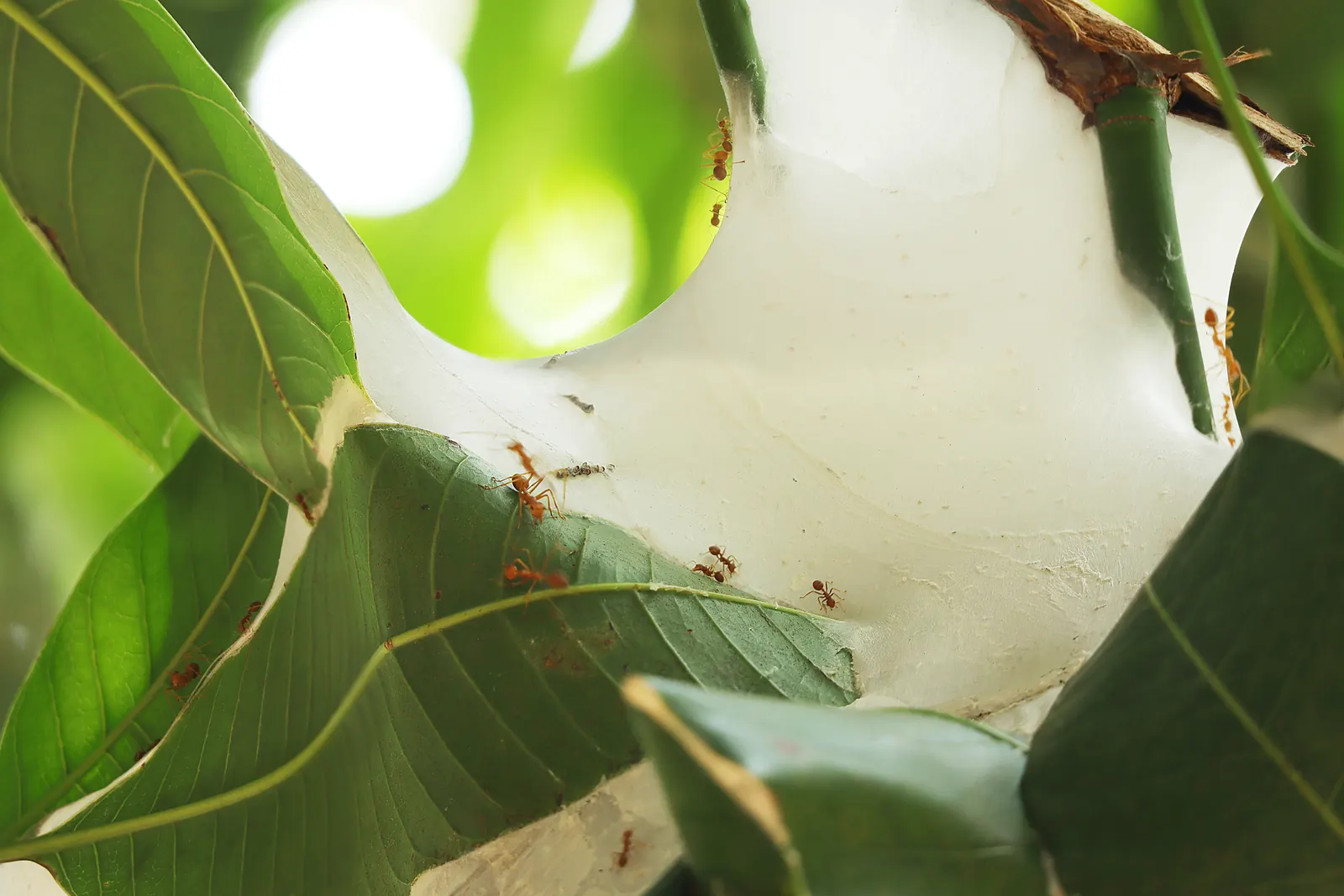
Where does ant pressure concentrate in Cape Coral?
- NW Cape build-out zones (33993): active construction and fresh sod — the heaviest new-colony pressure in the city.
- Trafalgar & Mid-Cape (33914, 33991): established yards with paver drives and pool decks — big-headed ant sand piles at the joints.
- Yacht Club & SE Cape (33904): the Cape’s oldest landscaping — mature hedges cycling white-footed ants; irrigated beds feeding ghost ant trails indoors.
- Canal-front lots citywide: seawall planters and irrigation keep soil moist — ghost ants nest in the beds and follow slab penetrations to the kitchen.
- Pelican & SW Cape (33914): vacant-parcel checkerboard — treated yards flanked by unmanaged colony reservoirs.
- Burnt Store corridor (33991, 33993): new communities on cleared pine flatwoods — fire ant arcs follow every phase of construction.
Why does the spray can make the kitchen ants worse?
Because Cape Coral’s dominant indoor ants — ghost ants and white-footed ants — are budding species with dozens to hundreds of queens spread across satellite nests. Hit a trail with repellent spray and the colony reads it as an attack: it fractures, queens scatter with worker bands, and one nest behind the dishwasher becomes four across three rooms. The professional play is the opposite — slow-acting, non-repellent baits placed on the active trails, matched to the colony’s current appetite (sugar-heavy most of the year, protein during brood pushes), left undisturbed so foragers ferry the dose home through food-sharing. White-footed ants share food poorly, so operators supplement with non-repellent transfer treatments along the hedge lines and entry points. Expect the counter trail to thicken for a few days after baiting — that’s recruitment, and it means the dose is moving toward the queens.
Call the line
Tap (863) 445-9190 any hour. Describe the ants, where they are, and your Cape Coral ZIP.
Get matched by job type
Yard and fire ant calls route to operators with broadcast equipment; kitchen-trail and paver calls route to baiting-program providers.
A licensed operator takes over
An independent, FDACS-licensed and insured Cape Coral operator inspects, identifies the species, and quotes. No obligation — the dispatch call costs nothing.
Mounds by the mailbox? Trail across the counter every morning?
The line answers 24/7 and matches you with a licensed Cape Coral ant operator.
One tap. One call. Matched.
(863) 445-9190Tap to call — 24/7 dispatch
Free to call. The licensed operator gives the quote.
Cape Coral ant questions, answered straight
Why did mounds appear right after my new sod went in?
The vacant lot next door is full of mounds — is treating my yard pointless?
Are fire ant stings actually dangerous or just painful?
What does ant control cost in Cape Coral?
Disclosure
Lakeland Exterminators is a pest control dispatch and referral service, not a licensed pest control operator. All ant inspections, quotes and treatments in Cape Coral are performed by independent pest control operators licensed by the Florida Department of Agriculture and Consumer Services (FDACS) and insured in their own name. Calling the dispatch line is free and creates no obligation; the licensed local operator you’re matched with sets their own pricing and terms.
More Cape Coral help: Pest control in Cape Coral, Termite treatment in Cape Coral, Rodent control in Cape Coral · Fire ant dispatch guide · All pest control services