📞 Call (888) 295-0220Open 24/7. Enter your ZIP on the keypad and talk live with a local pest control company that serves your area.
Bites on your arm and evidence in the seams? Heat kills the whole population in one day.
Bed bugs don’t respond to a quick spray, and chemical-only programs in Lakeland often take several visits over weeks while the population keeps breeding. Whole-room or whole-structure heat treatment raises the space to a lethal temperature in a single day — killing adults, nymphs, and eggs at once. One call gets you connected with a local pest control company that offers it.
Open 24/7 · Free to call · Enter your ZIP when prompted
Think it could be bed bugs at your Lakeland home?
Call, enter your 5-digit ZIP on the keypad, and get connected live with a local pest control company. Free to call, 24/7.
How heat treatment actually works
A bed bug heat treatment uses specialized electric heaters and fans to raise the air temperature inside a room, or an entire structure, to somewhere between 120°F and 135°F, and hold it there long enough for that heat to penetrate mattresses, furniture, and wall voids. Bed bugs and their eggs die at sustained exposure above roughly 118°F — the technique doesn’t rely on a pesticide reaching every hiding spot, because heat physically fills the space itself.
A local pest control company monitors the treatment with multiple remote temperature sensors placed around the room, confirming lethal temperature is reached in the hardest-to-heat spots — inside a mattress, behind a headboard, deep in a couch cushion — before calling the job complete. Most single-room or apartment-sized treatments finish in six to eight hours.
Why Lakeland households increasingly choose heat over chemical-only programs
Bed bugs (Cimex lectularius) don’t care about surface cleanliness — they feed on blood, hitchhike in luggage, and travel through Lakeland’s dense rental turnover, hotel corridors near I-4, and secondhand furniture market just as easily in a spotless home as a cluttered one. A chemically resistant population is increasingly common, which means a sequenced chemical-only program can take three or more visits over several weeks while the infestation keeps producing new eggs between treatments.
Heat sidesteps the resistance problem entirely — insecticide resistance doesn’t protect against a lethal temperature the way it can against a specific chemical class. For a household that can vacate a room or a unit for a single day, that trade-off often makes heat the faster and more decisive option, especially where an infestation has already spread beyond one piece of furniture.
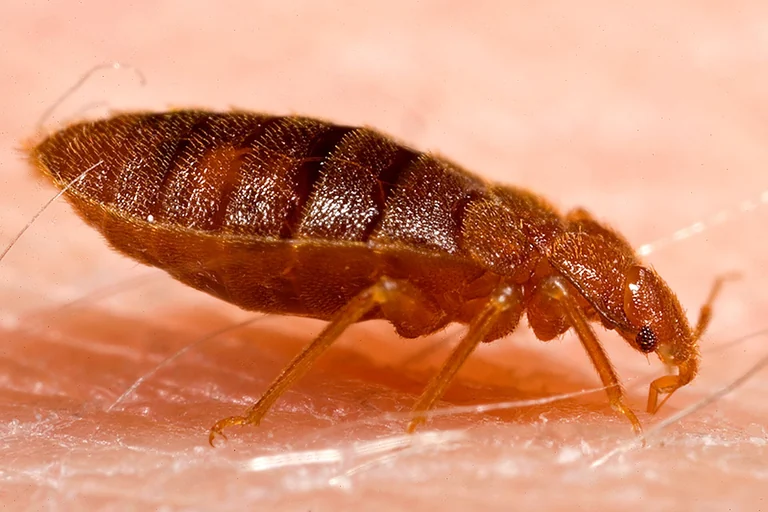
Adult bed bugs and their eggs both die under sustained heat — no chemical resistance involved.
What to expect on treatment day
Pre-treatment prep
Heat-sensitive items (electronics, candles, some cosmetics, aerosol cans) get removed from the room; everything else generally stays in place, which is one of heat’s advantages over a chemical prep list.
Setup and monitoring
Heaters and fans are positioned, and remote sensors are placed in the coldest predicted spots — inside furniture, near exterior walls — to confirm even heat penetration.
The heat cycle
The room holds at a lethal temperature range for several hours, with the operator adjusting airflow to reach voids and furniture interiors evenly.
Verification and cool-down
Sensor logs confirm every monitored point held lethal temperature for the required time before the room is allowed to cool and re-enter.
Interceptor follow-up: how you know it worked
A responsible operator doesn’t just leave after the heat cycle. Interceptor cups placed under bed and furniture legs catch any bug that might be commuting between rooms or from an adjoining unit, and a two-to-four-week recheck confirms zero activity. In multifamily buildings — a real factor in parts of Lakeland with dense rental stock — bed bugs travel wall voids between units, so an adjacent-unit inspection is often part of a complete program.
What heat treatment doesn’t fix by itself
Heat kills what’s in the treated space at the time of treatment. It doesn’t prevent reintroduction from an untreated adjoining unit, from luggage after the next trip, or from an unquarantined piece of secondhand furniture brought in afterward. The pest control company you’re connected with can explain the specific prevention steps — encasements, ongoing interceptor use, travel hygiene — that keep a heat-treated space from becoming a repeat call.
Check the company before treatment starts
In Florida, pest control companies must hold a business license from the Florida Department of Agriculture and Consumer Services (FDACS) under Chapter 482, Florida Statutes. Ask for the company’s license number and look it up on the FDACS license search before work starts.
Get the treatment plan, the products to be used, any follow-up visits and the price in writing. For termite work, ask what the contract or bond covers, whether it’s retreatment only or includes repair of damage, and how long it lasts. Our guide on checking an FDACS pest control license walks through it.
How the call works
- Call (888) 295-0220. Any time, day or night.
- Enter your 5-digit ZIP code on your phone’s keypad when prompted.
- Get connected live with a local pest control company that serves your ZIP. Describe what happened and ask when they can come out and what the job will cost.
Questions, answered straight
Does heat treatment really kill bed bug eggs?
Yes. Sustained exposure above roughly 118°F is lethal to bed bugs at every life stage, including eggs, which is the main advantage over some chemical treatments that don’t always penetrate egg cases.
How long does a heat treatment take?
Most single rooms or apartment-sized units finish in six to eight hours, including setup, the heat cycle, monitoring, and cool-down.
Do I need to throw away my mattress or furniture?
Usually no. Heat penetrates mattresses, box springs, and upholstered furniture without destroying them, which is one of the main reasons people choose it over discarding items.
Can heat damage my belongings?
A local pest control company removes heat-sensitive items first — electronics, aerosol cans, candles, certain cosmetics, vinyl records. Most household items and furniture tolerate the treatment temperature range without damage.
Is heat treatment more effective than chemical-only treatment?
For established infestations, many operators consider heat faster and more decisive because it kills all life stages in one visit and sidesteps chemical resistance. Some programs combine heat with a chemical residual for longer-term prevention.
What does it cost to get connected with an operator?
Nothing. It’s free to call. The pest control company assesses the space and quotes the job — we don’t set prices.
Bed bug heat treatment elsewhere in Polk County
The same single-visit thermal protocol, written for the rental and housing stock of the three Polk County cities that ask for it most.
- Bed bug heat treatment in Winter Haven, FL — Chain of Lakes rentals and 33880 / 33881 / 33884 turnover
- Bed bug heat treatment in Auburndale, FL — 33823 homes and workforce housing between Lakeland and Winter Haven
- Bed bug heat treatment in Haines City, FL — 33844 / 33845 and the short-term rental corridor toward Davenport
Lakeland Exterminators is a free referral line that connects callers with independent local pest control companies. We don’t perform the work. The company you’re connected with gives the quote, does the work and stands behind it.