Why they show up right after it rains
If you have lived in Lakeland through a summer storm season, you already know the drill: the sky opens up over Lake Hollingsworth or the Chain of Lakes, the yard floods for an hour, and by the next morning there is a line of millipedes crossing the garage floor or a fast, many-legged centipede sprinting across the bathroom tile. Neither one arrived because your house is dirty. They arrived because Polk County’s sandy soil and heavy rainfall pushed them out of saturated ground and toward the driest, highest spot they could find — which is often your slab.
Both pests are common enough in Central Florida that almost every Lakeland homeowner sees one or the other at some point, usually clustered around the rainy season from June through September, with a secondary bump after fall storms and hurricane remnants moving through Polk County.
Centipede or millipede? The quick tell
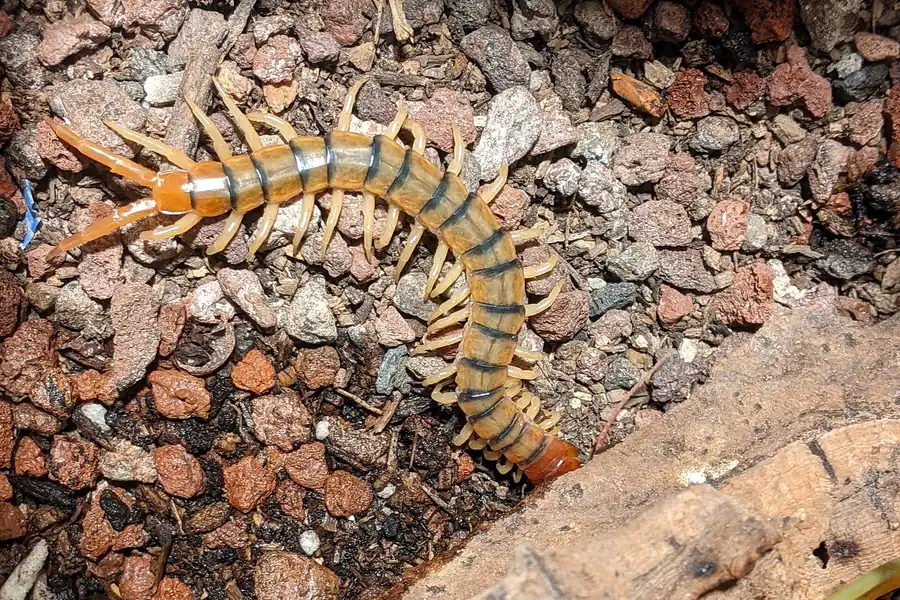
They get lumped together because both are long, segmented, many-legged, and show up at the same time for the same reason — but they are not related and they do not behave the same way.
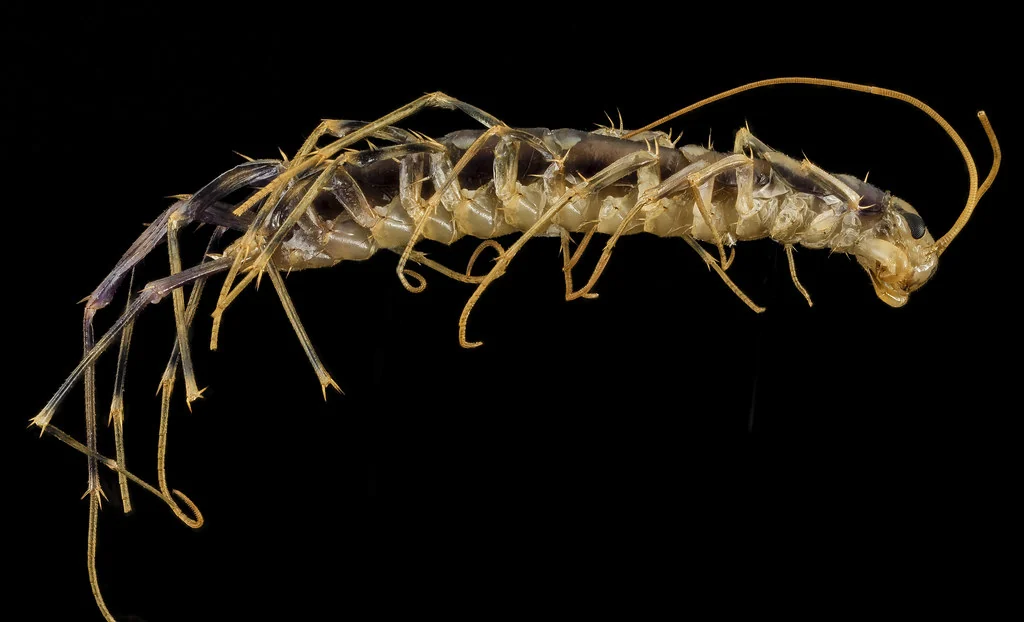
- House centipedes have long legs (one pair per body segment), move in fast, erratic bursts, and are active predators that hunt roaches, spiders, and other small insects indoors. They can deliver a pinch if handled, which is mildly uncomfortable but not medically significant for most people.
- Millipedes have two pairs of short legs per segment, move slowly, curl into a tight coil when disturbed, and feed on decaying plant matter and mulch rather than on other bugs. They do not bite. Some species can release a mild defensive secretion if crushed, which can irritate skin or eyes in sensitive individuals.
Neither species damages a Lakeland home structurally, and neither is a public health threat the way mosquitoes or rodents are. The concern homeowners actually have is volume — millipedes in particular can appear by the dozens after a hard rain, and that kind of sudden indoor swarm is unsettling even when the pests themselves are harmless.
Why Central Florida rain drives them inside
Polk County sits on predominantly sandy soil (the Astatula, Candler, and Tavares soil series common across Lakeland, Bartow, and Winter Haven) that drains fast but saturates completely during a heavy summer thunderstorm or a tropical system. Millipedes live in the top layers of soil, mulch beds, and leaf litter, feeding on decomposing organic matter. When that ground floods, they migrate upward and outward, looking for dry ground — and a slab foundation with a door threshold nearby is often the first dry, solid surface they reach.
House centipedes follow a related but different path: they are chasing the smaller insects that also get displaced by flooding, and Lakeland’s humidity keeps prey populations (roaches, silverfish, spiders) active indoors year-round, which gives centipedes a reason to stay once they find a way in.
The lake-heavy geography that makes Lakeland scenic also means a lot of residential lots sit near retention ponds, drainage swales, or one of the city’s 38 named lakes — all of which hold moisture in the surrounding soil longer than a typical inland lot, extending the window when centipedes and millipedes are active near a foundation.
Where they get in
- Slab expansion joints and small foundation cracks, especially on the shaded, damp side of a house
- Door thresholds and garage door seals that have worn down or gapped
- Weep holes in brick veneer that were never fitted with weep hole covers
- Mulch beds pushed up against siding or stucco, which keeps the soil against the house wet long after the rest of the yard has dried
- Lanai and pool enclosure gaps, common on South Lakeland and Highlands Reserve-style construction with screened outdoor living space
The moisture and exclusion fix
Because both pests are drawn indoors by moisture and easy entry points rather than by anything indoors, the most effective response is mostly outside the house:
- Pull mulch back 6-12 inches from the foundation so the soil directly against the slab dries out between rains.
- Check and improve grading and gutter discharge so water is not pooling against one side of the house after storms — a common issue on older Cleveland Heights and Dixieland-area lots where landscaping has grown up over original drainage lines.
- Install or replace door sweeps and threshold seals on exterior doors, including the garage service door.
- Cap or screen weep holes with proper vent covers rather than leaving them open.
- Run a dehumidifier or address AC condensation in garages, laundry rooms, and Florida rooms where humidity tends to sit high.
- Reduce exterior lighting near entry doors during peak swarm periods, since lights draw the insects centipedes hunt, which in turn draws the centipedes.
Homeowners can knock down a light, one-time appearance with these steps alone. A shop vacuum handles individual centipedes and millipede clusters without chemicals.
When a recurring wave means it is time to call a pro
If millipedes or centipedes show up after every significant rain, in growing numbers, or well away from an obvious wet mulch bed, that usually points to a perimeter moisture or gap issue that a homeowner can’t fully close on their own — often a foundation-level entry point, an irrigation head aimed at the house, or a crawl space moisture problem. A licensed Polk County pest control operator can apply a perimeter treatment that intercepts both species before they reach the door line and identify the specific entry points a visual homeowner check might miss.
Get matched with a licensed Lakeland-area pest pro
One call reaches a licensed, local exterminator who covers your address — and a real person answers, 24/7.
Free to call. Free to get matched. The licensed operator gives the quote.
Related Lakeland Exterminators pages
- Silverfish & Booklice: Humidity Pests in Lakeland Homes
- Rodent Exclusion in Lakeland, FL
- Pest Control in South Lakeland, FL
- Exterminator in Lakeland, FL
Verify before you sign: structural pest control in Florida requires an FDACS license under Chapter 482, Florida Statutes. Every operator this line matches is independent, licensed and insured — and you can check any company yourself in thirty seconds at the FDACS license search.
Frequently asked questions
Are centipedes or millipedes dangerous to my family or pets?
No. House centipedes can pinch if handled roughly, which feels like a minor sting, but they are not medically dangerous. Millipedes do not bite; a few species secrete a mild irritant if crushed against skin, so it’s fine to sweep or vacuum them rather than handle them barehanded. Neither poses a real risk to pets in typical Lakeland exposure levels.
Why did I suddenly get dozens of millipedes at once?
Heavy rain saturates the sandy soil and mulch beds where millipedes live, pushing large numbers of them out of the ground at the same time in search of dry surfaces. A single hard storm can produce what looks like an “infestation” overnight, even though it’s really a migration event tied to that specific rain, not an established indoor colony.
Do centipedes mean I have another pest problem?
Often, yes. House centipedes are predators and stay where prey is available — so recurring centipede sightings can be a signal that roaches, spiders, or other small insects are active in the same area. Addressing the underlying prey population usually reduces centipede sightings as a side effect.
Will mulch attract more millipedes to my Lakeland yard?
Thick, moisture-holding mulch pushed directly against the foundation is one of the biggest millipede attractants in Polk County landscaping. Pulling mulch back from the slab and choosing a coarser mulch that drains faster reduces the population living close enough to migrate indoors.
How fast can a pest pro get out after a bad millipede wave?
Response windows depend on the individual licensed operator’s schedule, location, and current call volume — nothing is promised in advance. Call the dispatch line and the operator you’re connected with will confirm their own availability directly.
Is a one-time treatment enough, or do I need ongoing service?
For an isolated post-storm wave, a single perimeter treatment paired with the exclusion steps above is often enough. Homes with chronic drainage issues, heavy mulch beds, or a nearby lake or retention pond frequently do better on a recurring quarterly program, since the moisture source regenerates the population between rains.