📞 Call (888) 295-0220Open 24/7. Enter your ZIP on the keypad and talk live with a local pest control company that serves your area.
Winter Haven’s identity is built around water – more than 50 lakes threaded together by canals across the city – and that same geography shapes how red imported fire ants behave in local lawns. Lakefront turf, canal banks, and the irrigated green space around the Chain of Lakes stay moist and cool at root level even during the driest stretches of a Florida summer, which is exactly the microclimate fire ant colonies favor when choosing where to build a mound. Lakeland Exterminators connects Winter Haven homeowners with local pest control companies for residential fire ant control throughout the ZIP codes surrounding the city.
Fire ant mounds spreading across your Winter Haven lawn?
Call, enter your 5-digit ZIP on the keypad, and get connected live with a local pest control company. Free to call, 24/7.
Why Lakefront Lawns Draw Heavier Mound Pressure
Fire ant colonies build mounds in open, sunny turf where the soil below stays workable and moist, which describes a large share of Winter Haven’s residential lots backing onto lakes or canals. Irrigation systems that keep lakefront grass green year-round have the side effect of keeping soil conditions ideal for colony expansion, and the open sight lines many lakefront yards are landscaped for – wide, unobstructed turf running down to the water – give colonies plenty of undisturbed ground to spread into. Yards that back onto retention areas or canal easements between properties see some of the more persistent mound activity in the city, since that transitional turf is often mowed less frequently than a primary lawn.
Florida’s red imported fire ants are also opportunistic after heavy rain. Winter Haven’s lake-adjacent soil can stay saturated well after a storm has passed elsewhere in the county, and colonies will often relocate a mound to slightly higher ground nearby, which can make a yard that seemed clear a week earlier suddenly show new activity.
Signs of Fire Ant Activity in Winter Haven Yards
Fresh, Loose-Soil Mounds With No Obvious Entrance Hole
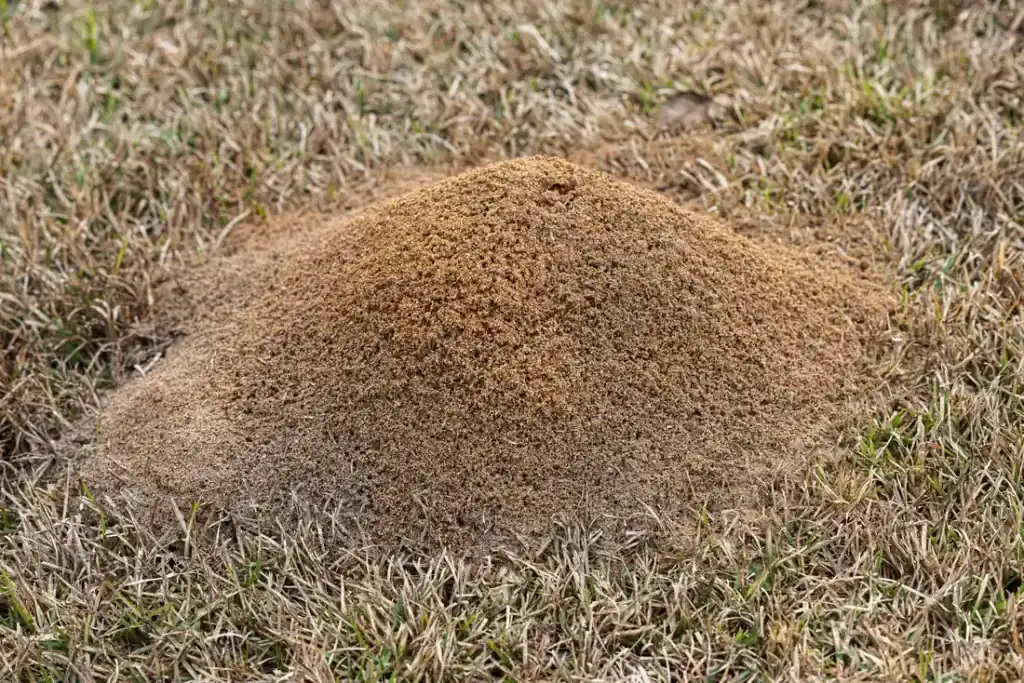
Unlike many other ant species, fire ants build mounds without a visible central opening, instead entering and exiting through underground tunnels that radiate out from the mound. A dome of loose, fluffy soil appearing in turf within a day or two, especially after rain, is a strong sign of new colony activity.
Aggressive Response When a Mound Is Disturbed
Fire ants react to ground vibration near the mound quickly and in large numbers, swarming out within seconds. This rapid, coordinated response is one of the more reliable ways to distinguish a fire ant mound from other ant species active in the same lawn.
Mounds Concentrated Near Irrigation Heads and Water Features
Because moisture retention drives mound placement, Winter Haven yards often show mound clusters near sprinkler heads, low spots that hold water after rain, and the transition zone between mowed lawn and lake or canal bank.
Shared Turf and Canal Easements Complicate Control
Because fire ant colonies readily relocate a short distance when disturbed, a single treated yard next to an untreated canal easement, retention pond bank, or neighboring lot can see new mounds appear within weeks as colonies shift toward the nearest undisturbed ground. This is a common pattern in Winter Haven’s lakefront neighborhoods, where turf frequently continues past a property line into shared or lightly maintained space. A local pest control company can factor this into a treatment plan, since perimeter and mound-specific approaches behave differently depending on how much adjoining turf is realistically reachable by a relocating colony.
Reducing Fire Ant Pressure Between Treatments
Between professional visits, homeowners can watch for fresh mounds after rain, avoid mowing directly over an active mound (which scatters rather than controls a colony), and keep an eye on the low, damp corners of the yard where mounds tend to concentrate first. Countywide ant and pest pressure patterns are tracked on the Polk County pest and termite pressure report, and the pest identifier tool can help confirm a mound-building ant is a fire ant before requesting service.
Check the company before treatment starts
In Florida, pest control companies must hold a business license from the Florida Department of Agriculture and Consumer Services (FDACS) under Chapter 482, Florida Statutes. Ask for the company’s license number and look it up on the FDACS license search before work starts.
Get the treatment plan, the products to be used, any follow-up visits and the price in writing. For termite work, ask what the contract or bond covers, whether it’s retreatment only or includes repair of damage, and how long it lasts. Our guide on checking an FDACS pest control license walks through it.
How the call works
- Call (888) 295-0220. Any time, day or night.
- Enter your 5-digit ZIP code on your phone’s keypad when prompted.
- Get connected live with a local pest control company that serves your ZIP. Describe what happened and ask when they can come out and what the job will cost.
Frequently Asked Questions
Why do fire ant mounds keep coming back in the same part of my yard?
Low, damp corners near irrigation heads, canal banks, or retention areas hold the soil moisture fire ant colonies prefer, so those spots often get recolonized even after a mound is treated, especially if an adjoining untreated area sits nearby.
Is it safe to mow over a fire ant mound?
Mowing over an active mound typically scatters the colony rather than controlling it and increases the chance of a sting reaction. It is safer to have a mound identified and treated by a local pest control company before mowing directly over it.
How can I tell a fire ant mound apart from another ant species?
Fire ant mounds are typically loose, domed soil with no single visible entrance hole, and the colony responds to disturbance quickly and aggressively. Other ant species common in Polk County, like ghost ants or Argentine ants, tend to build flatter, less obvious nests and do not swarm as fast.
Do canal-adjacent yards need a different fire ant approach?
Yards backing onto canals or shared easements often benefit from a broader perimeter treatment rather than spot-treating individual mounds, since colonies can relocate a short distance into adjoining turf that was not treated.
How soon after rain do new fire ant mounds appear?
Fresh mounds can appear within a day or two of heavy rain as colonies rebuild or relocate toward higher, drier ground, which is a common pattern in Winter Haven’s lake-adjacent neighborhoods.
How do I get connected with a fire ant provider in Winter Haven?
Call the line, enter your 5-digit ZIP on the keypad, and you’re connected live with a local pest control company that serves your part of Winter Haven for residential fire ant treatment.
Lakeland Exterminators is a free referral line that connects callers with independent local pest control companies. We don’t perform the work. The company you’re connected with gives the quote, does the work and stands behind it.