Winter Haven sits at the center of Polk County’s Chain of Lakes, a network of more than 50 interconnected lakes that keeps groundwater levels high and soil moisture elevated across the city year-round. That steady moisture is exactly the condition subterranean termites need to build mud tubes from soil up into wood framing, and it is a major reason why Winter Haven’s older lakefront and downtown-adjacent neighborhoods carry some of the more consistent termite-pressure signals tracked across Polk County. Lakeland Exterminators connects Winter Haven homeowners with FDACS-licensed pest control providers who handle residential termite inspection and treatment throughout the ZIP codes surrounding the city.
Dealing with a pest problem right now?
📞 Call now — get matched with a licensed local exterminator: (888) 295-0220When you call, stay on the line for a few seconds while we match you with the licensed local exterminator for your area. Have your address and a quick description of the problem ready.
Licensed local pros · Fast response, subject to availability · No obligation
Why Winter Haven’s Geography Raises Termite Pressure
Subterranean termites, the species responsible for the large majority of structural termite damage in Central Florida, travel through soil and require contact with moisture to survive outside their below-ground colonies. Winter Haven’s high water table – a direct result of sitting inside a chain of interconnected lakes rather than on a single body of water – keeps the soil around slab foundations and crawl spaces damp for more of the year than in drier inland parts of the county. Homes built before modern termite pretreatment standards became routine, particularly in the neighborhoods ringing the lakes and around historic downtown Winter Haven, were not always built with the soil treatment barriers or elevated wood-to-ground clearances that newer construction requires.
Irrigation from lawns bordering the lakes adds another layer of pressure. Sprinkler systems that keep lakefront turf green also keep the soil beside foundations consistently wet, which shortens the distance a termite colony needs to travel to reach a structure and makes it easier for mud tubes to stay intact between rains.
Signs of Termite Activity in Winter Haven Homes
Mud Tubes Along Foundations and Piers
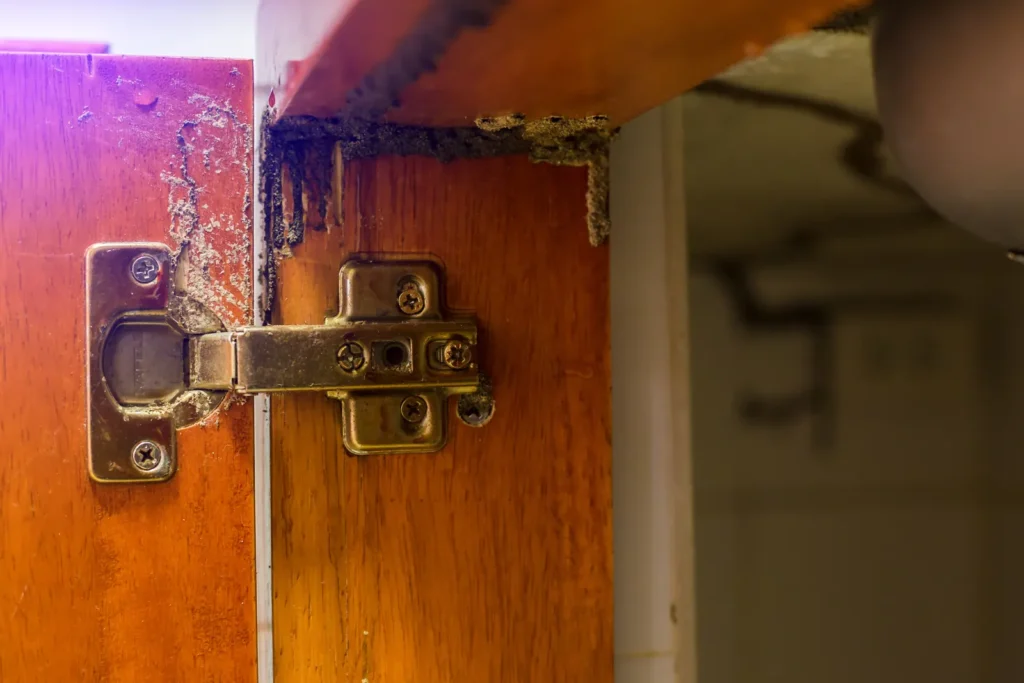
Subterranean termites build pencil-width mud tubes along foundation walls, piers, and slab edges to keep their bodies protected from open air while they travel between soil and wood. These tubes are one of the clearest visual signs of an active colony and are worth checking for anywhere exterior soil meets the home, especially on the shaded side of a house near irrigation lines.
Wood That Sounds Hollow or Papery
Termites feed from the inside of wood outward, so damaged boards, trim, or subflooring can look intact on the surface while sounding hollow or papery when tapped. This is especially common in older Winter Haven homes with original wood trim around doors, windows, and baseboards.
Discarded Wings Near Windows and Doors
Termite swarmers shed their wings almost immediately after a swarm, so small piles of translucent, uniform-length wings on windowsills, in spiderwebs, or near light fixtures are a strong indicator that a colony nearby has reached maturity and is actively reproducing.
Check Termite Service Availability in Your Winter Haven ZIP Code
Lakeland Exterminators matches Winter Haven homeowners with an FDACS-licensed pest control provider for a residential termite inspection. Confirm coverage in your ZIP code before requesting an appointment.
How Dispatch Works for Termite Service in Winter Haven
Lakeland Exterminators is a dispatch and referral service, not a licensed pest control company. When a Winter Haven homeowner requests termite service through this site, the request is matched with an FDACS-licensed local provider who carries out the inspection, treatment plan, and any follow-up monitoring directly. Confirming your ZIP code first lets the dispatch process match you with a provider who actively services your specific part of Winter Haven, whether that is a neighborhood along the Chain of Lakes, a subdivision closer to US-17, or a home near historic downtown. See the full Winter Haven pest control overview for general service coverage across the city.
Older Homes Near Downtown Winter Haven Carry Added Pressure
Winter Haven’s downtown core and the residential streets surrounding it include a meaningful share of homes built well before current termite pretreatment codes existed. Original wood framing, older pier-and-beam foundations, and decades of settling can all create small gaps and moisture pockets that give subterranean termites easier access than they would have in a newly built slab home. A wood-destroying organism (WDO) inspection is the most direct way to establish whether a specific property currently shows evidence of activity, and it is a standard part of real estate transactions in this part of Polk County for exactly that reason.
What You Can Do Between Inspections
Homeowners can reduce termite risk between professional visits by keeping mulch and soil at least several inches below siding and door thresholds, redirecting sprinkler heads away from the foundation, trimming vegetation back from exterior walls, and storing firewood away from the structure rather than stacked against it. None of these steps replace a licensed inspection, but they reduce the moisture and wood-to-soil contact points that make a property attractive to a colony in the first place. Countywide termite and soil-moisture trends are tracked on the Polk County pest and termite pressure report.
Frequently Asked Questions
How often should a Winter Haven home be inspected for termites?
Most licensed providers in this part of Polk County recommend an annual wood-destroying organism inspection for homes near the Chain of Lakes, given the consistently higher soil moisture in the area, with additional inspections around a real estate transaction.
Are subterranean or drywood termites more common in Winter Haven?
Subterranean termites are the more common concern given the area’s high water table, though drywood termites, which do not require soil contact, are also active in Central Florida and can affect exposed wood framing, attics, and furniture.
Can I treat a termite mud tube myself?
Breaking a mud tube open only tells you whether it is currently in use; it does not address the colony itself. A licensed provider needs to evaluate the extent of activity and apply a treatment appropriate to the construction type before a tube is disturbed.
Does lakefront property carry more termite risk than inland Winter Haven?
Properties closer to the Chain of Lakes typically sit on more consistently moist soil than homes farther inland, which can support more active subterranean termite pressure, though any home with wood-to-soil contact or a leaking irrigation line can be affected regardless of distance from the water.
What does a wood-destroying organism inspection check for?
A WDO inspection documents visible evidence of termites, wood-decay fungi, and other wood-destroying pests or damage across accessible areas of a structure, and is commonly required as part of home sales and refinancing in Polk County.
How do I get matched with a termite provider in Winter Haven?
Confirm your ZIP code through this site and your request is routed to an FDACS-licensed pest control provider actively servicing your part of Winter Haven for a residential termite inspection or treatment.
Ready to Confirm Service in Winter Haven?
One call reaches a licensed, local exterminator who covers your address — and a real person answers, 24/7.