Winter Haven’s identity is built around water – more than 50 lakes threaded together by canals across the city – and that same geography shapes how red imported fire ants behave in local lawns. Lakefront turf, canal banks, and the irrigated green space around the Chain of Lakes stay moist and cool at root level even during the driest stretches of a Florida summer, which is exactly the microclimate fire ant colonies favor when choosing where to build a mound. Lakeland Exterminators connects Winter Haven homeowners with FDACS-licensed pest control providers for residential fire ant control throughout the ZIP codes surrounding the city.
Dealing with a pest problem right now?
📞 Call now — get matched with a licensed local exterminator: (888) 295-0220When you call, stay on the line for a few seconds while we match you with the licensed local exterminator for your area. Have your address and a quick description of the problem ready.
Licensed local pros · Fast response, subject to availability · No obligation
Why Lakefront Lawns Draw Heavier Mound Pressure
Fire ant colonies build mounds in open, sunny turf where the soil below stays workable and moist, which describes a large share of Winter Haven’s residential lots backing onto lakes or canals. Irrigation systems that keep lakefront grass green year-round have the side effect of keeping soil conditions ideal for colony expansion, and the open sight lines many lakefront yards are landscaped for – wide, unobstructed turf running down to the water – give colonies plenty of undisturbed ground to spread into. Yards that back onto retention areas or canal easements between properties see some of the more persistent mound activity in the city, since that transitional turf is often mowed less frequently than a primary lawn.
Florida’s red imported fire ants are also opportunistic after heavy rain. Winter Haven’s lake-adjacent soil can stay saturated well after a storm has passed elsewhere in the county, and colonies will often relocate a mound to slightly higher ground nearby, which can make a yard that seemed clear a week earlier suddenly show new activity.
Signs of Fire Ant Activity in Winter Haven Yards
Fresh, Loose-Soil Mounds With No Obvious Entrance Hole
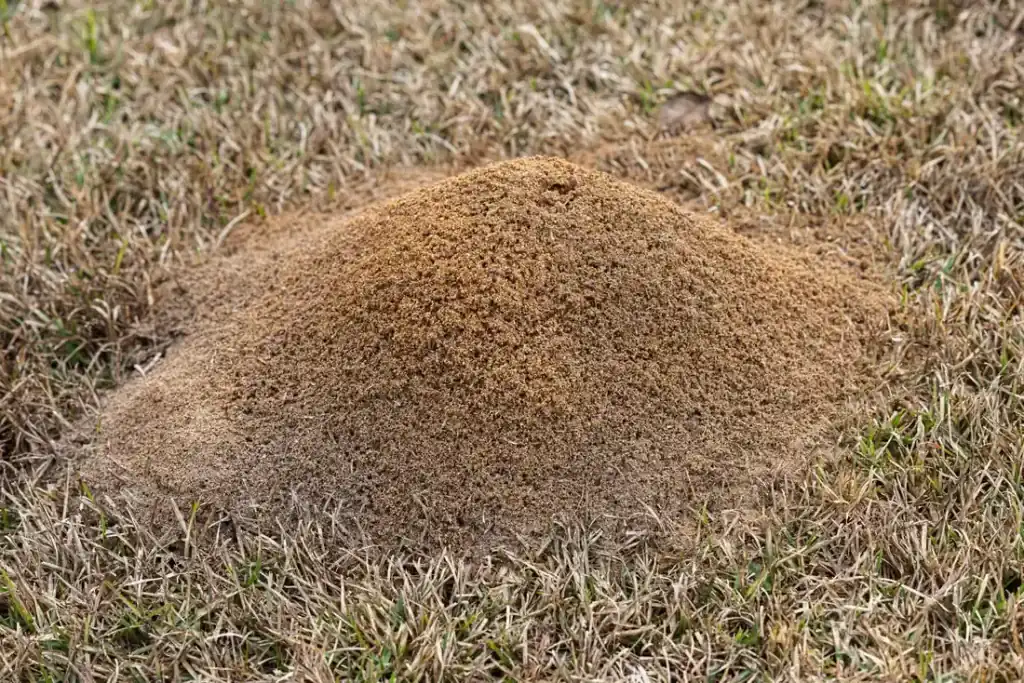
Unlike many other ant species, fire ants build mounds without a visible central opening, instead entering and exiting through underground tunnels that radiate out from the mound. A dome of loose, fluffy soil appearing in turf within a day or two, especially after rain, is a strong sign of new colony activity.
Aggressive Response When a Mound Is Disturbed
Fire ants react to ground vibration near the mound quickly and in large numbers, swarming out within seconds. This rapid, coordinated response is one of the more reliable ways to distinguish a fire ant mound from other ant species active in the same lawn.
Mounds Concentrated Near Irrigation Heads and Water Features
Because moisture retention drives mound placement, Winter Haven yards often show mound clusters near sprinkler heads, low spots that hold water after rain, and the transition zone between mowed lawn and lake or canal bank.
Check Fire Ant Service Availability in Your Winter Haven ZIP Code
Lakeland Exterminators matches Winter Haven homeowners with an FDACS-licensed pest control provider for residential fire ant treatment. Confirm coverage in your ZIP code before requesting an appointment.
How Dispatch Works for Fire Ant Service in Winter Haven
Lakeland Exterminators is a dispatch and referral service, not a licensed pest control company. A Winter Haven homeowner who requests fire ant service through this site is matched with an FDACS-licensed local provider who inspects the yard, treats active mounds, and can recommend a broader perimeter approach for lots that back onto lakes, canals, or shared retention areas. Confirming your ZIP code first ensures the request reaches a provider actively covering your part of the city. General residential coverage across Winter Haven is outlined on the Winter Haven pest control page.
Shared Turf and Canal Easements Complicate Control
Because fire ant colonies readily relocate a short distance when disturbed, a single treated yard next to an untreated canal easement, retention pond bank, or neighboring lot can see new mounds appear within weeks as colonies shift toward the nearest undisturbed ground. This is a common pattern in Winter Haven’s lakefront neighborhoods, where turf frequently continues past a property line into shared or lightly maintained space. A licensed provider can factor this into a treatment plan, since perimeter and mound-specific approaches behave differently depending on how much adjoining turf is realistically reachable by a relocating colony.
Reducing Fire Ant Pressure Between Treatments
Between professional visits, homeowners can watch for fresh mounds after rain, avoid mowing directly over an active mound (which scatters rather than controls a colony), and keep an eye on the low, damp corners of the yard where mounds tend to concentrate first. Countywide ant and pest pressure patterns are tracked on the Polk County pest and termite pressure report, and the pest identifier tool can help confirm a mound-building ant is a fire ant before requesting service.
Frequently Asked Questions
Why do fire ant mounds keep coming back in the same part of my yard?
Low, damp corners near irrigation heads, canal banks, or retention areas hold the soil moisture fire ant colonies prefer, so those spots often get recolonized even after a mound is treated, especially if an adjoining untreated area sits nearby.
Is it safe to mow over a fire ant mound?
Mowing over an active mound typically scatters the colony rather than controlling it and increases the chance of a sting reaction. It is safer to have a mound identified and treated by a licensed provider before mowing directly over it.
How can I tell a fire ant mound apart from another ant species?
Fire ant mounds are typically loose, domed soil with no single visible entrance hole, and the colony responds to disturbance quickly and aggressively. Other ant species common in Polk County, like ghost ants or Argentine ants, tend to build flatter, less obvious nests and do not swarm as fast.
Do canal-adjacent yards need a different fire ant approach?
Yards backing onto canals or shared easements often benefit from a broader perimeter treatment rather than spot-treating individual mounds, since colonies can relocate a short distance into adjoining turf that was not treated.
How soon after rain do new fire ant mounds appear?
Fresh mounds can appear within a day or two of heavy rain as colonies rebuild or relocate toward higher, drier ground, which is a common pattern in Winter Haven’s lake-adjacent neighborhoods.
How do I get matched with a fire ant provider in Winter Haven?
Confirm your ZIP code through this site and your request is routed to an FDACS-licensed pest control provider actively servicing your part of Winter Haven for residential fire ant treatment.
Ready to Confirm Service in Winter Haven?
One call reaches a licensed, local exterminator who covers your address — and a real person answers, 24/7.