Pest problem in St. Cloud? A 1909 downtown and a 2020s boomtown share one lake — and two very different pest playbooks.
St. Cloud is really two towns wearing one name. The original 1909 veterans’-colony grid south of East Lake Toho still carries old pine-framed bungalows on numbered streets — subterranean termite country. The Narcoossee corridor and the eastern ranchlands are sprouting brand-new rooftops by the thousand — fire ant and new-sod country. And the lake that gives everyone their sunsets breeds marsh mosquitoes that don’t care which St. Cloud you live in. The 24/7 dispatch line matches you by ZIP with an FDACS-licensed exterminator who works your side of town.
Talk to a live dispatch coordinator now
Swarmers on a 10th Street windowsill, mounds erupting in Twin Lakes sod, roaches in a Michigan Avenue kitchen — describe it and get routed to an independent, licensed and insured operator covering your St. Cloud ZIP.
(863) 445-9190Tap to call — 24/7 dispatch
Free to call. Free to get matched. The licensed operator you’re matched with gives the quote.
24/7 line · A real person answers · Availability of same-day and emergency service depends on the provider.
Need pest control in St. Cloud, FL? Call (863) 445-9190 and a dispatch coordinator matches you with an FDACS-licensed exterminator serving St. Cloud and Osceola County — termite, ant, roach, rodent, fire ant and mosquito work from the historic downtown grid to Narcoossee, Twin Lakes and Harmony. Lakeland Exterminators is a dispatch service: the licensed local operator you’re matched with inspects, quotes and treats.
Why do old-grid termites and new-sod fire ants define St. Cloud?
The numbered streets between Lakeshore Boulevard and 17th Street are some of Osceola County’s oldest housing — frame bungalows built for Civil War veterans’ families starting in 1909, plus decades of block infill. That mix is prime eastern subterranean termite habitat: century-old sills near soil, additions with cold-joint slab seams, and mature landscaping holding moisture against foundations. Spring swarm season tells the story every year — winged alates on windowsills along the grid, mud tubes on pier blocks and garage slab edges. The honest read on any downtown swarm call is scope: one tube on a detached shed is a different job than activity at the main structure’s bath trap, and the inspection should show you the difference before anyone names a treatment.
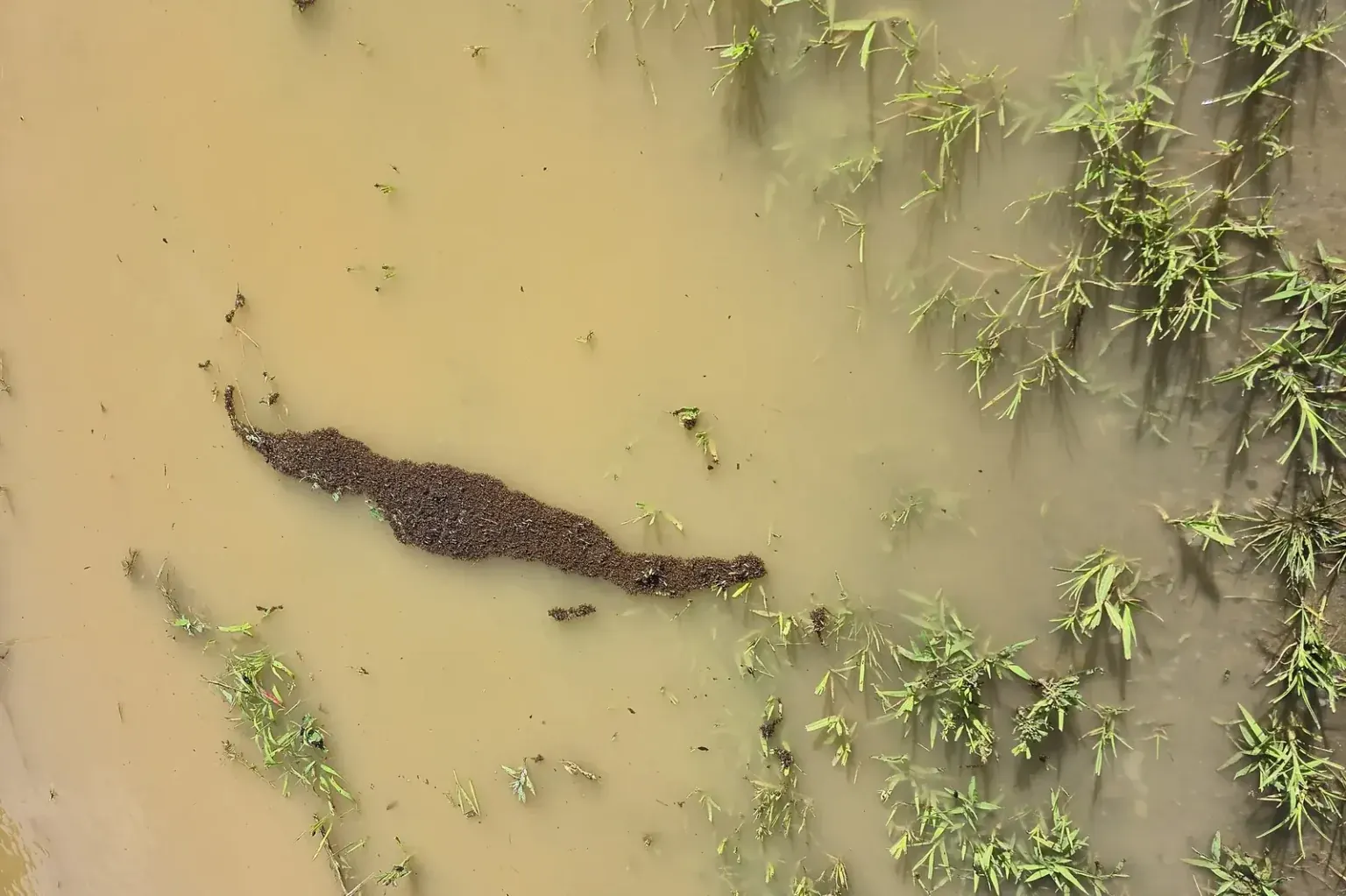
East of Narcoossee Road, the pest profile flips a full generation. Twin Lakes, Del Webb Sunbridge, Harmony and the subdivisions filling the old ranchland all run the new-build sequence: fresh sod arrives carrying fire ant queens, disturbed sandy ground invites satellite mounds, and summer high water around East Lake Toho sends whole colonies rafting to new lawns — which is why single-mound drenching disappoints and broadcast baiting on a schedule wins. Ghost ants thread the fresh stucco expansion joints into kitchens, builder termite pretreats start their ten-year countdown the day the slab cures, and the Toho marsh line plus a thousand retention ponds set a mosquito baseline that peaks at dusk from June through October. Add German cockroach turnover pressure in the 192-adjacent rental stock and steady rodent probing wherever new construction pushes into pasture, and St. Cloud’s dispatch calls sort cleanly by which decade your street was built.
Where does pest pressure concentrate around St. Cloud?
- Historic downtown grid, 9th–13th Streets (34769): frame bungalows and block infill — subterranean termite tubes, swarm-season calls, crawl-space moisture work.
- Lakeshore Boulevard & the Toho waterfront: marsh-edge mosquito drift, seawall rodent runs, fire ant rafting after high water.
- Narcoossee corridor & Twin Lakes (34771): new-sod fire ants, ghost ants in fresh stucco, builder-pretreat countdowns.
- Harmony & the eastern ranchland edge (34773): wild-edge rodent pressure, broadcast fire ant programs on big lots and common areas.
- Canoe Creek & southern 34772: 1980s–2000s slab homes with aging barriers — the quiet middle where termite re-checks matter most.
- Michigan Avenue & 192-adjacent commercial: restaurant and rental kitchens — German roach cleanouts with documentation landlords can use.
What kind of help can the line dispatch in St. Cloud?
Termite control
Downtown crawl-space inspections; barrier and bait-system work for slab homes aging past their pretreat.
Ant control
Ghost ant baiting in new stucco; species ID first so budding species aren’t scattered by the wrong spray.
Rodent control
Exclusion and trapping where new construction meets ranchland, plus waterfront seawall runs.
Roach extermination
German roach programs for rental turnovers and commercial kitchens; palmetto bug harborage work in older blocks.
Fire ant treatment
Broadcast baiting for new sod, HOA common areas and lakefront lawns that re-flood every summer.
Commercial & emergency
Restaurants, HOAs and property managers routed to commercial-capable operators, after-hours included.
How does the St. Cloud dispatch actually work?
You call the line
Tap (863) 445-9190 any hour. A coordinator answers — describe the pest, the property and your ZIP.
The problem gets matched
A swarm on the downtown grid routes to a crawl-space-fluent termite inspector; a mound-riddled Twin Lakes lawn routes to a broadcast-baiting crew. Matching runs on species, structure age and side of Narcoossee.
A licensed operator takes over
An independent, FDACS-licensed and insured Osceola County exterminator contacts you, inspects, and quotes directly.
You decide
No obligation. If their plan works for you, they treat. The dispatch call costs nothing either way.
Wings on the windowsill? Mounds back again after the rain?
The line answers 24/7 and matches you with a licensed Osceola County operator.
One tap. One call. Matched.
(863) 445-9190Tap to call — 24/7 dispatch
Free to call. The licensed operator gives the quote.
St. Cloud pest questions, answered straight
Our new-build came with a termite pretreat. Are we covered?
We drench every fire ant mound and they keep coming back. Why?
Do lakefront homes on Toho just have to live with mosquitoes?
What does pest control cost in St. Cloud?
Disclosure
Lakeland Exterminators is a pest control dispatch and referral service, not a licensed pest control operator. All inspections, quotes and treatments in St. Cloud are performed by independent pest control operators licensed by the Florida Department of Agriculture and Consumer Services (FDACS) and insured in their own name. Calling the dispatch line is free and creates no obligation; the licensed local exterminator you’re matched with sets their own pricing and terms.
Nearby: Kissimmee, Poinciana, Orlando · All Florida service areas