Pest problem in Palm Harbor? Sponge-era cottages by the Gulf, oak canopy by Lake Tarpon — two termite species, one town.
Palm Harbor runs from the old waterfront settlements of Ozona and Crystal Beach — wood-frame cottages that predate air conditioning — up the bluff through downtown’s brick streets to the golf-course stucco of the Innisbrook and Lansbrook corridors on Lake Tarpon. That geography splits the pest map neatly: coastal drywood termites in the old wood, subterranean termites and ghost ants inland, roof rats wherever the live oaks touch a roofline. The 24/7 dispatch line matches you by ZIP with an FDACS-licensed exterminator who reads which side of the split you’re on.
Talk to a live dispatch coordinator now
Pellet piles on an Ozona windowsill, ant trails through a Lansbrook kitchen, scratching over a Westlake ceiling — describe it and get routed to an independent, licensed and insured operator covering your Palm Harbor ZIP.
(863) 445-9190Tap to call — 24/7 dispatch
Free to call. Free to get matched. The licensed operator you’re matched with gives the quote.
24/7 line · A real person answers · Availability of same-day and emergency service depends on the provider.
Need pest control in Palm Harbor, FL? Call (863) 445-9190 and a dispatch coordinator matches you with an FDACS-licensed exterminator serving Palm Harbor, Ozona and Crystal Beach — termite, ant, roach, rodent, fire ant and mosquito work from the waterfront cottages to Lansbrook and East Lake. Lakeland Exterminators is a dispatch service: the licensed local operator you’re matched with inspects, quotes and treats.
Why does Palm Harbor carry both of Florida’s big termite species?
Down at the water, Ozona and Crystal Beach hold some of North Pinellas’s oldest wood — sponge-era and early-1900s cottages, fish camps turned homes, and decades of salt-air fascia and porch carpentry. That’s drywood termite habitat: colonies that live entirely inside the wood, need no soil contact, and betray themselves only with pepper-grain pellet piles under a kick-out hole in a window frame or crown molding. Because drywoods spread by swarm flight from house to house along the coast, an Ozona pellet pile is a neighborhood event, not a private one — and the honest treatment question is always scope: genuinely localized activity can sometimes be spot-treated, while multiple separated evidence points push toward a structure-level conversation that should be justified with a map of findings, not a scare pitch.
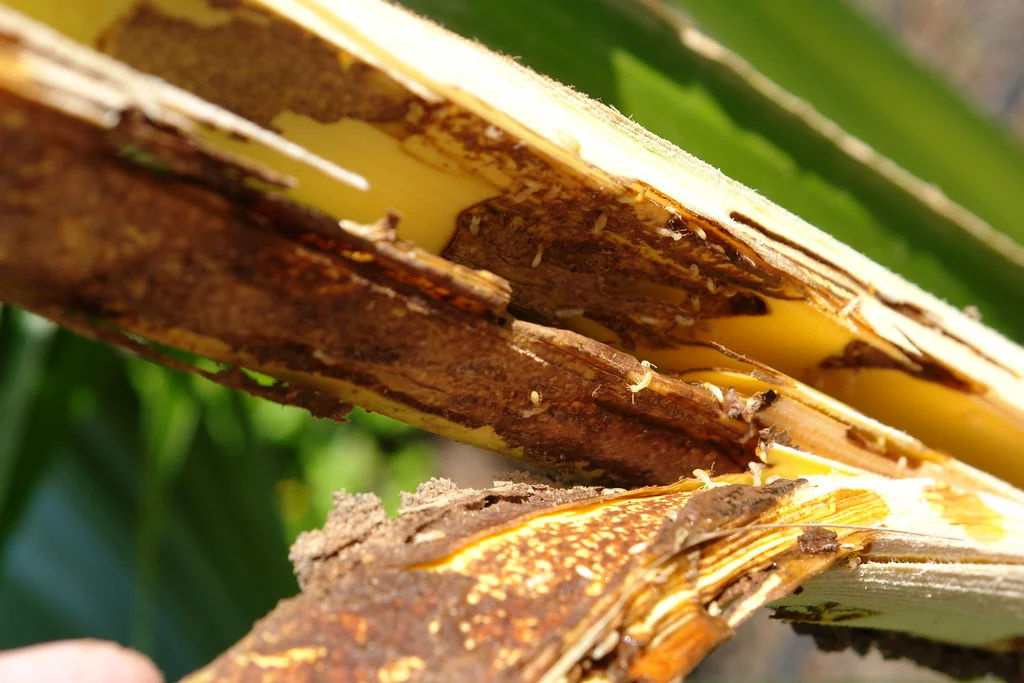
Climb the bluff and the species changes underfoot. The 1970s–90s slab neighborhoods along US-19, Curlew Road and the Lake Tarpon side — Highland Lakes, Lansbrook, Westlake — are eastern subterranean termite ground, where original soil pretreatments have aged out and activity shows as spring swarmers at sliding doors or mud at a garage slab edge. The same corridors carry Palm Harbor’s other signature calls: roof rats running the live-oak canopy into attics from Ozona to Lansbrook’s preserve edges, ghost ants threading golf-community stucco joints into kitchens, fire ants in irrigated fairway-edge turf, palmetto bugs in landscaped beds, and Lake Tarpon’s marsh margins breeding mosquitoes that settle into shaded hedge lines by evening. One town, two termite species, and a half-dozen supporting acts — species ID is the first honest step of every job here.
Where does pest pressure concentrate around Palm Harbor?
- Ozona & Crystal Beach (34683): the drywood heartland — old cottage fascia, porch wood and windowsill pellet piles; salt-air carpentry inspections are due diligence.
- Old Palm Harbor & the downtown brick streets (34683): mixed-era wood and block — both termite species possible, plus restaurant-row roach work along Florida Avenue.
- Highland Lakes & the US-19 corridor (34684): 1970s–80s slab ranches with expired pretreats — swarm-season subterranean calls and slab-edge inspections.
- Lansbrook & East Lake (34685): golf-community stucco ghost ants, preserve-edge roof rats, fire ants in irrigated turf.
- Lake Tarpon rim & Brooker Creek edge: marsh-margin mosquito pressure and wild-edge rodent probing where lots meet the preserve.
- Alt-19 condo & villa corridors: association-level drywood decisions and German roach programs in shared-wall buildings.
What kind of help can the line dispatch in Palm Harbor?
Termite control
Species-first inspections — coastal drywood pellet mapping or inland subterranean barrier work, never a one-size answer.
Ant control
Ghost ant baiting for Lansbrook and East Lake stucco; ID before treatment so budding colonies don’t scatter.
Rodent control
Oak-canopy roof rat exclusion — sealing rooflines and cutting limb bridges from Ozona to the preserve edges.
Roach extermination
German roach programs for kitchens and shared-wall buildings; harborage work for landscaped palmetto bugs.
Fire ant treatment
Broadcast baiting for fairway-edge turf, parks and irrigated HOA common areas.
Commercial & emergency
Restaurants, associations and golf properties routed to commercial-capable operators, after-hours included.
How does the Palm Harbor dispatch actually work?
You call the line
Tap (863) 445-9190 any hour. A coordinator answers — describe the pest, the property and your ZIP.
The problem gets matched
An Ozona pellet pile routes to a drywood-fluent inspector; a Highland Lakes swarm routes to a subterranean barrier crew. Matching runs on species, structure age and distance from the water.
A licensed operator takes over
An independent, FDACS-licensed and insured North Pinellas exterminator contacts you, inspects, and quotes directly.
You decide
No obligation. If their plan works for you, they treat. The dispatch call costs nothing either way.
Pellets under the window? Swarmers at the slider?
The line answers 24/7 and matches you with a licensed North Pinellas operator.
One tap. One call. Matched.
(863) 445-9190Tap to call — 24/7 dispatch
Free to call. The licensed operator gives the quote.
Palm Harbor pest questions, answered straight
How do I tell drywood termites from subterranean before anyone quotes me?
Our Ozona neighbor just found drywood damage. Should we get inspected too?
Rats in the attic — but our neighborhood is immaculate. How?
What does pest control cost in Palm Harbor?
Disclosure
Lakeland Exterminators is a pest control dispatch and referral service, not a licensed pest control operator. All inspections, quotes and treatments in Palm Harbor are performed by independent pest control operators licensed by the Florida Department of Agriculture and Consumer Services (FDACS) and insured in their own name. Calling the dispatch line is free and creates no obligation; the licensed local exterminator you’re matched with sets their own pricing and terms.
Nearby: Clearwater, Largo, New Port Richey · All Florida service areas