Pest problem in Panama City? Hurricane Michael rewrote this town’s pest map — and Formosan termites are writing the next chapter.
Panama City’s housing stock tells its history in one glance: streets where brand-new post-Michael roofs sit beside older homes that took water and never fully dried out. That mix is a termite accelerant — moisture-compromised wood feeds both native subterraneans and the Formosan colonies that have made the Panhandle one of their strongholds — while St. Andrews’ historic frame blocks, the bayous’ rodent corridors and Bay County’s long mosquito season fill out the rest of the map. The 24/7 dispatch line matches you by ZIP with an FDACS-licensed exterminator who knows which chapter your street is in.
Talk to a live dispatch coordinator now
Mud tubes on a Cove crawl space, swarmers around a St. Andrews porch light, rats along a Watson Bayou dock — describe it and get routed to an independent, licensed and insured operator covering your Panama City ZIP.
(863) 445-9190Tap to call — 24/7 dispatch
Free to call. Free to get matched. The licensed operator you’re matched with gives the quote.
24/7 line · A real person answers · Availability of same-day and emergency service depends on the provider.
Need pest control in Panama City, FL? Call (863) 445-9190 and a dispatch coordinator matches you with an FDACS-licensed exterminator serving Panama City and Bay County — termite, ant, roach, rodent, fire ant and mosquito work from the Cove and St. Andrews to Lynn Haven and the beach. Lakeland Exterminators is a dispatch service: the licensed local operator you’re matched with inspects, quotes and treats.
Why did Hurricane Michael make Panama City a termite accelerant?
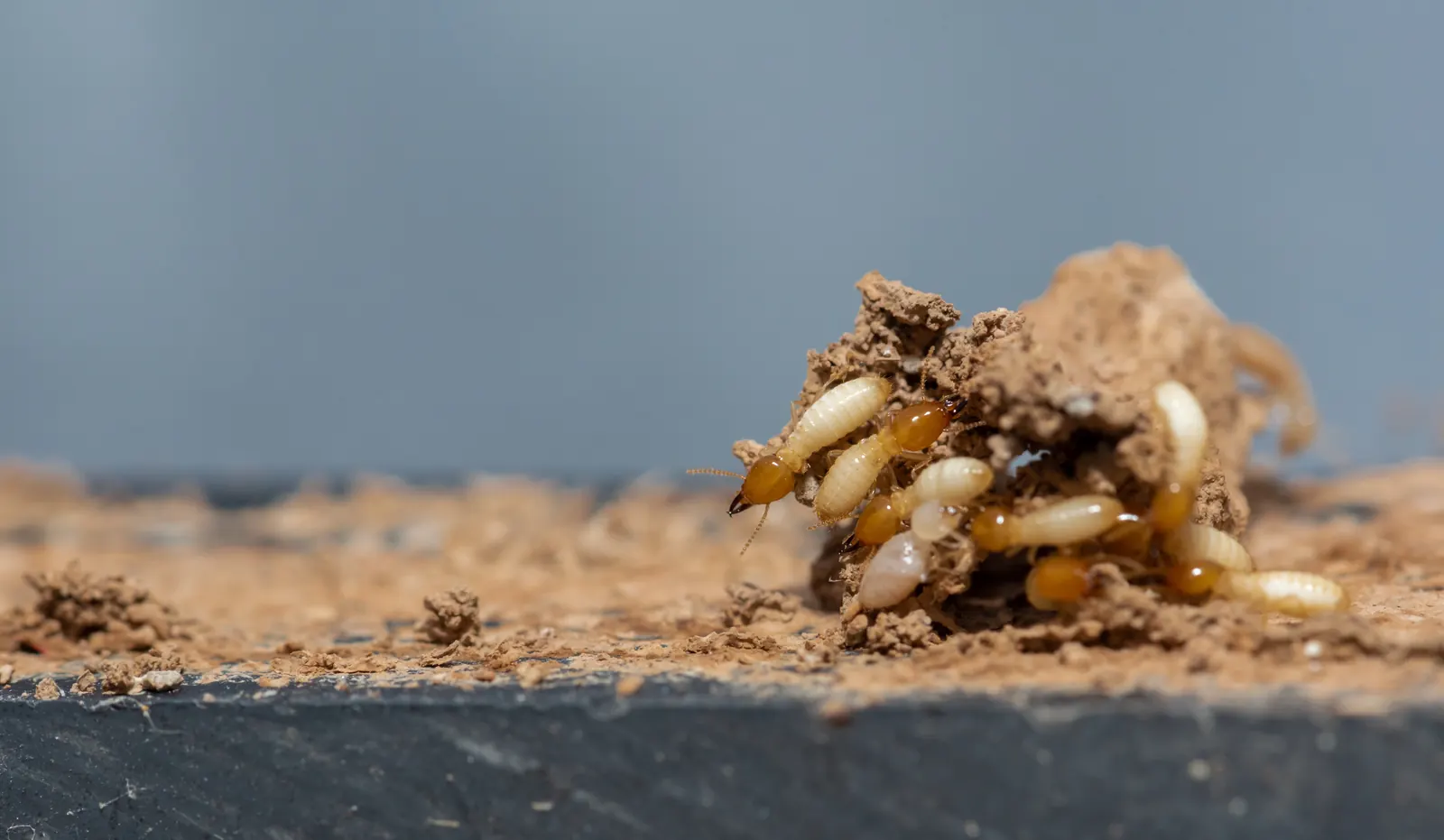
Michael’s 2018 landfall did more than tear off roofs — it wrote moisture into thousands of structures at once. Homes that took rain through opened roofs, wicked floodwater into sills, or sat tarped through a wet winter carry exactly the compromised, damp wood that subterranean termites target first, and years later that vulnerability is still surfacing: repaired homes where the cosmetic work outpaced the drying, rental stock patched fast during the housing crunch, and older Cove and Millville blocks where storm damage compounded decades of deferred maintenance. Layered onto that, the Formosan subterranean termite — the aggressive imported species — is established across the Panhandle’s port cities, and it raises every stake: bigger colonies, faster damage, carton nests that can persist in walls above ground, and May-evening swarm flights around streetlights that residents learn to dread. The practical takeaway is blunt: in post-Michael Panama City, any mud evidence, blistered paint near baseboards, or spring swarm deserves a species-literate inspection promptly — the difference between native and Formosan findings changes the response, and the moisture history of the structure changes the odds.
The rest of the map follows the water. St. Andrews’ historic frame blocks and the Cove’s older homes pair crawl-space subterranean risk with coastal drywood termite checks on salt-seasoned trim. The bayous — Watson, Massalina, Robinson — run rodent corridors along docks, seawalls and overwater brush, feeding roof rats into adjacent attics every cool season. Bay County’s mosquito season stretches from March past October, supplied by bayou margins, ditches and every tarp and container the storm economy left behind — the district handles the big water while yard programs fight resting sites and containers at home. German cockroaches cycle through the beach’s hospitality kitchens and the town’s rental stock; palmetto bugs patrol crawl spaces and mulch; fire ants claim sunny turf from Lynn Haven to the sports complexes; and ghost ants work kitchen seams throughout. Storm town, port town, beach town — the dispatch line sorts which one is calling.
Where does pest pressure concentrate around Panama City?
- The Cove & the historic bayou streets (32401): older frame homes with storm-moisture history — crawl-space subterranean inspections, Formosan-aware evidence reads.
- St. Andrews (32401, 32405): historic frame blocks and marina edges — drywood trim checks, dock-line rodent runs, restaurant-row roach programs.
- Millville & Springfield (32401, 32404): post-storm patched stock — moisture-legacy termite risk, rental roach cleanouts with documentation.
- Lynn Haven & the north side (32444): newer slabs and rebuilt streets — fire ants in sod, ghost ants in stucco, builder-pretreat countdowns.
- The bayou waterfronts (Watson, Massalina, Robinson): seawall and dock rodent corridors, marsh-margin mosquito resting sites.
- Panama City Beach & the hospitality corridor (32407, 32413): rental-turnover German roach pressure, salt-air drywood checks on older cottages.
What kind of help can the line dispatch in Panama City?
Termite control
Species-literate inspections — storm-moisture subterranean risk, Formosan evidence, coastal drywood checks.
Ant control
Ghost ant baiting for kitchen seams; species ID before anything is applied.
Rodent control
Bayou-corridor exclusion — dock lines, seawalls, roofline sealing and attic trap-outs.
Roach extermination
German roach programs for hospitality kitchens and rental stock; palmetto bug harborage work in crawl spaces.
Fire ant treatment
Broadcast baiting for sports turf, HOA lawns and rebuilt-lot sod.
Commercial & emergency
Beach hospitality, marinas and property managers routed to commercial-capable operators, after-hours included.
How does the Panama City dispatch actually work?
You call the line
Tap (863) 445-9190 any hour. A coordinator answers — describe the pest, the property and your ZIP.
The problem gets matched
A Cove crawl-space mud tube routes to a species-literate termite inspector; a bayou dock rodent run routes to an exclusion crew; a beach rental roach wave routes to a documentation-grade commercial operator. Matching runs on species and setting.
A licensed operator takes over
An independent, FDACS-licensed and insured Bay County exterminator contacts you, inspects, and quotes directly.
You decide
No obligation. If their plan works for you, they treat. The dispatch call costs nothing either way.
Swarmers at the porch light? Mud in the crawl space?
The line answers 24/7 and matches you with a licensed Bay County operator.
One tap. One call. Matched.
(863) 445-9190Tap to call — 24/7 dispatch
Free to call. The licensed operator gives the quote.
Panama City pest questions, answered straight
Our house was repaired after Michael. Why would termites be a bigger risk now?
Huge swarms around the streetlights every May — is that the Formosan thing people talk about?
Rats moved into the attic right after the cold snap. Coincidence?
What does pest control cost in Panama City?
Disclosure
Lakeland Exterminators is a pest control dispatch and referral service, not a licensed pest control operator. All inspections, quotes and treatments in Panama City are performed by independent pest control operators licensed by the Florida Department of Agriculture and Consumer Services (FDACS) and insured in their own name. Calling the dispatch line is free and creates no obligation; the licensed local exterminator you’re matched with sets their own pricing and terms.
Nearby: Fort Walton Beach, Pensacola, Tallahassee · All Florida service areas