📞 Call (888) 295-0220Open 24/7. Enter your ZIP on the keypad and talk live with a local pest control company that serves your area.
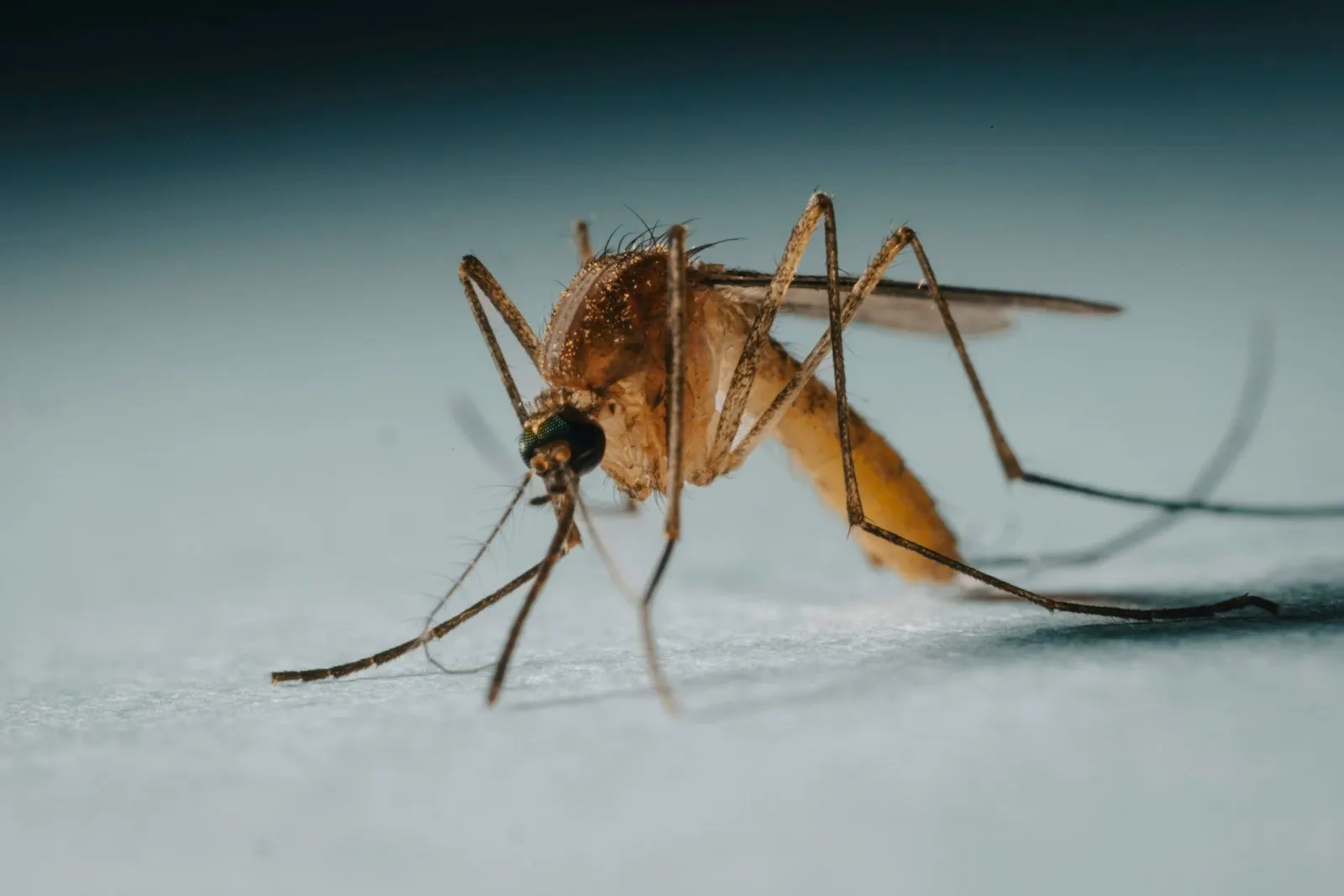
Quick answer: Central Florida’s rainy season — roughly June through September — resets your yard’s mosquito population every five to seven days. The species biting you at the grill, the container-breeding Aedes aegypti and Aedes albopictus, can go from egg to biting adult in under a week in a bottle cap of warm water, and they rarely fly more than a few hundred feet from where they hatched. That means most rainy-season mosquito problems are bred on your property or your immediate neighbors’ — and a weekly ten-minute container audit after each big rain does more than any zapper, candle or fogger you can buy.
Mosquitoes taking over the yard?
Call, enter your 5-digit ZIP on the keypad, and get connected live with a local pest control company. Free to call, 24/7.
Why do mosquitoes explode five days after every big rain?
Because of a trick called egg banking. Container Aedes females do not lay eggs on water — they glue them to dry surfaces just above a waterline: the inside rim of a plant saucer, the fold of a tarp, the lip of a clogged gutter. Those eggs sit dormant, sometimes for months, until rain raises the water to touch them. Then the whole bank hatches at once. That is why a dry June week feels fine and the Saturday after a Thursday downpour feels like an ambush: the rain did not “bring” mosquitoes, it activated eggs your yard had already stockpiled.
The development math is brutal in Florida heat. At summer water temperatures, egg to larva to pupa to flying adult takes five to seven days. A single female lays 100–200 eggs per batch. Left alone, one overlooked bucket runs continuous production from June to October.
What actually holds water in a Central Florida yard?
Walk the property after the next storm and check these in order — this list comes from what local pest control companies find on real service calls:
- Plant saucers and cache pots — the most common urban breeding site. Empty weekly or fill saucers with sand.
- Bromeliads — the central cups are natural water tanks and Central Florida landscaping is full of them. Flush with a hose weekly or treat the cups with Bti granules, which target larvae and spare bees, butterflies and lizards.
- Clogged gutters — invisible from the ground and warm, which accelerates breeding. If mosquitoes appear near the roofline at dusk, this is the suspect.
- Tarps, toys, and trampoline covers — every fold is a nursery. Re-tension or flip after each rain.
- Rain barrels without screens — fit a fine mesh over every inlet or the barrel becomes a production plant.
- Boat and pool covers, wheelbarrows, tires, trash-can lids — flip, drain, drill drainage holes.
- French drains and yard low spots that hold water past four days — regrade or treat; if it dries within three days it cannot complete a mosquito life cycle.
Note what is not on the list: lakes, retention ponds and swales with fish and movement are rarely your backyard-biter source — predators and wave action suppress the container species. The mosquito control districts handle the marsh and floodwater species; the bottle-cap breeders in your hedge line are on you.
Do foggers, zappers and citronella actually work?
Zappers: no — studies consistently show they kill mostly harmless night insects and very few biting female mosquitoes. Citronella candles: marginal, a few feet of partial suppression in still air. Store foggers: real but brief — they knock down adults present at that moment, then new adults fly in from the untouched breeding sites within a day or two. EPA-registered skin repellents (DEET, picaridin, oil of lemon eucalyptus) genuinely protect the person wearing them. A box fan on the patio is honestly one of the better tools available — Aedes are weak fliers and cannot hold position in a crosswind.
What a local pest control company adds beyond all of this is the systematic version: a walked inspection that finds the sites you missed, larvicide placed in the water that cannot be dumped, a barrier treatment on the shaded resting foliage where adults wait out the heat, and a service interval timed to the rainy-season hatch cycle. If the yard is already doing everything on the list above and the bites keep coming, the source is usually a site you cannot see or cannot reach — a neighbor’s gutter, a vacant lot, an abandoned pool — and that conversation is worth having with a professional.
Yard audit done and still getting eaten alive?
Call to get connected with a mosquito operator serving your Central Florida ZIP — inspection, larviciding and barrier treatment are their call to quote.
Free to call · 24/7 · The pest control company you’re connected with gives the quote.
When in the rainy season should treatment start?
Before the first June deluge, ideally — because the egg banks load in spring. A yard that gets its containers controlled and its first barrier treatment in May enters the rainy season with an empty bank, while the yard that starts in August is fighting three months of accumulated production. Mid-season starts still work; they just take two to three service cycles to pull the population down because new adults keep emerging from sites treated after their eggs were already laid.
The same logic scales by city. Container pressure looks different against Tampa’s dense older neighborhoods, Orlando’s stormwater-pond suburbs and Miami’s year-round season. The month-by-month Polk County picture is in the Polk mosquito calendar.
Rainy-season rhythm: a simple weekly routine
- After every storm: flip or drain anything that catches water; re-check tarps and toys.
- Weekly: flush bromeliads, empty saucers, check the rain barrel screen, run a hand along the gutter downspout outflow for standing backup.
- Monthly: drop Bti dunks in fountains, French drain boxes and anything that must hold water.
- At dusk gatherings: fan on the patio, repellent on the people — not sprays into the air.
Ten minutes a week, timed to the rain, beats any gadget on the market — and it makes whatever professional program you add dramatically more effective, because the operator is no longer treating around a yard that restocks itself every storm.
Disclosure: Lakeland Exterminators is a free referral line. We connect callers with local pest control companies. We are not a pest control company and do not perform treatment, set prices, or issue warranties. All pricing, scheduling and treatment plans are determined by the pest control company connected with your address under Chapter 482, Florida Statutes.
Check the company before treatment starts
In Florida, pest control companies must hold a business license from the Florida Department of Agriculture and Consumer Services (FDACS) under Chapter 482, Florida Statutes. Ask for the company’s license number and look it up on the FDACS license search before work starts.
Get the treatment plan, the products to be used, any follow-up visits and the price in writing. For termite work, ask what the contract or bond covers, whether it’s retreatment only or includes repair of damage, and how long it lasts. Our guide on checking an FDACS pest control license walks through it.
How the call works
- Call (888) 295-0220. Any time, day or night.
- Enter your 5-digit ZIP code on your phone’s keypad when prompted.
- Get connected live with a local pest control company that serves your ZIP. Describe what happened and ask when they can come out and what the job will cost.
Lakeland Exterminators is a free referral line that connects callers with independent local pest control companies. We don’t perform the work. The company you’re connected with gives the quote, does the work and stands behind it.