Florida’s rats do not wait for winter. They move indoors when the first dry-season signals hit — and the calendar says that is closer than it feels.
Every October, dispatch lines across Florida record the same pattern: rodent calls that ran flat all summer start climbing in late September, peak through November, and stay elevated until spring. Northern intuition says cold drives rodents indoors, but Florida barely gets cold — what actually moves them is the seasonal switch itself. Understanding the trigger, the timeline and the first-week signs is the difference between a fifty-dollar weekend of prevention in September and a four-figure exclusion-and-cleanup job in January.
Already hearing it overhead at dusk?
Describe the noise, the droppings or the chewed wire and get matched with an FDACS-licensed operator in your part of Florida.
(888) 295-0220Tap to call — 24/7 dispatch
Free to call. Free to get matched. The licensed operator you’re matched with gives the quote.
When do rats move indoors in Florida? The surge starts in late September and peaks October through November, triggered by the end of the summer rain pattern: outdoor food and water sources contract, night temperatures ease off, and breeding colonies look for protected nest sites — which is when attics win. The prevention window is the two or three weekends before that, spent sealing entry points and cutting vegetation bridges.
What actually triggers the fall move?
Three overlapping signals, none of them a freeze. First, the rain switch: Florida’s daily thunderstorm pattern shuts down between late September and mid-October, and with it goes the effortless outdoor abundance — standing water everywhere, lush growth, insects and fallen fruit in every yard. A roof rat that never needed your house in August starts commuting toward reliable food and water in October. Second, the breeding calendar: roof rats breed heavily in fall, and a pregnant female selects a protected, warm, dry nest site — an insulated attic beats a palm crown in every category she measures. Third, the first genuine cool nights: not dangerous cold, just enough contrast to make an attic’s stored daytime heat attractive. The result is a coordinated seasonal push — wildlife biologists see it in trap data, operators see it on the dispatch board, and homeowners hear it above the ceiling at exactly the same time every year.
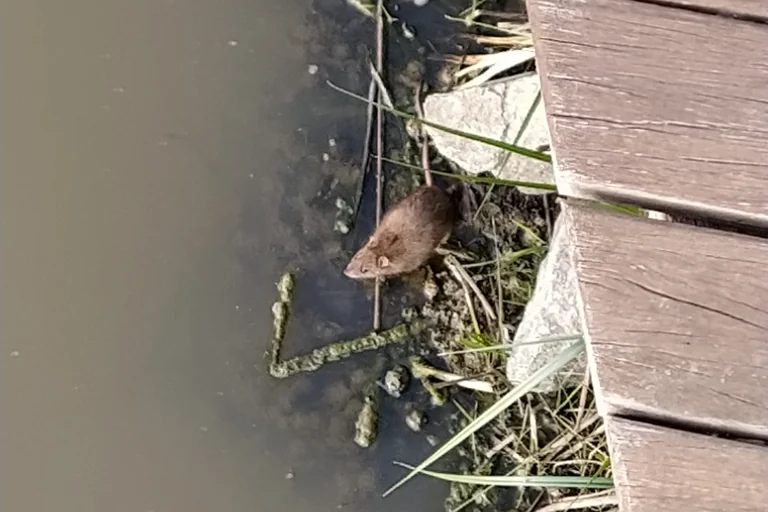
What are the first-week signs — before it becomes an infestation?
- Dusk timing: scratching, rolling or scurrying over the ceiling in the first two hours after sunset — roof rats leave the nest to forage on schedule; daytime noise is more likely squirrels.
- The first droppings: spindle-shaped, olive-pit-sized, concentrated along garage walls, water heater platforms and attic entry edges — scattered singles mean scouting; piles mean settled.
- Gnawing evidence: fresh, pale tooth marks on eave corners, soffit screens or stored boxes; rats gnaw to open entries and to wear incisors — check the AC chase and garage weatherstrip first.
- Fruit strikes: citrus or mango hollowed out neatly while still hanging — the classic Florida roof rat signature, and it usually precedes the attic by a couple of weeks.
- Pet alerts: a dog or cat staring fixedly at a wall or ceiling line at night is running better acoustic detection than you are — take the hint seriously the first week, not the fourth.
What does the two-weekend prevention window look like?
Weekend one is the ladder audit: walk the eave line and seal what a thumb fits through — a rat needs about a half-dollar-sized gap, a mouse far less. The standard Florida entry set: gable and off-ridge vents (back them with hardware cloth), soffit returns where two rooflines meet, the AC line-set chase, the gap where fascia has pulled off the roof deck, tile-roof eave arches, and the garage door’s corner seals. Use metal — hardware cloth, flashing, steel wool plus sealant — because foam alone is a chew toy. Weekend two is the bridge cut: trim canopy back six feet from the roofline, skirt the palms, pull ivy off walls, and move the firewood and stored clutter off the exterior walls so travel lanes lose their cover. If fruit trees are part of the yard, commit to picking promptly and clearing drops through winter. Homes that do these two weekends in late September routinely skip the season entirely; homes that skip them meet the season in the attic. And if the noise has already started, the order of operations flips: get a licensed inspection first — sealing rats inside a house is the one mistake worse than leaving the gaps open, and it happens to well-intentioned DIY sealers every fall.
Rather have a professional walk the eave line?
The dispatch line matches Florida homes with FDACS-licensed operators for inspections, exclusion work and attic trapping — statewide.
One tap. One call. Matched.
(888) 295-0220Tap to call — 24/7 dispatch
Free to call. The licensed operator gives the quote.
Disclosure
Lakeland Exterminators is a pest control dispatch and referral service, not a licensed pest control operator. All pest inspections, treatments and quotes are performed by independent pest control operators licensed by the Florida Department of Agriculture and Consumer Services (FDACS) and insured in their own name. Calling the dispatch line is free and creates no obligation; the licensed local operator you’re matched with sets their own pricing and terms.
Go deeper: The rodent dispatch guide, Rodent exclusion explained, The roof rat profile