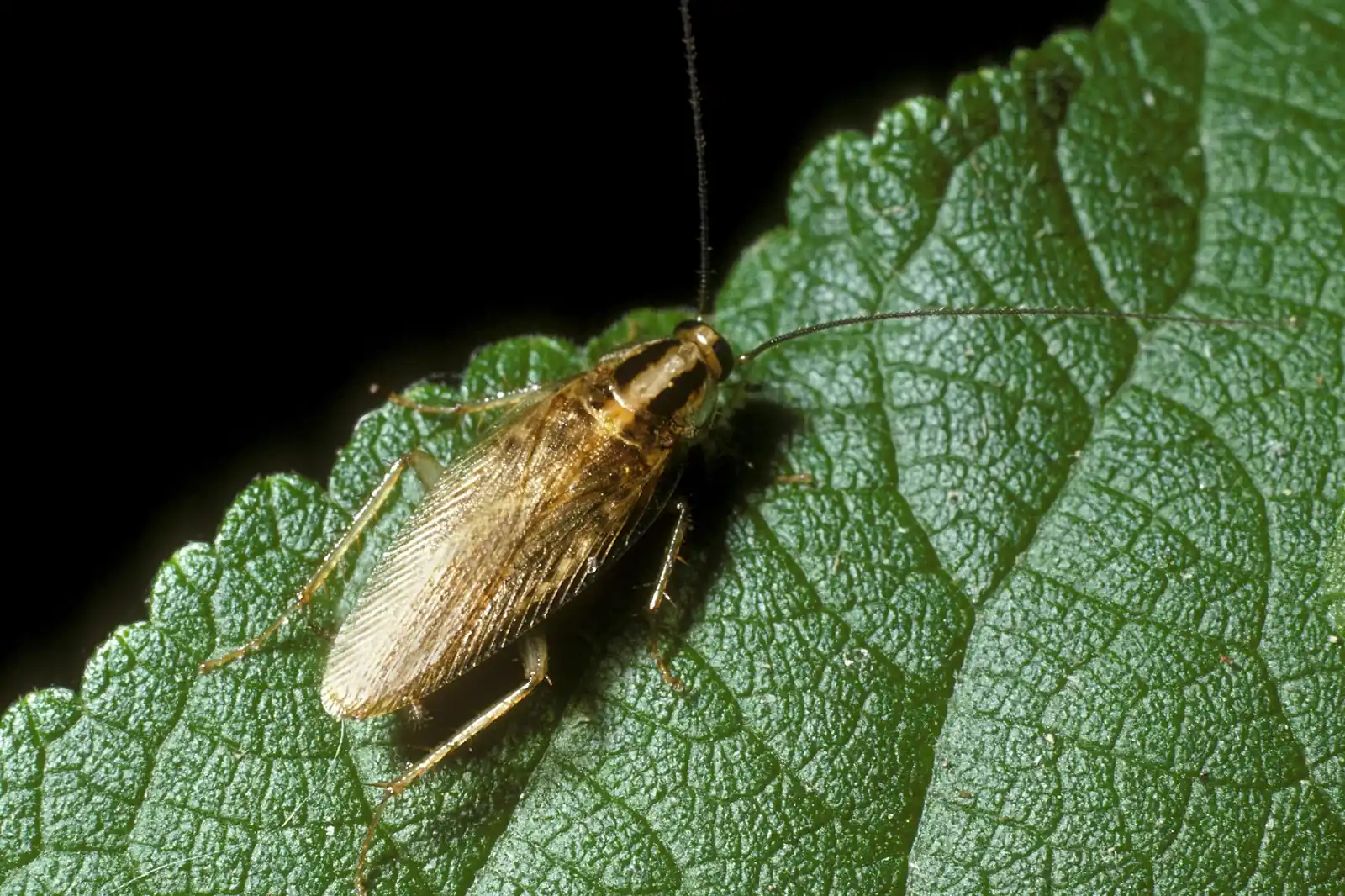
Small roaches in the kitchen at night? That is a German roach infestation — and it is growing.
One call reaches a licensed, local exterminator who covers your address — and a real person answers, 24/7.
Talk to a licensed exterminator now
Call and we’ll connect you with a licensed, local exterminator who covers your address. It takes about two minutes, and a real person answers.
Free to get matched. No obligation. The licensed operator gives the quote.
24/7 line · A real person answers · Availability of same-day and emergency service depends on the provider.
German roach or palmetto bug? The answer changes everything
German cockroach — the indoor breeder
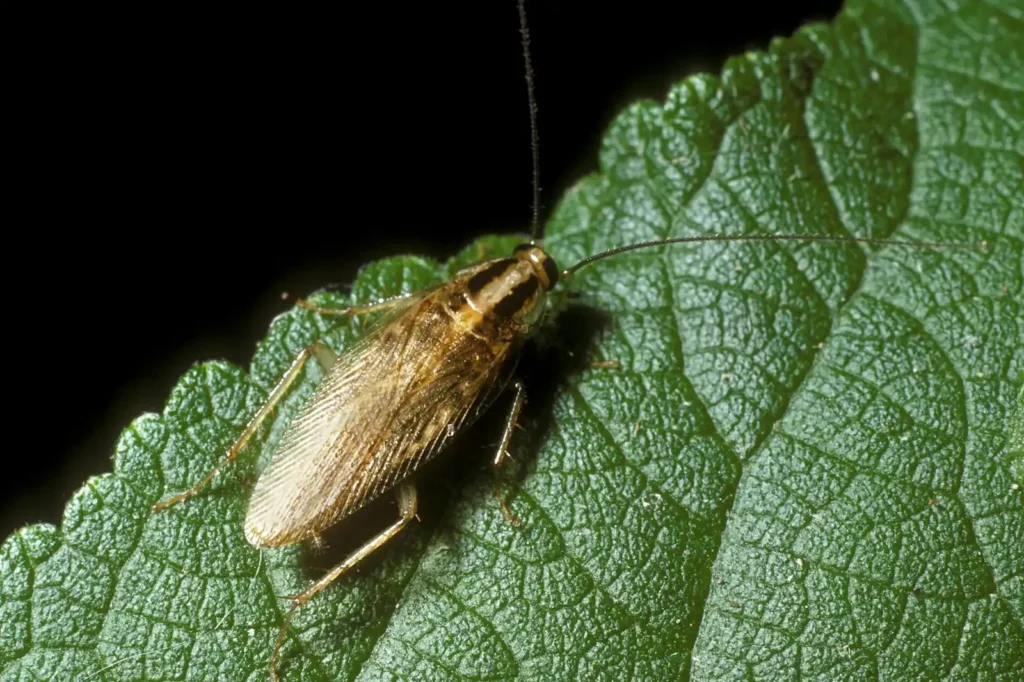
Blattella germanica. Half-inch, tan, two dark racing stripes behind the head. Lives its entire life indoors, concentrated in kitchens and bathrooms. Egg cases carry 30–40 young and a population explodes in weeks. Seeing them in daylight means heavy pressure. This page is about them.
Palmetto bug — the outdoor wanderer
Periplaneta americana. Big, reddish-brown, flies badly and walks in from mulch, sewers and palms. It does not want to live in your kitchen. Different biology, different treatment — see the palmetto bug guide.
Quick field check: small roach + kitchen + night activity + droppings like coffee grounds in cabinet corners = German. Big roach + bathroom floor or garage + occasional = palmetto. The main roach guide covers both.
Roaches on the counter when you flip the light? Get matched tonight.
One call reaches a licensed, local exterminator who covers your address — and a real person answers, 24/7.
Free to get matched. No obligation. The licensed operator gives the quote.
Why the spray can is making it worse
Repellents scatter, baits eliminate
Over-the-counter roach sprays are repellent pyrethroids — they kill the roaches you hit and chase the rest deeper into wall voids and appliance cavities, spreading the infestation into rooms it had not reached. Worse, spray residue contaminates the surfaces where a professional would place gel bait, making the effective treatment harder. If you have been fogging weekly and the roaches keep coming, this is why.
What the licensed program actually looks like
Modern German roach work is crack-and-crevice gel baiting matched with an insect growth regulator (IGR): the bait kills foraging adults and — because roaches eat their dead and each other’s droppings — cascades through the colony, while the IGR stops nymphs from maturing into breeders. The operator places bait where the roaches actually live (hinge cups, appliance motors, void edges), monitors with sticky traps, and re-baits on a schedule until counts hit zero. Heavy infestations typically need multiple visits over several weeks — anyone promising a one-visit fix on a daylight-active infestation is selling optimism.
The Lakeland rental reality
German roaches are Polk County’s signature rental-housing pest — they travel between units through shared walls and plumbing chases, and they ride in with furniture, boxes and grocery bags. In multifamily buildings, treating one unit while its neighbors stay infested is a subscription, not a solution; the honest fix treats the block of adjacent units. Tenants and landlords can both use the line — the rental property guide covers who typically pays for what under Florida landlord-tenant practice.
How the German roach dispatch works
Straight up: Lakeland Exterminators is a dispatch and matching service, not a licensed pest control operator. Here is the exact path your call takes.
Describe what you found
Where you see them, day or night, droppings location, how long — and whether you rent or own. A real person answers around the clock.
Your address picks the operator
The call routes to an FDACS-licensed operator covering your part of Polk County — including operators who handle multifamily and rental accounts.
Licensed inspection on site
The operator confirms German vs palmetto, maps harborage with flush checks and traps, and writes the quote. Pricing comes from them, never from us.
Treatment stays with the pro
Baiting program, IGR, follow-up schedule — all owned by the licensed operator under Chapter 482, Florida Statutes.
Verify before you hire — any Florida pest control company’s license status is public at the FDACS license search. Check the operator you are matched with; the good ones expect it.
Related guides: roach extermination overview · German roach species profile · palmetto bugs · cost guide.
German roach questions, answered straight
How bad is it if I see them during the day?
One call reaches a licensed, local exterminator who covers your address — and a real person answers, 24/7.
How long does it take to clear a German roach infestation?
Typically a few weeks across two or more visits — initial baiting knocks down foragers within days, but egg cases keep hatching and the IGR needs a nymph generation to work through. The operator’s trap counts tell the real story. One-visit clears happen only on early, light infestations.
What does German roach treatment cost in Lakeland?
Set by the licensed operator after inspection — infestation severity, unit size and the number of follow-up visits move the number. We do not set or publish prices. The cost guide explains the categories.
I am a tenant — do I call, or does my landlord?
Either can call the line. Under typical Florida practice, structural pest issues in multifamily housing are usually the landlord’s to remedy, but leases vary. Documenting the infestation (photos, dates) protects you either way, and the operator’s written findings help the conversation.
Do I need to empty every cabinet before treatment?
Follow the operator’s prep sheet — modern gel-bait programs usually need far less prep than the old spray-everything protocols. Typical asks: clear under-sink areas, fix drips, tighten food storage, and skip DIY sprays entirely so the bait stays attractive.
One number. Real roach expertise. The line answers now.
Free to get matched. No obligation. The licensed operator gives the quote.
Free to get matched. No obligation. The licensed operator gives the quote.
Disclosure
Lakeland Exterminators is a dispatch and matching service. We connect Polk County callers with FDACS-licensed structural pest control operators. We are not a licensed pest control operator. We do not perform pest control work, set prices, issue warranties, or carry pest control trade insurance. All pricing, scheduling, treatment plans, warranties and service terms are determined by the FDACS-licensed operator dispatched to your address under Chapter 482, Florida Statutes.
Same-day and 24/7 emergency services are subject to provider participation, location, technician availability, and demand. Availability is not guaranteed and may vary by market and appointment capacity.
License status of any operator you connect with is publicly verifiable at the FDACS license search.